


When an affiliate marketer chooses a proxy, they usually look at two parameters: price and country. Everything else seems secondary - until accounts start getting banned. In this article, we will look at how to choose the right proxies for specific tasks, how the types differ from each other, and demonstrate this using the service MuaProxyVietNam - a Vietnamese provider with a wide range of products for affiliate marketers.
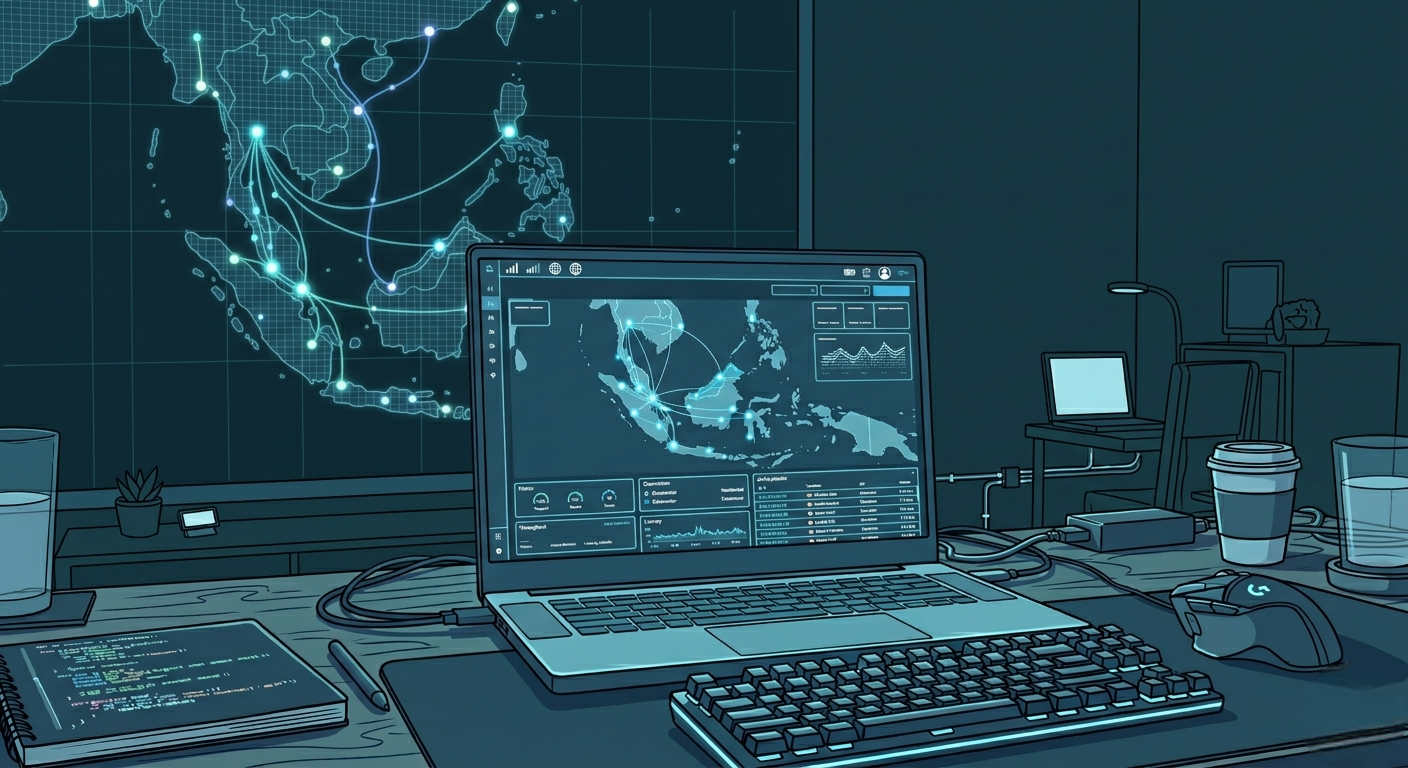
What Facebook Actually Checks When Logging Into an Account
Most affiliate marketers know that a proxy is needed. But few understand exactly what the platform checks and why some proxies work for years, while others burn through accounts in a week.
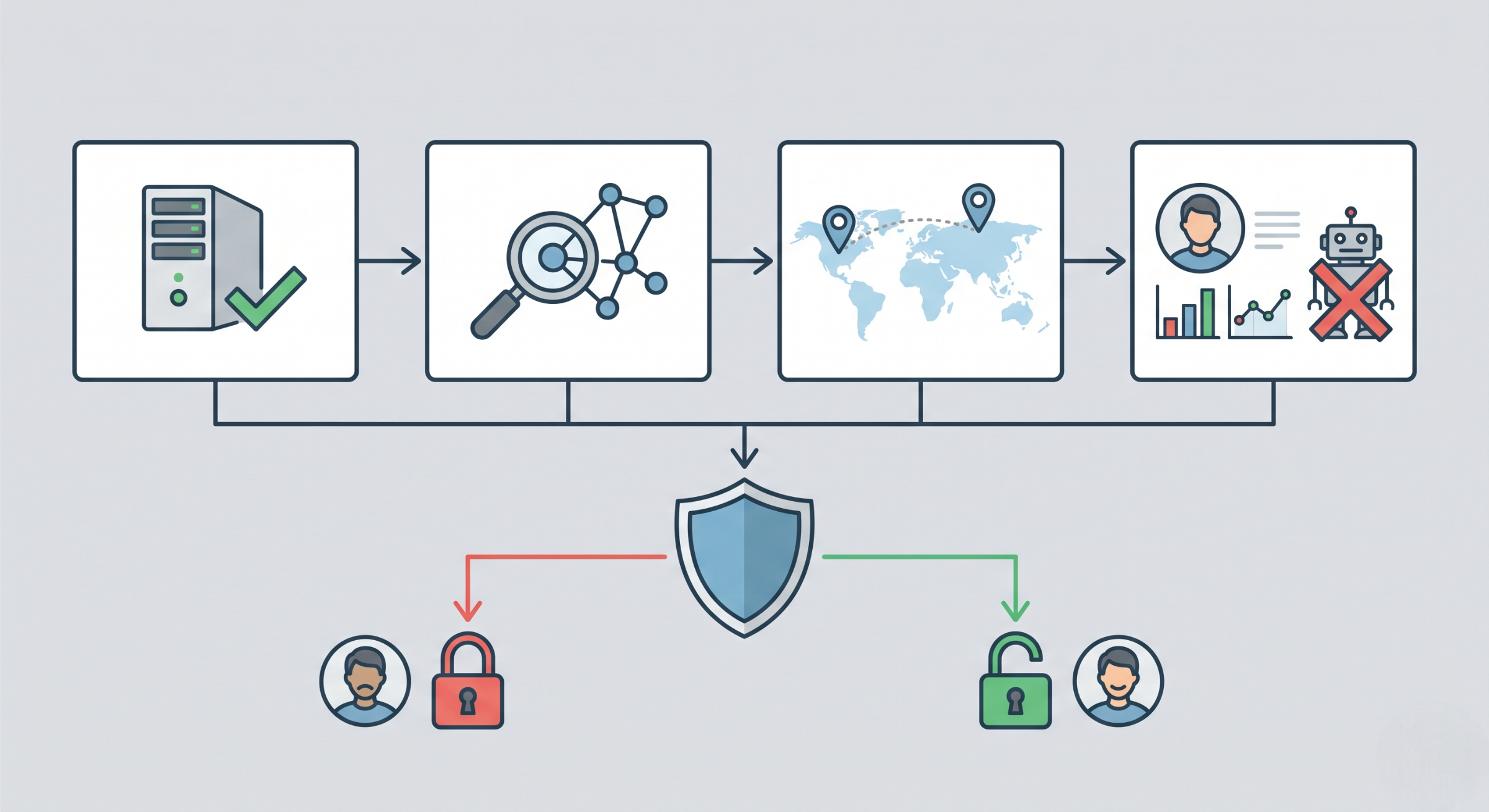
With each login, Facebook analyzes several layers:
IP address and its history - whether this IP was associated with violations, how many accounts logged in from it
ASN (Autonomous System Number) - which organization the IP belongs to: a real telecom operator, a hosting provider, or a datacenter
Geolocation - whether the country and city match the account profile
Behavioral patterns - how often the IP changes, how stable the behavior is between sessions
When all four layers look organic - the account works stably. When at least one signals an anomaly - trust drops, checks become more frequent, and sooner or later a ban follows.
This provider offers several types of proxies for different tasks of an affiliate marketer - from account management to automation. Let's break down each one.
Mobile 4G Proxy: Why It Is the Gold Standard for Advertising Accounts
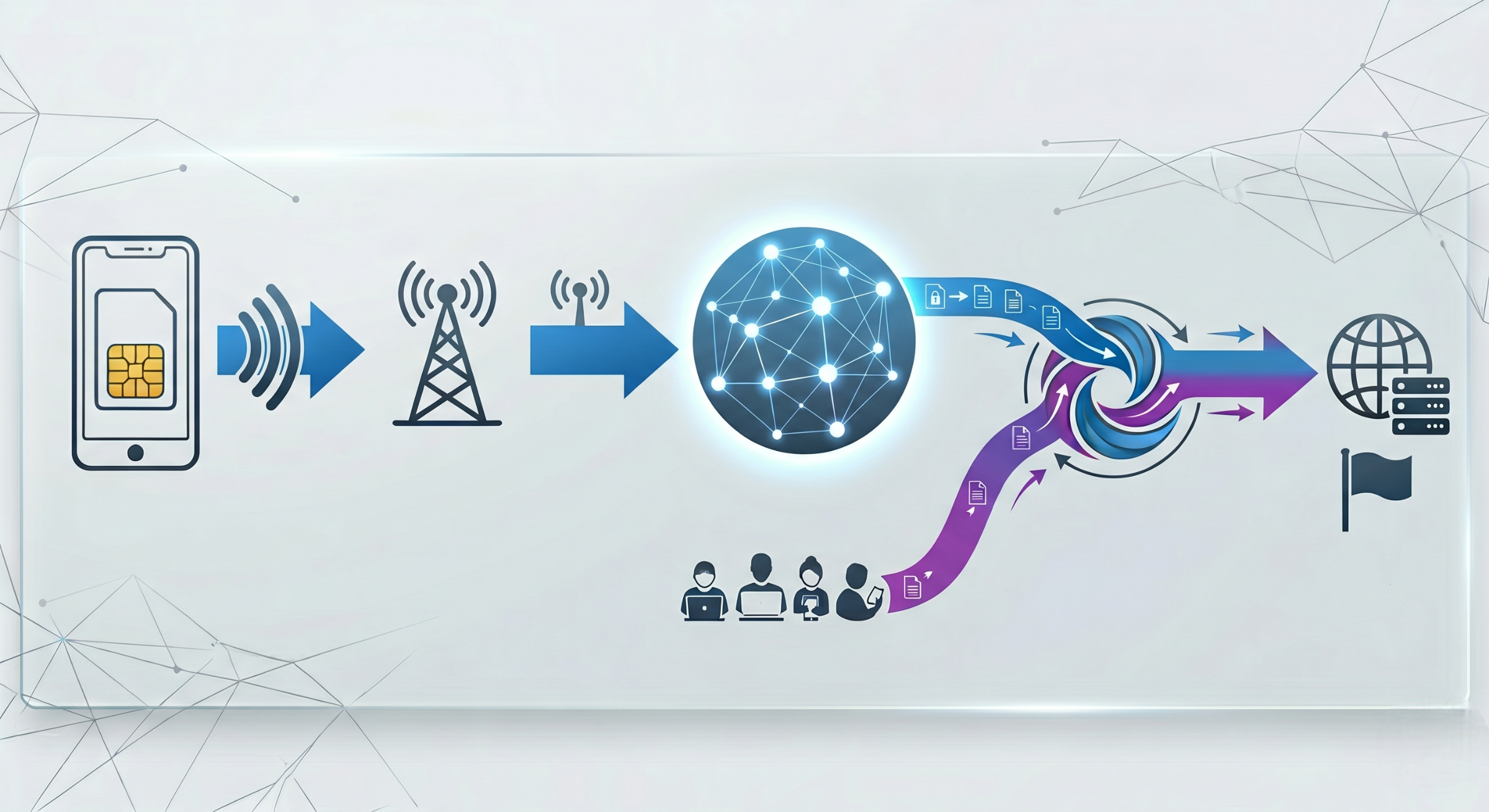
A mobile proxy is a connection through a real SIM card in a real mobile device. When you work through such a proxy, to Facebook you look like a regular smartphone user with mobile internet from a real carrier.
The key property of mobile IPs: one address is used simultaneously by dozens and hundreds of real users. This makes mobile IPs practically unbannable - the platform cannot ban them selectively without affecting real people.
They offer mobile 4G proxies with rotation. The IP changes on request or on a schedule, which is convenient when you need to work with multiple accounts on different IPs within a single session.
An important point when working with a rotating mobile proxy on advertising accounts: do not change the IP in the middle of an active login session. It is better to perform rotation between sessions, not during them - a sharp change of IP while an account is logged in signals unusual behavior.
For which tasks mobile 4G is optimal:
Creating and warming up new advertising accounts
Managing accounts with grey offers on Facebook and TikTok
Tasks where account trust is priority number one
Residential Proxy: When Stability and a Clean IP Are Needed
A residential proxy is the home internet IP of a real user. From an ASN perspective, it looks like regular broadband internet from an ISP, rather than a datacenter or a mobile carrier.
The provider offers two options for residential proxies:
Residential Static - a fixed IP that does not change between sessions. This is important for managing advertising accounts: Facebook monitors the stability of the entry point, and a constant IP works in favor of account trust. Suitable for managing accounts where a sequence of logins is required.
Residential Rotating - the IP changes from a large pool. Suitable for tasks where IP freshness is needed rather than consistency: monitoring competitors' ads, checking offers from different addresses, data scraping.
For managing Facebook accounts, always choose the static option. Use the rotating one separately for research tasks.
For which tasks a residential proxy is optimal:
Managing advertising accounts in Google Ads and Meta
Warming up accounts while mimicking real user behavior
Working with platforms that do not accept mobile IPs
Multi-accounting in e-commerce and traffic arbitrage
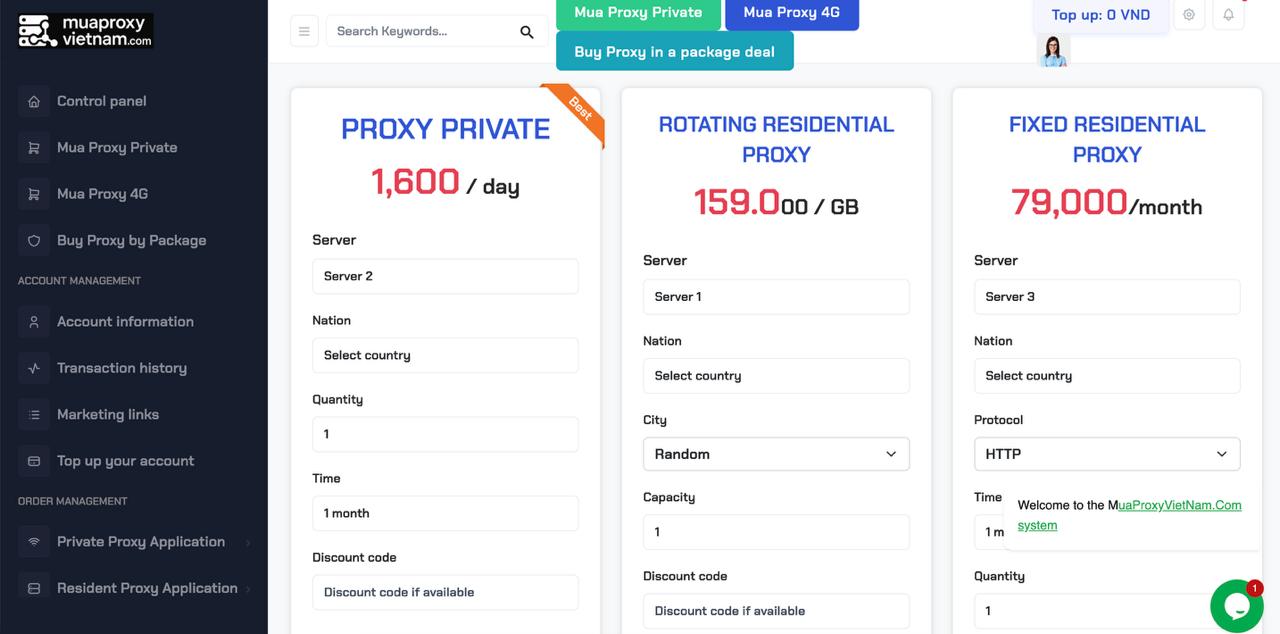
Private IPv4: When and Why
Private IPv4 is available from them on two servers with different IP ranges. These are classic datacenter proxies with a guarantee that the IP is not used by more than one client at a time.
Honestly speaking about applicability: Facebook learned to recognize datacenter IPs a long time ago. Their ASN belongs to hosting providers, and this is visible at the very first request. They are not optimal for managing advertising accounts.
Where private IPv4 is truly useful:
Scraping and monitoring - gathering data on competitors, prices, ads
Automation without logging into advertising accounts
SEO tasks - checking positions, crowd marketing
Testing your own landing pages from different IPs
Private IPv4 rates at MuaProxyVietNam are affordable - a good option for tasks where high trust is not required, but reliability and dedicated IPs are needed.
How to Check a Proxy Before Assigning It to an Account
Buying a proxy is not everything. Especially if you take residential ones from pools: the IP could have been used by a previous client and have a bad history.
Two tools you need to run before assigning a proxy to an advertising account:
IPQualityScore - evaluates the IP fraud score from 0 to 100. The safe zone is below 75. Above 85 is high risk; such an IP is best not used for accounts.
Scamalytics - checks the IP history for associations with ad fraud, spam, and abuse.
If the proxy passes both checks - assign it to the account. If not - request a replacement from the provider or use it for low-stake tasks.
MuaProxyVietNam provides the opportunity to purchase through an automated system with instant provisioning - this is convenient when you need to quickly replace a problematic IP without downtime.
Configuration Rules That Actually Affect Account Survival
One proxy - one account. This is not a recommendation, it is a rule. Facebook builds a connection graph of accounts, including by IP. Two accounts on one proxy mean linked accounts. One gets banned - the other is at risk.
Proxy GEO = Account registration GEO. If an account was created with a Vietnamese number - the proxy must be Vietnamese. A mismatch between the IP country and the profile country is one of the most common reasons for checks.
Do not change the IP between logins of the same account unless necessary. Platforms monitor the stability of the entry point. If today you log in from Hanoi, and tomorrow from the same account from Ho Chi Minh City - this is an anomaly.
Do not test the offer link from the managing proxy. By clicking the link from the ad using the same IP that you use to manage the account, you create an account-landing page connection. This is a signal for the system. For testing, use a separate IP - or a whitelist in the cloaking service.
The Proxy Covers the Account - But Not the Offer
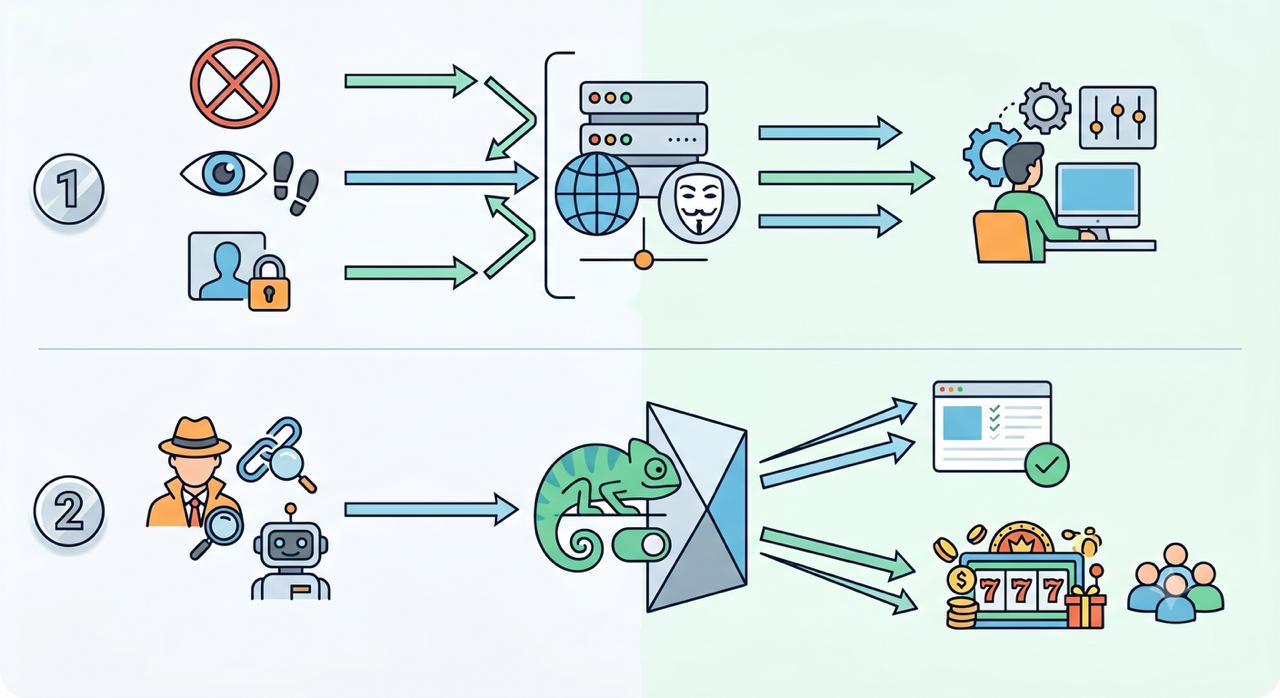
Here is what is important to understand about the protection architecture: the proxy works at the account management level. It hides your real IP from the platform during logins, campaign creation, and management.
But after the campaign is launched, another vulnerability appears. Platform moderators click on links in ads to check landing pages. If they see a real offer from a restricted category - nutra, gambling, crypto - the campaign gets flagged. A proxy does not help here - the request does not come from your side.
This is the task of cloaking. The system analyzes each incoming visit in real time: a real user gets the offer, while a moderator or bot gets a white page that violates nothing.
Cloaking.House is a service that covers exactly this level. Machine learning for traffic classification, filtering by IP, VPN, GEO, device, and behavior. Threat databases are updated in real time - no need to maintain blacklists manually.
Proxy + cloaking are two shields for two different vulnerabilities. Both are needed, neither replaces the other.
Practical Stack for Facebook Campaigns with Vietnamese Traffic
For those who want specifics, not general words - a working configuration:
Account management: mobile 4G proxy from MuaProxyVietNam - one proxy per account, the IP is stable during a single login session.
Warming up new accounts: the same mobile proxies + an antidetect browser with isolated profiles. Each profile has its own proxy, its own cookies, its own fingerprint.
Running active campaigns: a flow in Cloaking.House with a GEO filter for Vietnam, enabled VPN and bot filters. A white page on the same domain.
Offer verification: personal IP added to the whitelist of the flow in Cloaking.House. Testing is always done through the whitelist - not through a VPN and not directly. This is important: if you are not working from a Vietnamese GEO, without the whitelist you will see a white page and think that something broke.
Proxy quality: we run every new batch from MuaProxyVietNam through IPQualityScore before assigning them to accounts.
Competitor monitoring and data collection: a residential rotating proxy from MuaProxyVietNam - separate from accounts, a clean pool for research tasks.
Summary
A proper proxy infrastructure is not about having one type of proxy for all occasions, but making a conscious choice for each task. Mobile 4G for accounts. Static residential for stable campaign management. Rotating residential for research. Private IPv4 for automation.
MuaProxyVietNam covers this entire spectrum within a single service - with automated provisioning, Vietnamese carrier IPs, and plans for different budgets.
The proxy covers the account level. The offer level is covered by cloaking. Try Cloaking.House for free for 7 days - cloaking.house. Promo code BVBV_BRO_30 gives a 30% discount on any plan.




Be the first to share your opinion!
We value your feedback — share your thoughts.