


In affiliate marketing, not only the advertising strategy is important, but also the technical infrastructure on which the campaign runs. IP addresses are used for account management, accessing websites, data collection, and other daily tasks. At the same time, their quality and reputation can affect work stability.
A clean IP address is not just a new address, but an address with a suitable network history and predictable characteristics. If these parameters are not taken into account, you may face additional checks, access restrictions, and an unstable connection.
Let's figure out what affects IP reputation, how the main types of proxies differ, and how to organize work with FlashIP.
What is a clean IP address?
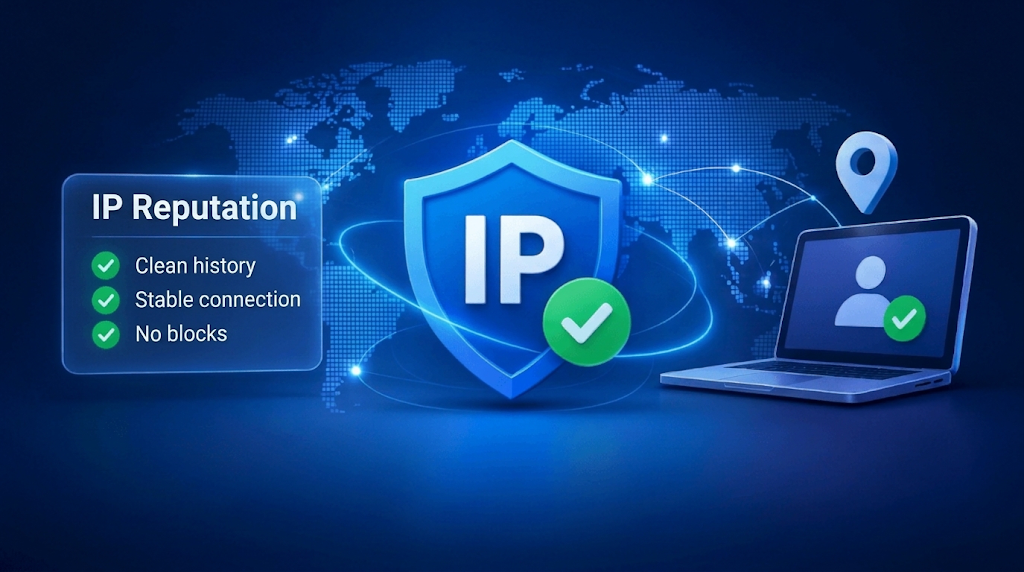
A clean IP is usually understood as an address that does not have a noticeable negative usage history and is not associated with suspicious activity. However, this concept has no single universal standard: different platforms and security systems evaluate IPs according to their own criteria.
When evaluating an address, the following may be taken into account:
Reputation - the presence of complaints, marks in threat databases, and history of abuse.
Network type - residential, datacenter, mobile, or ISP.
Geographic location - the country, region, and city to which the IP belongs.
Usage history - what actions were previously performed from the address.
Connection character - request frequency, session duration, and regularity of IP changes.
It is important to understand that a clean IP does not guarantee the absence of checks or restrictions. It only reduces the likelihood of problems associated with a negative address reputation. Account performance is also affected by user actions, device settings, network behavior, and the requirements of a specific platform.
How does IP reputation affect work?
IP reputation is especially important when interacting with advertising platforms, social networks, online stores, and other services using automatic security systems.
Account Management
Affiliate marketers often work with several accounts and projects simultaneously. At the same time, it is important to maintain consistency in technical settings. For example, frequent changes in connection countries, networks, and IP addresses can create an inconsistent picture of activity. This complicates account management and finding the causes of technical problems.
For more organized work, you should separate projects, use a clear connection structure, and avoid unnecessary changes to network parameters. It is important to consider that the IP is only one of the factors evaluating activity. Browser, device, cookies, and user actions can also affect platform checks.
Access to websites and online services
Some sites use additional checks for connections from IP addresses associated with hosting providers, suspicious activity, or an unusual number of requests.
Depending on the service's policy, this can lead to:
Additional user verification.
Appearance of a CAPTCHA.
Limitation of request frequency.
Temporary access block.
The reason is not always exactly in poor IP reputation. Restrictions may be related to the site's security settings or the nature of the requests. Nevertheless, checking the IP helps identify one of the possible sources of the problem.
Data collection and analytics
Affiliate marketers use various online tools to research offers, analyze competitors, and collect information. An unstable connection or an IP with a poor reputation can lead to request errors, session interruptions, and incomplete results. Therefore, the quality of the network infrastructure is important not only for working with accounts but also for daily research tasks.
Thus, IP reputation is one of the factors for the stable operation of the infrastructure, which should be considered along with software settings and connection quality.
What is the difference between residential, datacenter, mobile, and ISP proxies?
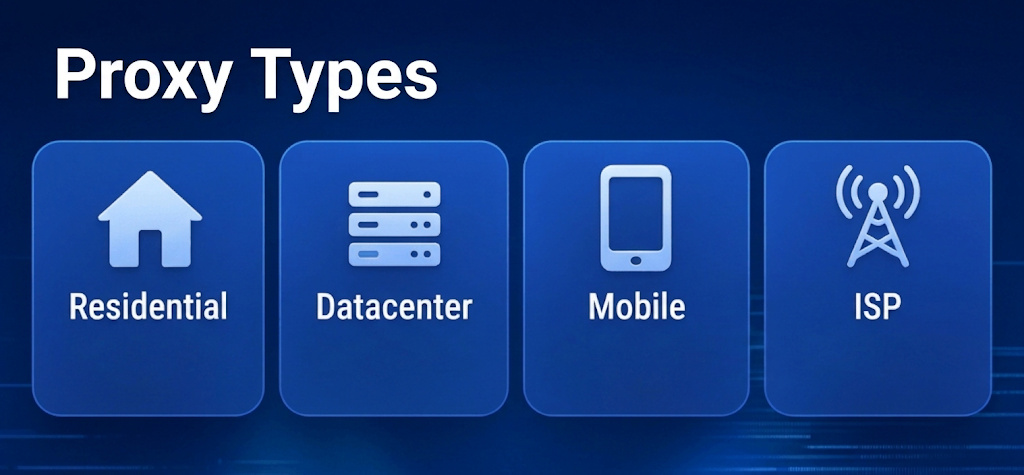
Before choosing a proxy, it is important to understand the main types of IPs. They differ in connection source, technical characteristics, and usage scenarios.
| Proxy type | Features | Where they are used |
| Residential | IP addresses of home Internet providers | Working with sites and services where a residential network is important |
| Datacenter | Datacenter addresses | Tasks where speed and cost are important |
| Mobile | Addresses of mobile operators | Working with services via mobile networks |
| ISP | Addresses registered with Internet providers and hosted on server infrastructure | Scenarios where session stability is important |
Residential proxies use IP addresses associated with home Internet connections. They are suitable for tasks that require working through residential networks.
Datacenter proxies provide datacenter addresses. Usually, they are chosen when speed, performance, and cost are the priorities.
Mobile proxies use IPs of mobile operators. Such connections can be useful when working with services targeted at mobile traffic.
ISP proxies combine IP registration with an Internet provider and hosting on server infrastructure. They can be used in tasks where connection stability and duration are important.
There is no universal proxy type for all tasks. The choice depends on the platform requirements, the nature of the work, and the required session duration.
Shared and Dedicated IP: what is the difference?
In addition to the network type, when choosing a proxy, you should consider whether the address is shared with other clients or dedicated to a single user.
Shared IP - a common address that multiple clients of a provider can use. This option is often cheaper, but the activity history of other users can affect the IP's reputation.
Dedicated IP - a dedicated address assigned to a single client. This allows better control over its use and reduces dependence on the actions of other users.
When choosing, you should consider the following features:
Cost: shared addresses are usually more affordable, dedicated ones can cost more.
Control: with a Dedicated IP, it is easier to track the usage history of a specific address.
Reputation: Shared IPs may have shared risks associated with the actions of other users.
Stability: a dedicated address is convenient when you need to work with one IP for a long time.
At the same time, a Dedicated IP does not necessarily have a good reputation initially. It should also be checked before use.
What can ruin an IP address's reputation?
Even a high-quality IP can get a negative history over time. This is influenced not only by user actions but also by the specifics of the address's previous use.
Spam and abuse. Mass unwanted requests, mailings, and other suspicious actions can lead to the appearance of the IP in databases with negative marks.
Excessive automation. A large number of identical requests in a short period of time can be perceived by security systems as atypical activity.
History of previous use. If the address was previously used for spam or other violations, its reputation may be ruined even before purchase or lease.
Frequent connection changes. Constant switching between IPs without a clear need complicates the control of the network environment and can cause additional checks.
Configuration errors. Incorrect proxy, DNS, or network parameter settings can lead to unstable connections and technical problems.
To avoid such situations, it is important not only to choose suitable addresses but also to control your own usage scenarios.
How to check IP quality before use?
Before connecting a proxy, it is advisable to conduct a basic check. This will help detect obvious problems and understand whether the address is suitable for a specific task.
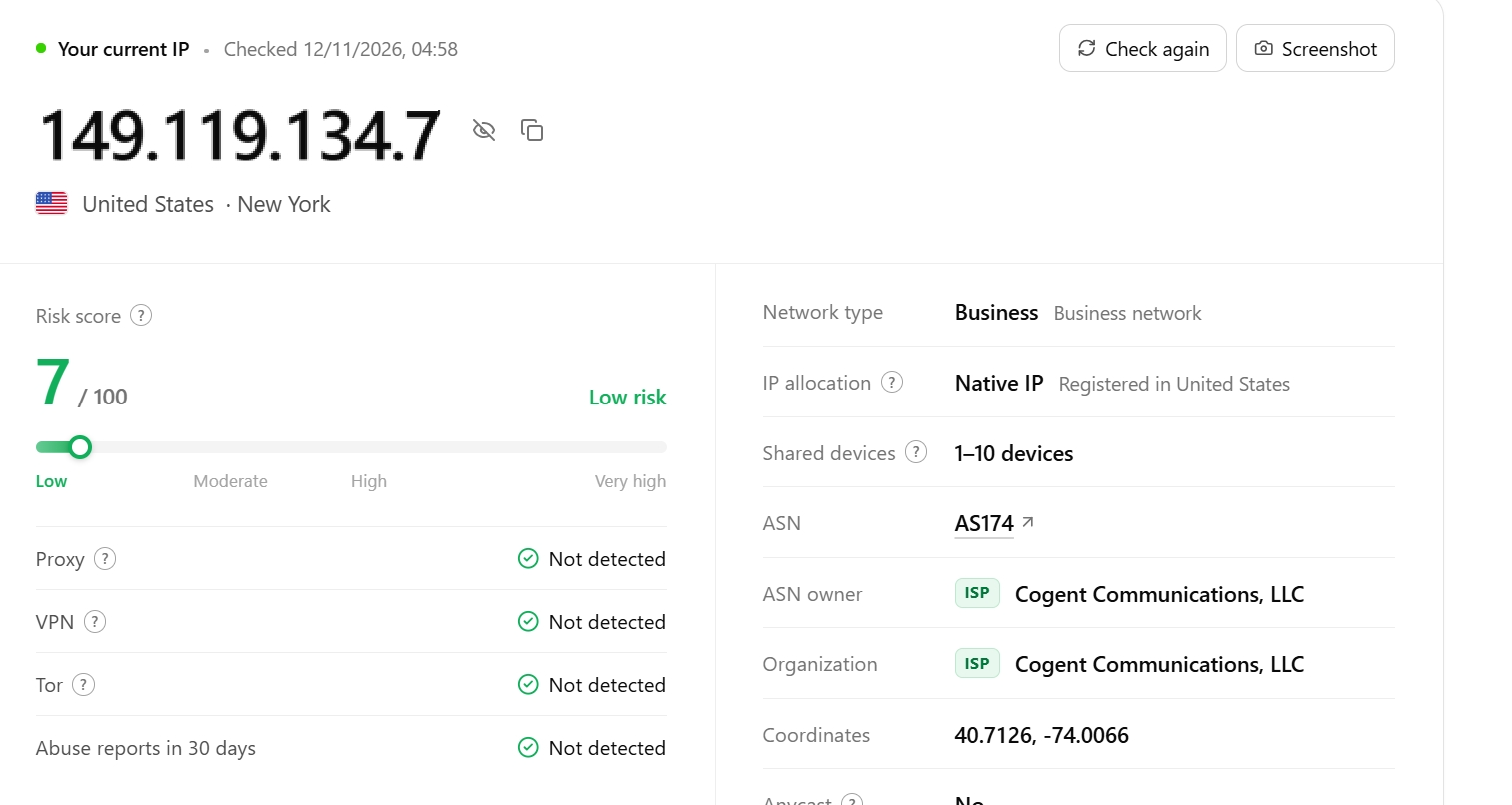
1. Check the IP reputationUse open databases and specialized IP checking services. They can show whether the address is present in spam lists, suspicious activity, or other risk categories.
2. Study network informationCheck the country, city, Internet provider, ASN, and network type. This data will help ensure that the IP matches the declared characteristics.
3. Evaluate connection stabilityCheck the response speed, presence of disconnections, and availability of required resources. For long-term tasks, it is especially important that the connection works predictably.
4. Repeat checksIP reputation is not a constant characteristic. It can change depending on activity and external factors. Therefore, periodic monitoring is useful even for addresses that previously raised no questions.
How to choose residential proxies for work tasks?
If residential IPs are needed for work, when choosing a provider, you should look not only at the size of the address pool and the number of available countries. Connection management capabilities and transparency of conditions are also important.
Pay attention to several criteria:
Geography: availability of the required countries, regions, and cities.
Pool size: the number of available addresses and the possibilities for updating them.
Rotation: methods and conditions for changing the IP.
Sticky sessions: the ability to keep a single address for a specified time.
Stability: connection quality and proxy availability.
Payment terms: traffic cost, limits, and additional fees.
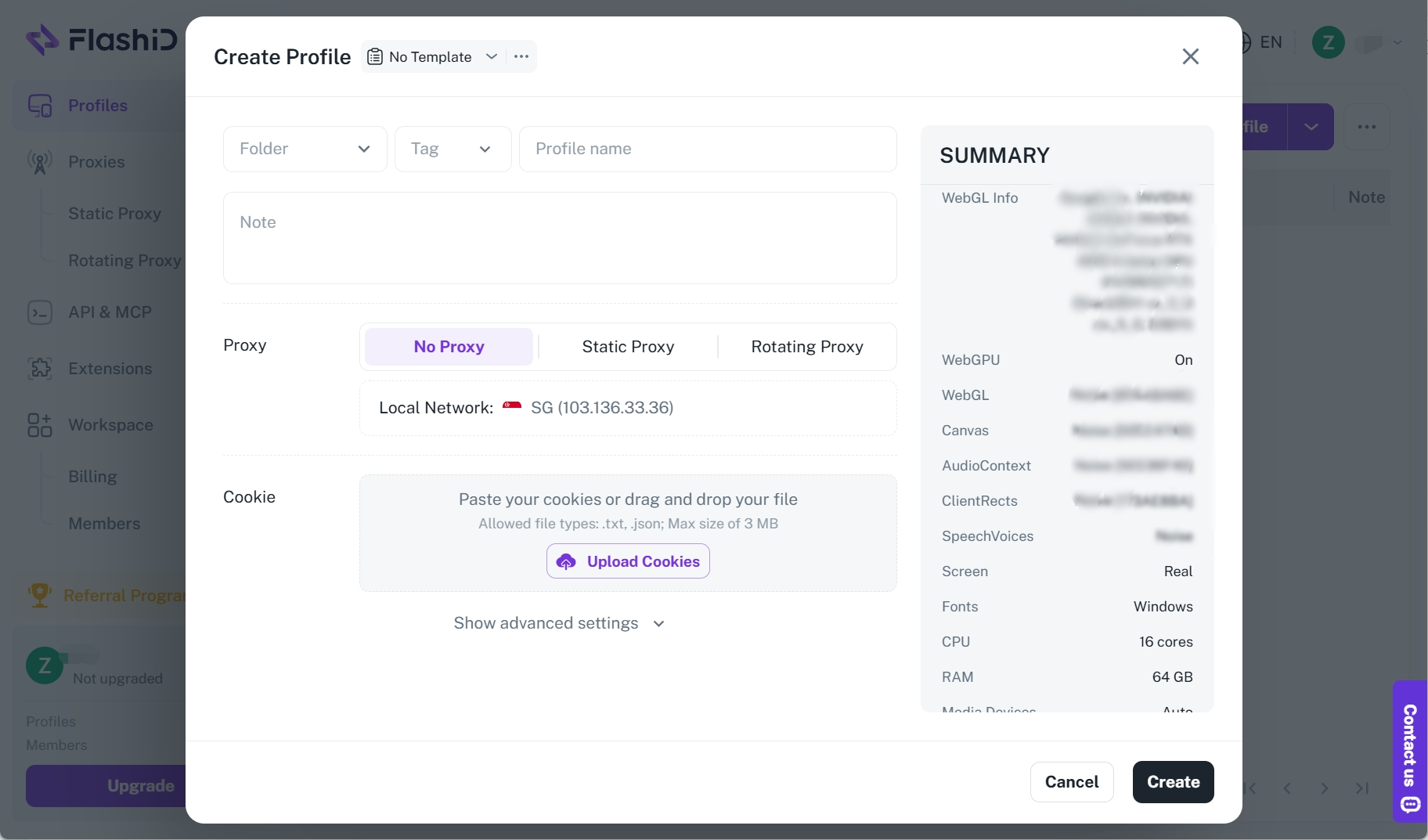
For example, FlashIP provides residential proxies with a choice of countries and states, as well as cities in certain US regions. The service supports IP rotation by requests and sticky sessions lasting 30, 60, 90, or 120 minutes.
How to organize work with IP addresses?
Even high-quality proxies will not solve all technical problems if work with them is not organized. For convenient infrastructure management, you should adhere to several rules.
Separate work tasks. Record which IPs are used for specific projects and processes. This will simplify control and help find the cause of malfunctions faster.
Keep track of connections. Save information about the provider, proxy type, geography, and periods of use. Such tracking is especially useful when working with a large number of addresses.
Do not change the IP unnecessarily. If the task involves a long session, use the appropriate connection mode. Frequent rotation does not always improve the result and can complicate diagnostics.
Monitor incoming traffic. Analyze request characteristics to understand what visitors come to the site and how they are processed. Filtering tools, such as Cloaking.House, help analyze site visits and check incoming requests for compliance with set conditions.
Regularly check the infrastructure. Monitor proxy availability, connection stability, and changes in IP reputation. This will help detect problems before they affect workflows.
Conclusion
The quality of IP addresses is an important part of an affiliate marketer's technical infrastructure. Reputation, network type, geography, and connection stability can affect access to platforms, account management, and the execution of network tasks.
When choosing a proxy, it is important to consider not only the cost and quantity of IPs but also the address history, session management capabilities, and connection quality. And regular checking and proper organization of connections will help maintain the infrastructure in working order.






Be the first to share your opinion!
We value your feedback — share your thoughts.