


Filters have cut off the bots, the white page looks flawless, only target users see the offer - yet the account still gets banned. We are breaking down what role proxy infrastructure plays in this setup.
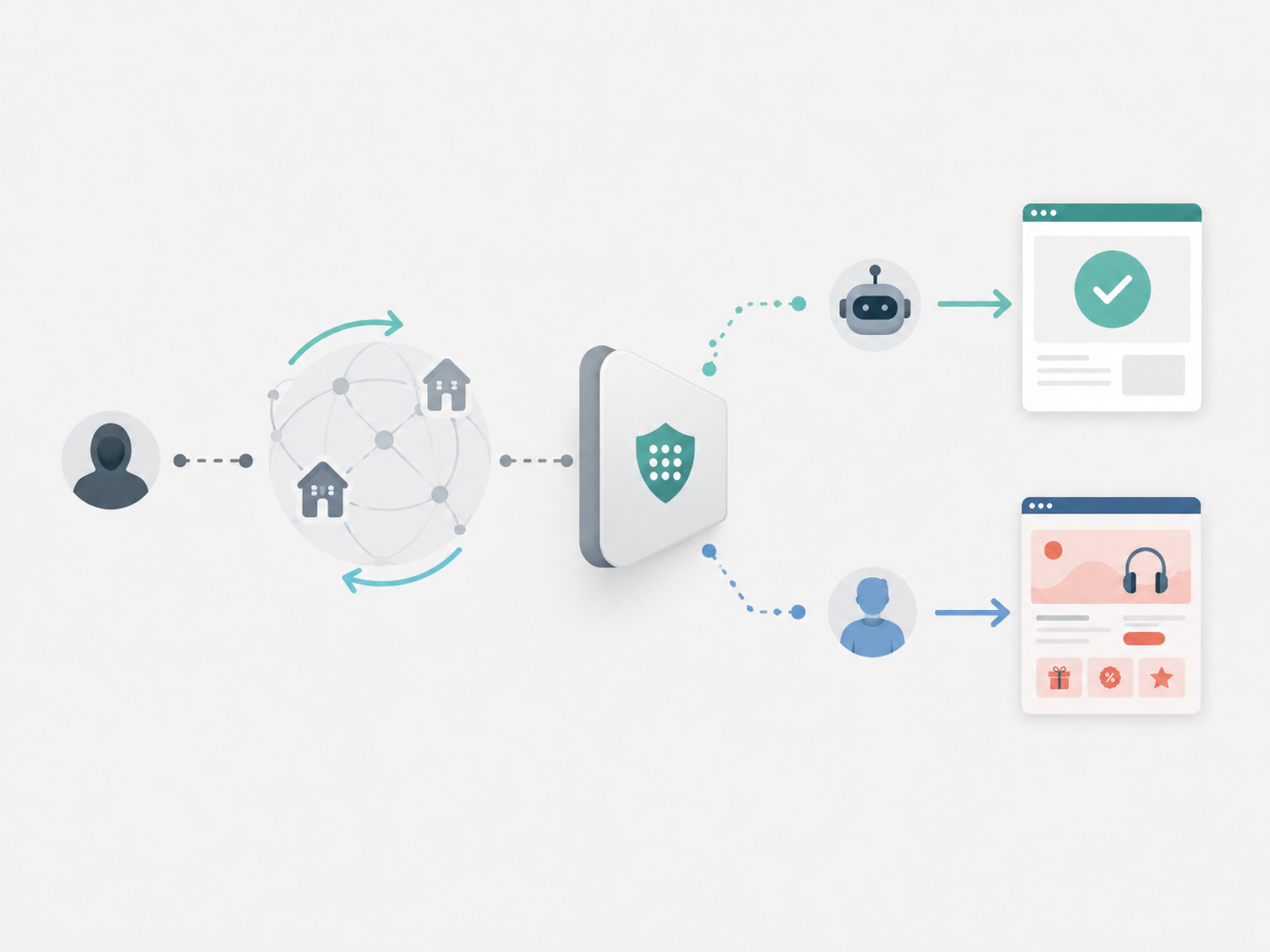
Cloaking has one specific function: to split traffic into two streams. The moderator, bot, and suspicious request - to a safe white page. The target user from the desired GEO - to the offer page. Cloaking.House does a good job with this task, reading dozens of signals for every click: user-agent, behavior, referrer, GEO by IP.
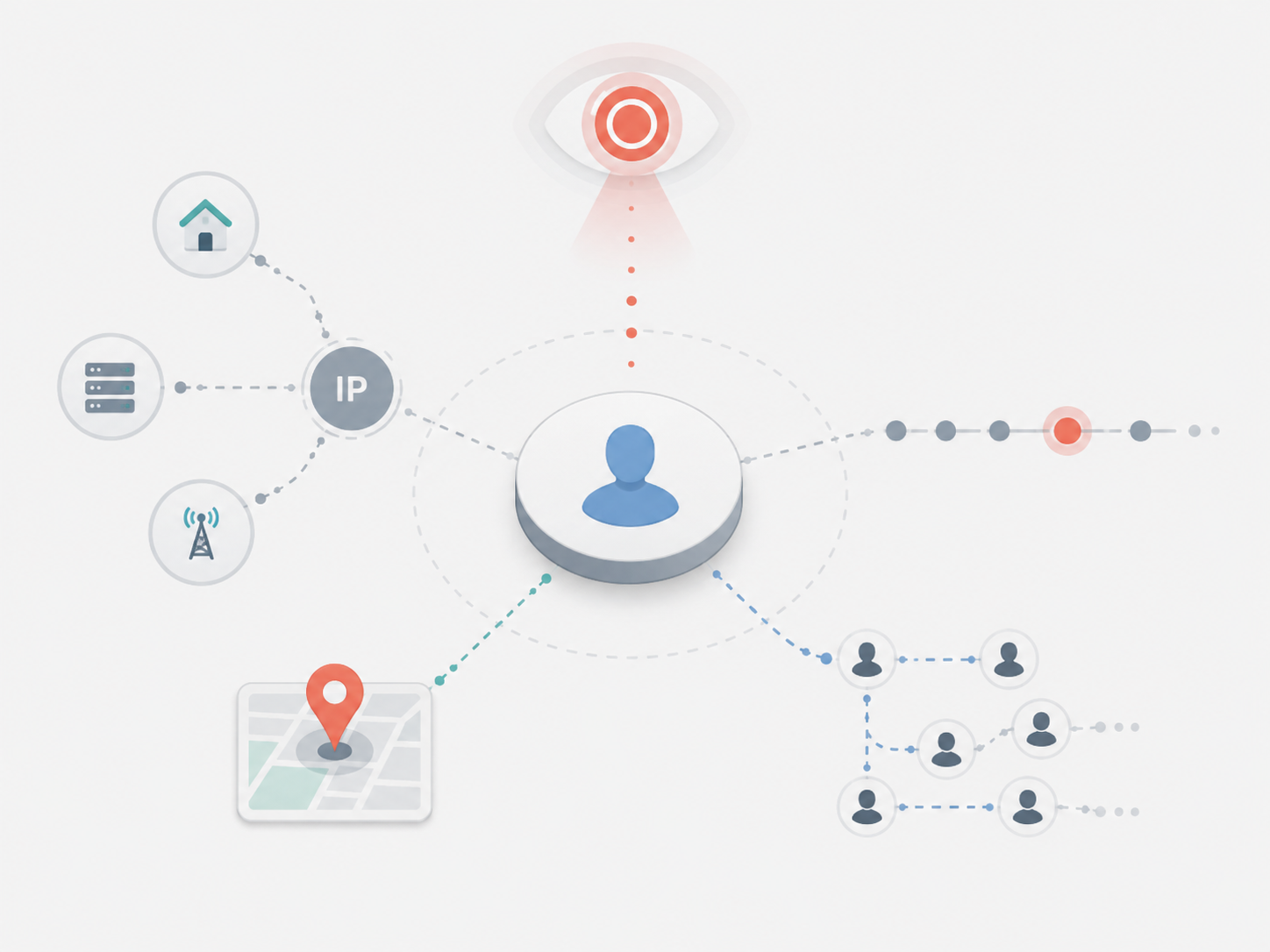 But here lies a limitation: cloaking filters the content that a specific visitor sees. It does not affect what the advertising platform knows about the source of this visitor itself - that is, about the network the click went through, and the history of this network as a whole. And it is precisely this information that increasingly becomes decisive in the fraud detection systems of Meta, Google, and TikTok.
Bottom line: the setup can be configured perfectly in terms of content filtering and still crash - because the system made the decision to block before the cloaking even had time to trigger, simply based on the "reputation" of the IP address.
What the platform sees besides the page content
Modern moderation systems analyze not a single click, but the entire context of the account session:
IP type - datacenter, mobile, or residential (i.e., issued to a regular home subscriber by a provider).
Range history - how many ad accounts have already worked from this IP pool and with what result.
GEO consistency - whether the country/city of the IP matches the targeting GEO of the campaign.
Connection pattern - how typically the account behaves: IP change speed, session stability, activity time.
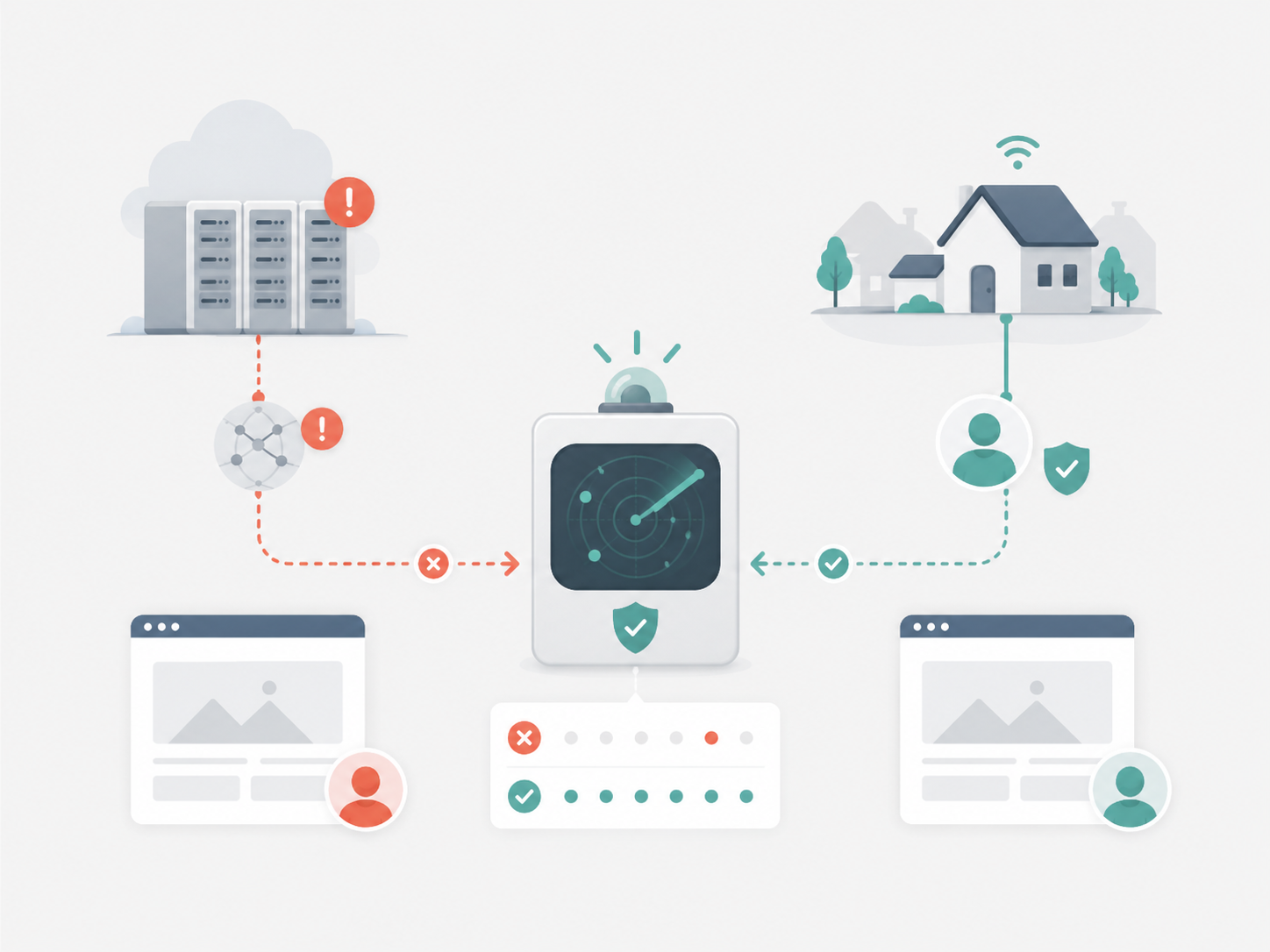 Datacenter proxies fail almost all these points at once: they physically cannot look like a regular home user, and platforms detect such ranges without difficulty - by the very affiliation of the IP with a cloud provider, not by behavior on the site. That is exactly why the "cloaking + cheap datacenter proxy" setup holds up exactly until the first budget scaling, when the system starts looking at the account more closely.
Why a residential IP specifically closes this hole
A residential proxy is an IP address actually issued by an internet provider to a specific subscriber, rather than a rented server in a data center. From the perspective of platform scoring, such an address is indistinguishable from a regular user: it belongs to a "residential" ASN, has a plausible GEO-binding, and is not mass-flagged in other ad accounts - unless, of course, the pool itself is reused by the provider for hundreds of clients simultaneously.
 The quality of the pool is fundamentally important here, not just the formal "residential" status in the plan description. Cheap proxy services often sell access to a limited number of ranges to a huge number of media buyers - and as soon as one client catches a mass ban, the entire reputation is distributed to everyone who uses this same pool.
Services like ArealProxy solve this problem through volume: a pool of tens of millions of residential and mobile IPs across 200+ countries with rotation and targeting precision down to the city reduces the likelihood of the campaign hitting an already "burned" range. For teams that are warming up several accounts in parallel and scaling campaigns, such a reserve is critical - concentrating dozens of profiles on the exact same narrow IP pool kills the setup faster than any mistake in the creative.
 What the setup looks like in practice
Let's take a typical case - launching a dating offer on Facebook Ads.
You create a stream in Cloaking.House, filters are configured for the target GEO and platform - this splits the incoming traffic between moderators and real users.
In parallel, residential IPs matching the targeting country are selected through AreaProxy. They are used for warming up a new ad account, pre-launch testing of the landing page and offer, as well as for background monitoring of competitors - without a single request to datacenter ranges.
Since the pool is residential and the GEO matching is precise, the account session looks to the platform like the activity of a regular local user - and this is exactly what takes the load off cloaking: it doesn't have to compensate for network "red flags" by filtering content.
Both layers operate independently but complement each other: cloaking covers what a specific visitor sees, proxy infrastructure - what the platform knows about the traffic source as a whole.
What to look for when choosing a proxy provider
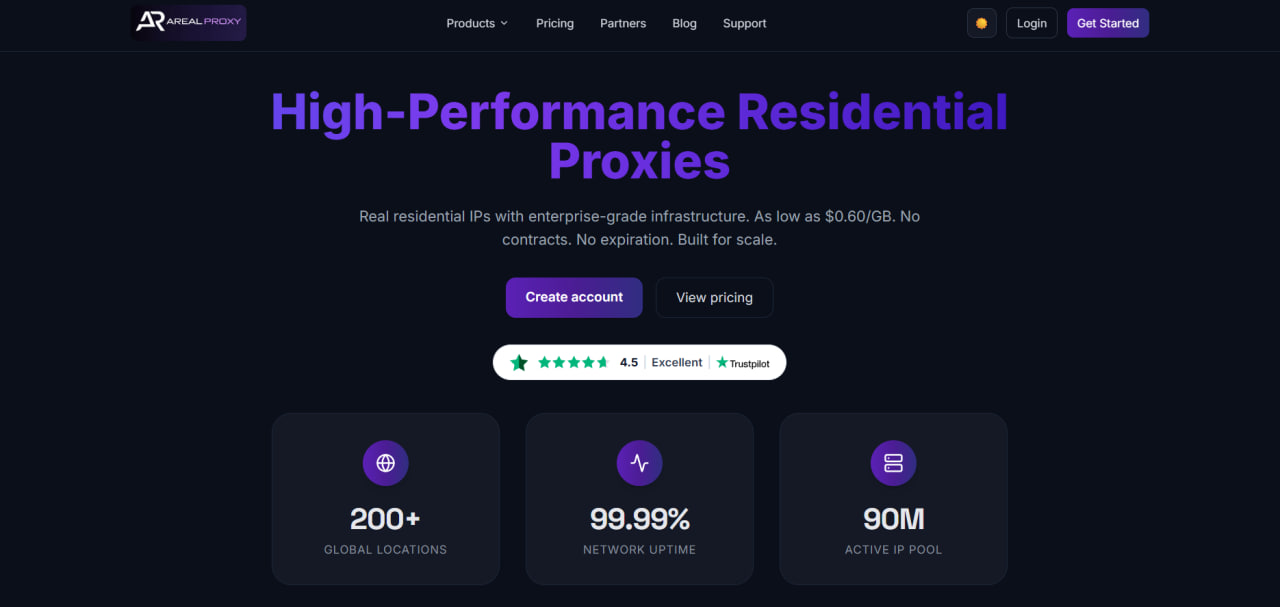
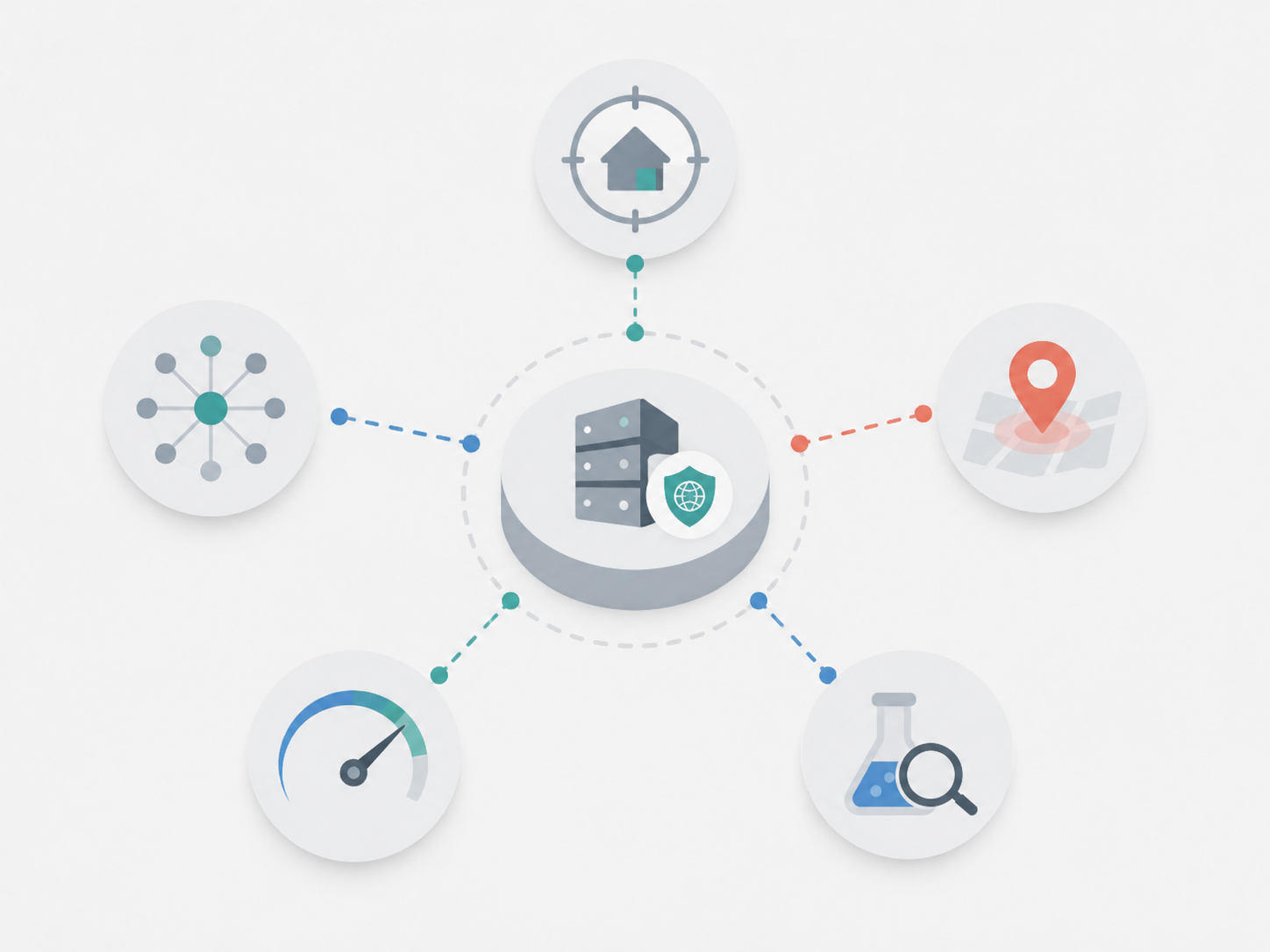 Before integrating proxies into a setup with cloaking, it is worth checking several parameters, not just the price per gigabyte:
Real IP source. Residential status must be confirmed by belonging to a "residential" ASN, rather than just marketing phrasing in the plan.
Size and "cleanliness" of the pool. The larger the range and the fewer clients share the same subset of IPs, the lower the risk of getting an already flagged address.
GEO-targeting precision. For some verticals (gambling, dating), not just the country is important, but precision down to the city - otherwise, the IP GEO will contradict the campaign's targeting GEO.
Flexibility in traffic and speed. Warming up an account and actively running traffic require different bandwidth - it is useful when the plan doesn't force you to overpay for speed that is unnecessary at the warmup stage.
Trial period. The ability to test the proxy on the real campaign flow before purchasing a large volume - this removes the risk of buying a pig in a poke.
For AreaProxy, for instance, the pool exceeds 90 million active IPs covering 200+ countries, with flexible bandwidth from 5 Mbps to 1 Gbps and plans starting from $9.99 for an unlimited plan - this is enough to cover both targeted warming up of a single account and parallel scaling of dozens of profiles without overlapping pools.
Setup specifics for different verticals
Requirements for the proxy part of the setup change noticeably depending on what is being run through cloaking:
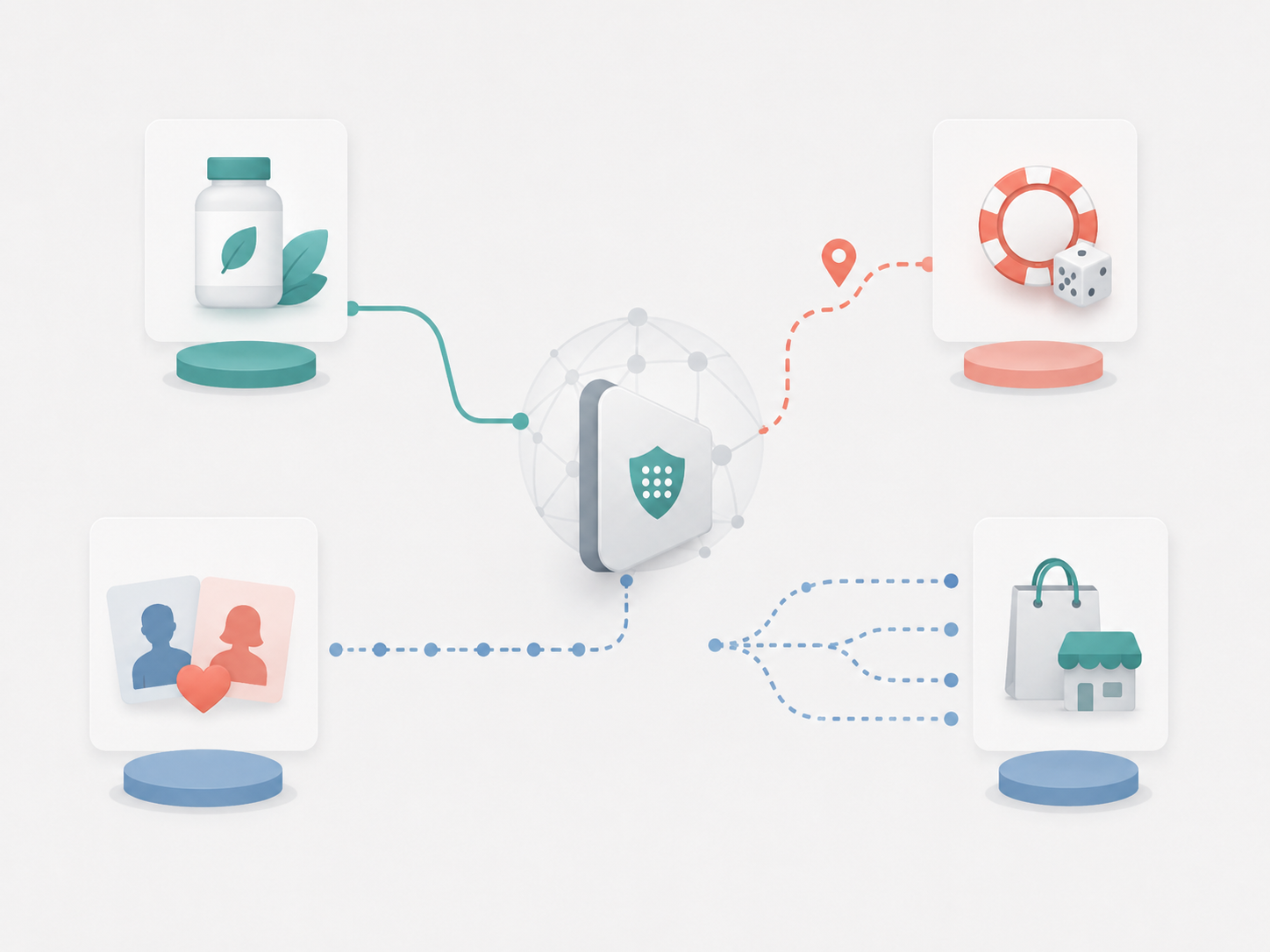
Nutra. The key - IP stability for the entire warmup cycle and the first days of running traffic. Frequent address changes on a "warm" account look atypical for a regular user and are more likely to add suspicions than remove them.
Gambling and betting. Strict moderation and the high cost of a ban require GEO precision down to the city and a stock of backup IPs for replacement - at the first signs of impression restriction, the campaign needs to be quickly switched to a clean address, without touching the already burned one.
Dating. Session consistency is more important here: the exact same residential IP from account registration to actively running traffic reduces the risk of the profile appearing "hastily put together" to the platform.
E-commerce and account farming scaling. The pool volume comes to the forefront - tens and hundreds of accounts must not be concentrated on the exact same IP ranges, otherwise one banned profile will drag down its subnet neighbors.
That is exactly why for teams working in multiple verticals at once or scaling several ad accounts in parallel, not just the "residential" label from the proxy provider is important, but the real volume and diversity of the pool - otherwise, different campaigns start competing for the exact same IPs within their own infrastructure.
Typical mistakes that affect your launch result
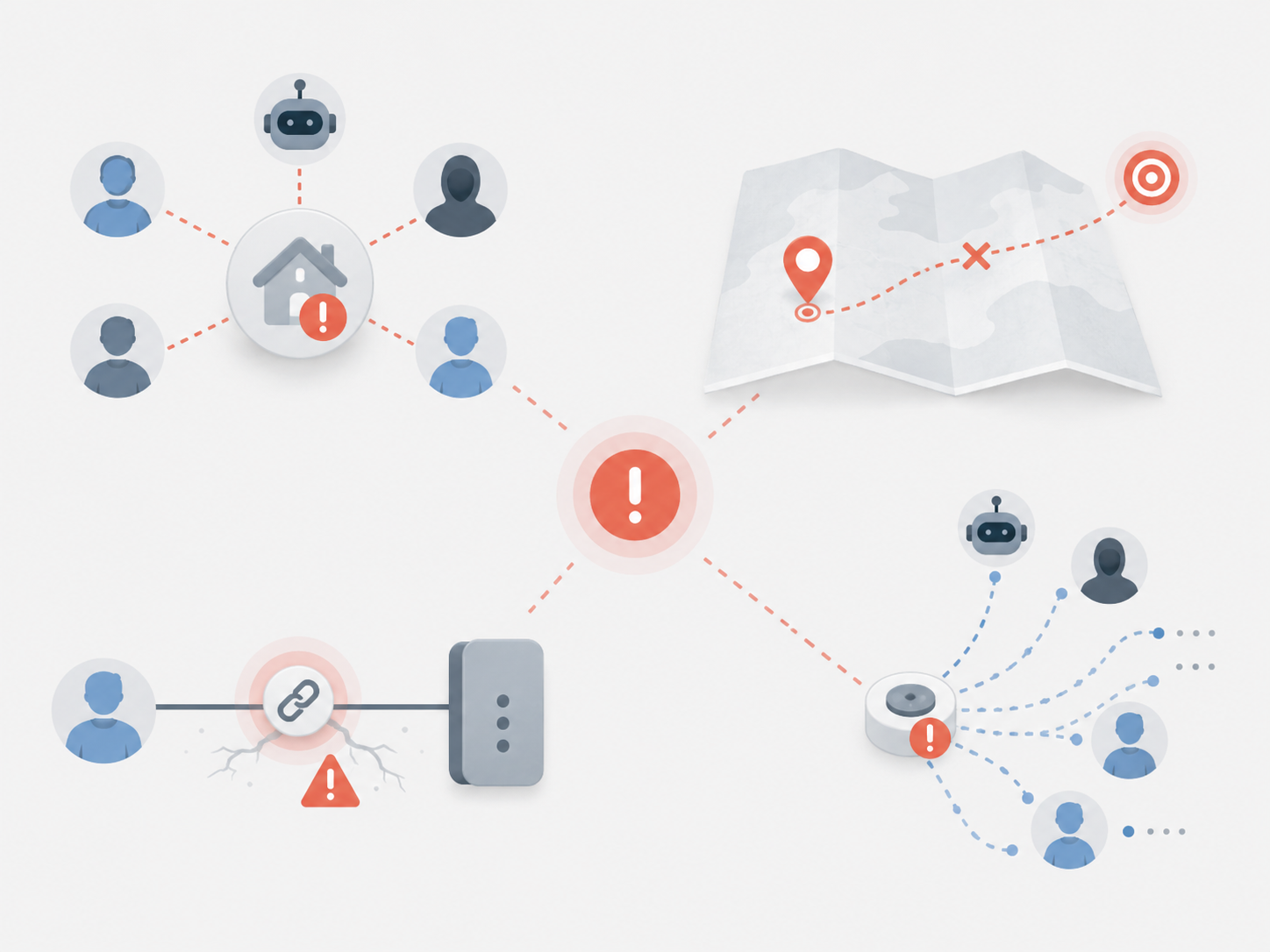
One proxy for several accounts at once. Even a residential IP loses its value if five different profiles are working through it in parallel - the platform quickly links them together.
Proxy and campaign targeting from different countries. The IP GEO must match the ad GEO - otherwise it is a direct contradiction that the fraud system records without any cloaking.
Completely ignoring rotation at the traffic running stage. A static IP that serves traffic for weeks on end without changes accumulates negative scoring over time, regardless of what was run on it.
Skimping on the pool during scaling. Infrastructure that worked fine on 2-3 accounts often falls apart when attempting to scale to 20-30 - simply because the IP range is not designed for such a volume.
Checklist before launching a cloaking + proxy setup
IP is residential or mobile, not datacenter
IP GEO matches the targeting GEO down to the required level of precision
The pool is not mass-reused by other clients of the provider
Rotation is configured for the task: stable IP for warmup, more flexible rotation - for actively running traffic
Cloaking and proxy settings do not contradict each other in terms of GEO and timezone
The setup is tested on a real campaign scenario, not just for connection speed
Conclusion
Cloaking and proxies solve different tasks that happen to end up in the same chain. Cloaking determines who will see the offer. The proxy determines how the platform will see the traffic source itself and the account history. A weak proxy nullifies even perfectly configured cloaking - the fraud system blocks the account earlier than the filtering even has time to trigger. A setup like Cloaking.House + ArealProxy covers both layers simultaneously: one side filters the content, the other - ensures a clean network reputation, upon which this filtering actually makes sense.




Be the first to share your opinion!
We value your feedback — share your thoughts.