


An account can be old, a proxy - high-quality, and the settings - perfectly configured. And still get banned.
The reason is often not in one specific element, but in the inconsistency between them. The advertising platform sees more than just a login, IP, or browser. It gathers dozens of signals into a single picture and evaluates how natural the user's behavior looks.
The device, network, geolocation, language, time zone, action history, and behavior itself must add up to a logical digital history. If individual elements contradict each other, the system gets a reason to increase the risk level - even if each of them looks normal on its own.
That is exactly why two accounts with the same age and the same proxy can get a completely different result: one will continue to work, while the second will be sent for verification or banned.
Let's break down which signals form a digital footprint, why individual inconsistencies become critical, and where the "account - device - network - behavior" setup breaks down most often.
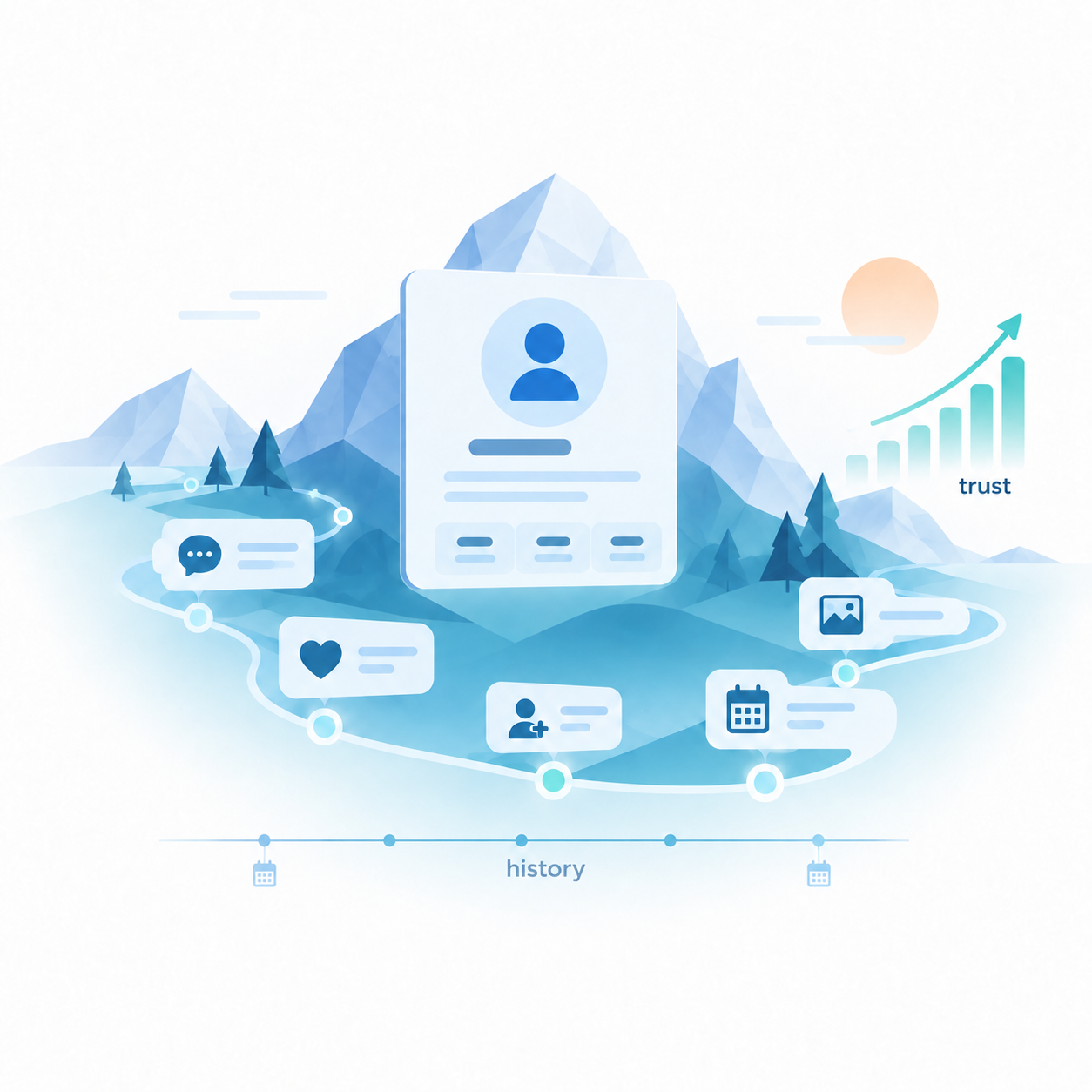
An account is not a login and password, but a history
 When an advertising system or social network evaluates the risk of a ban, it does not look at the account as an isolated unit. It analyzes the overall pattern: what device was used to log in; whether the time zone matches the IP geolocation; whether the interface language changed without reason; how typical the behavior is for this region and niche.
That is exactly why a newly created account with no history and an account with natural activity are perceived by the system completely differently.
The registration age, the nature of previous actions, the presence of chats, likes, and subscriptions form the so-called trust score - the account's trust level.
Anti-fraud systems have long stopped reacting only to technical markers like browser fingerprints. Today, an increasingly important role is played by long-term behavioral analysis.
Practical conclusion: when buying an account, it is important to evaluate not only its current "cleanliness," but also the integrity of its entire history.
You need to consider: the region of registration; IP matching; the absence of sudden device changes; the naturalness of previous activity.
The consistency of a digital footprint is more important than the quality of an individual element
One of the most frequent mistakes - perceiving a proxy, device, and account as independent elements that simply need to be taken as "good".
 In practice, anti-fraud systems look specifically for inconsistencies between the setup elements.
Typical risk factors:
- the system's time zone does not match the IP geolocation;
- the interface language differs from the connection region;
- User-Agent parameters or screen resolution look unnatural;
- the connection does not match the declared network type.
For example, a mobile IP might look suspicious if its behavior is more similar to a data center.
Each individual factor rarely leads to an instant ban. However, the system accumulates risk signals, and a combination of several inconsistencies can lead to additional verification or a ban.
Warm-up: not a ritual, but an imitation of natural behavior
There are many myths surrounding account warm-up. Some people think that waiting a few days is enough, while others perceive warm-up as a formality.
In practice, the point of warm-up is not about time, but about forming a natural behavioral profile.
The working logic is built on several principles:
1. Activity must look natural.
Real users do not log into the app on a perfectly identical schedule. Therefore: the time of activity must vary; there must be pauses; there must be no mechanical repetition of actions.
2. Actions must have semantic consistency.
If an account is created as a personal profile, but from day one it subscribes to dozens of commercial pages of the same theme, it looks suspicious.
What is more natural: a mixed interest in content; a gradual increase in activity in the required niche; a normal ratio of different actions.
3. You need to consider the number of accounts on a single device and in a single environment.
Even high-quality proxies do not save you if the system sees dozens of accounts that: perform the same actions; do so simultaneously; have the same behavioral pattern.
This already looks like a classic pattern of an automated farm.
Multi-accounting: where the line of risk lies
Modern systems are relying less and less solely on IP.
More and more attention is being paid to: user behavior; hardware signals; specific features of interaction with the interface.
The system can analyze: cursor movement; typing speed; characteristics of gestures on touch devices; reaction to notifications.
Therefore, simply separating accounts using different proxies is not enough.
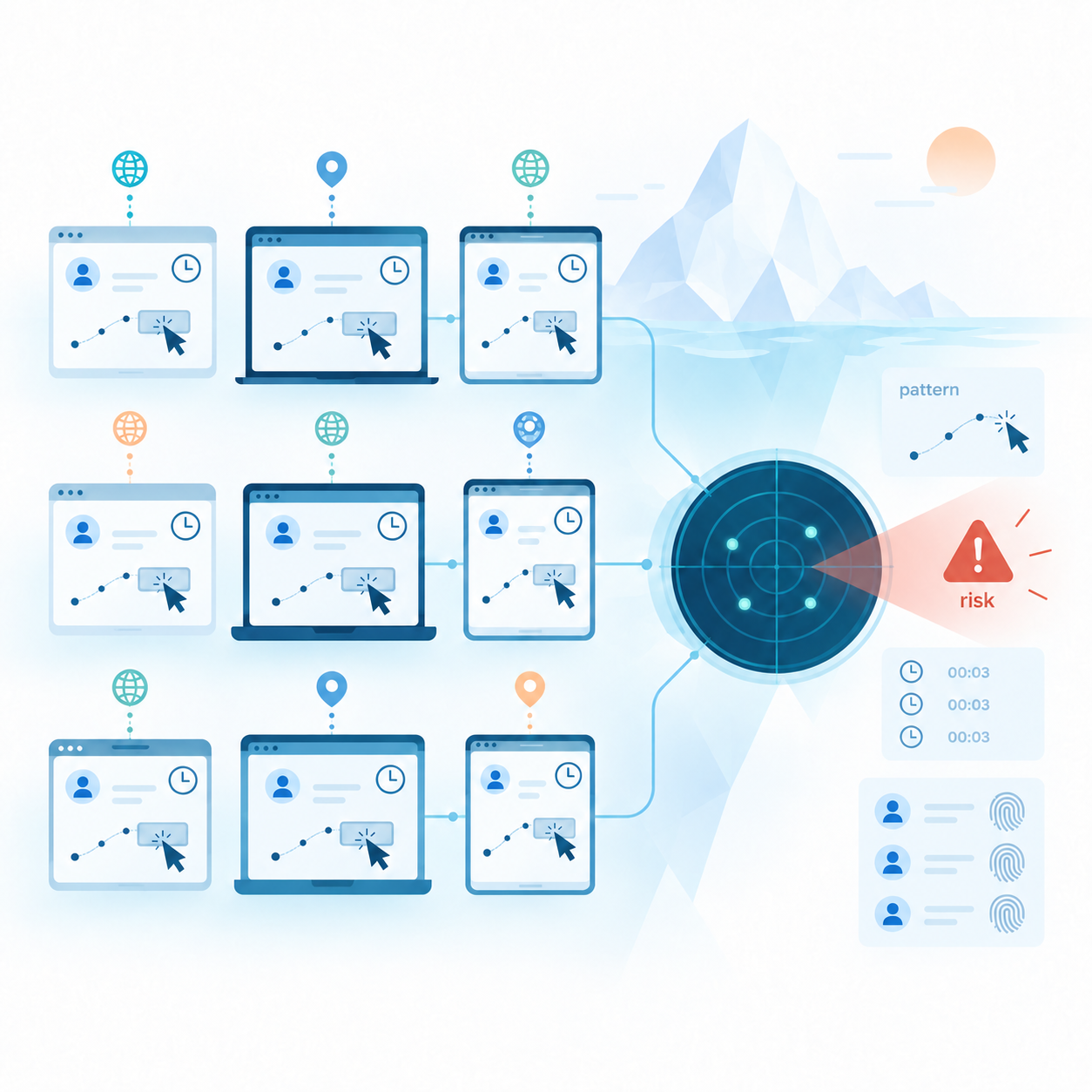 The main mistake - creating identical profiles where dozens of accounts: have identical settings; perform identical actions; are launched with an identical time interval.
It is exactly these patterns that often become the cause of mass bans.
Where to get accounts and why the source determines half the success
Even a perfectly configured environment will not fix the problem if the account itself was initially created with a violation of logic.
For example: wrong region; mass registration; flagged IP ranges; lack of a normal activity history.
Therefore, choosing an account supplier - is not just a matter of purchasing convenience. It is a matter of the initial digital footprint's quality.
When choosing, it is important to consider: registration date; region; verification status; presence of activity before the sale; transparency of the account's origin.
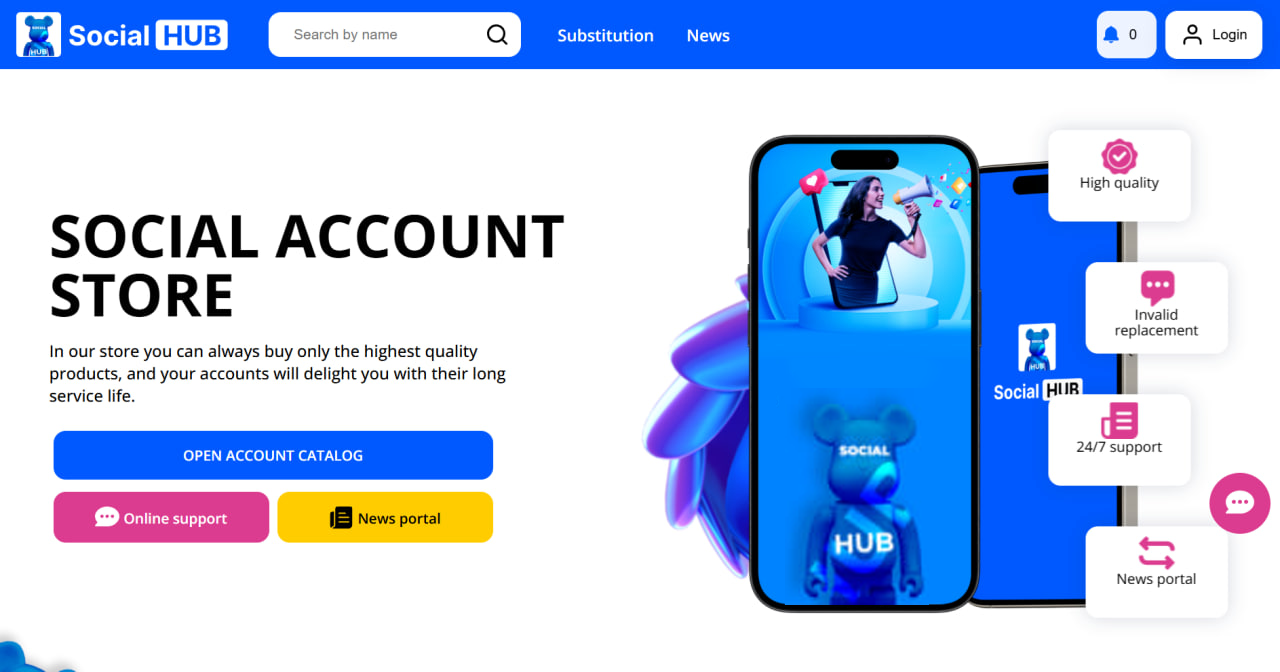 Among the current options, one can highlight SOCHUB, a social account store, which presents a catalog of profiles for various platforms with filters by parameters and descriptions of the accounts' status. This makes it possible to more accurately select the "region - proxy - vertical" setup.
Practical conclusions
If you put everything together into a single system, the correct sequence looks like this:
1. First, the region and vertical are determined.
And only after that, the following are selected: account; proxy; device; environment parameters.
2. Technical consistency is checked: time zone; language; User-Agent; browser parameters; connection characteristics.
3. A natural history of activity is formed.
Not just waiting for a few days, but creating logical user behavior.
4. Only after this does full-fledged work begin.
Such an approach requires more time at the start, but it is precisely what allows you to reduce the number of bans over the long run.
In traffic arbitrage, the stability of a setup is often more important than a one-time result.
Conclusion
An account, proxy, or device on their own do not determine the security of a setup.
Real stability is built on the consistency of all signals:
- technical;
- behavioral;
- regional;
- historical.
Understanding this logic allows you to not just buy accounts, but to create an infrastructure that works more stably and predictably.






Be the first to share your opinion!
We value your feedback — share your thoughts.