


For affiliate marketers, digital marketers, and agencies working with Google Ads in 2026, scaling campaigns has become much harder than before. The problem is no longer just about creatives, bids, or budgets. A campaign can be running perfectly, showing a high ROI—and suddenly, the account gets restricted or banned without warning.
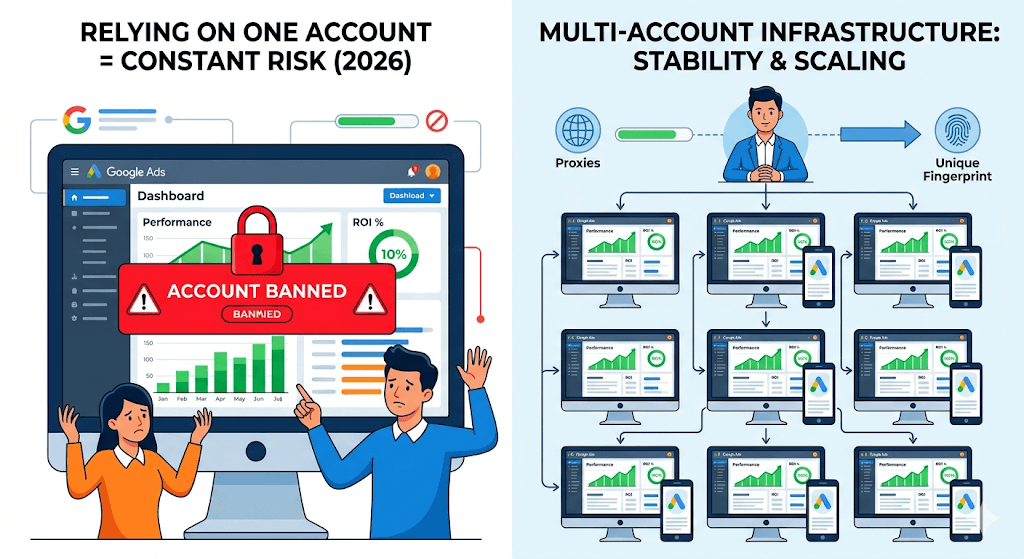
When an entire launch depends on one or a few accounts, it becomes a constant risk. Any check or block can completely stop the workflow. This is why many teams are moving away from the "one account - one campaign" model to a full-fledged infrastructure of multiple accounts with clear environment separation, warming up, and a traffic filtering system.
What is Google Ads Account Farming?
Account farming in Google Ads is the process of creating, preparing, and managing multiple independent advertising accounts to safely scale campaigns.
The essence is not just creating a large number of accounts. The main task is to build separate working environments where each account has its own history, behavioral signals, browser data, and network environment. With the right approach, such accounts become more stable over time and raise fewer suspicions from Google’s systems.
Usually, a full-fledged infrastructure includes:
separate browser profiles;
unique IPs and proxies;
independent cookies and local storage;
gradual account warm-up;
campaign separation;
a traffic filtering system.
Instead of depending on a single account, media buyers distribute the work among several, reducing the impact of potential bans or restrictions.
Why Multi-Accounting is Essential for Scaling
Building Trust in Accounts. New accounts almost always face limits, increased moderation, and additional checks. Gradual warming and natural activity help build a positive history. Accounts with age and stable behavior usually pass moderation more easily and allow for budget scaling without sharp restrictions.
Flexibility in Campaign Management. Splitting launches between different accounts allows you to separately test offers, GEOs, funnels, and creatives. Issues with one campaign do not affect the entire system. This approach is particularly convenient for agencies and teams working across multiple verticals or markets simultaneously.
More Stable Moderation Pass Rates. Warmed-up accounts with realistic behavior are less likely to trigger automated verification systems. This is especially important in sensitive verticals like finance, gambling, or health-related niches.
Main Challenges in Account Farming
Farming Google Ads accounts involves many risks. Google tracks not only logins but also browser fingerprints, IP overlaps, device parameters, geolocation, and behavioral signals.
If multiple accounts use the same environment or overlap by IP, they can be linked. Once linked, the ban of one account can affect the others.Another common mistake is aggressive launching on fresh accounts. A sudden increase in budgets and active advertising immediately after account creation often leads to restrictions.Additional complexity is created by sensitive verticals, where moderation requirements are significantly stricter.
Account Isolation via Anti-detect Browser
Tools like FlashID help create completely independent browser environments and avoid links between accounts.Each profile operates as a separate device with its own:
cookies;
local storage;
fingerprint;
browser parameters;
proxy settings.
Because of this, each account appears to Google as a distinct, real user.
How It Usually Works
Creating Separate Profiles
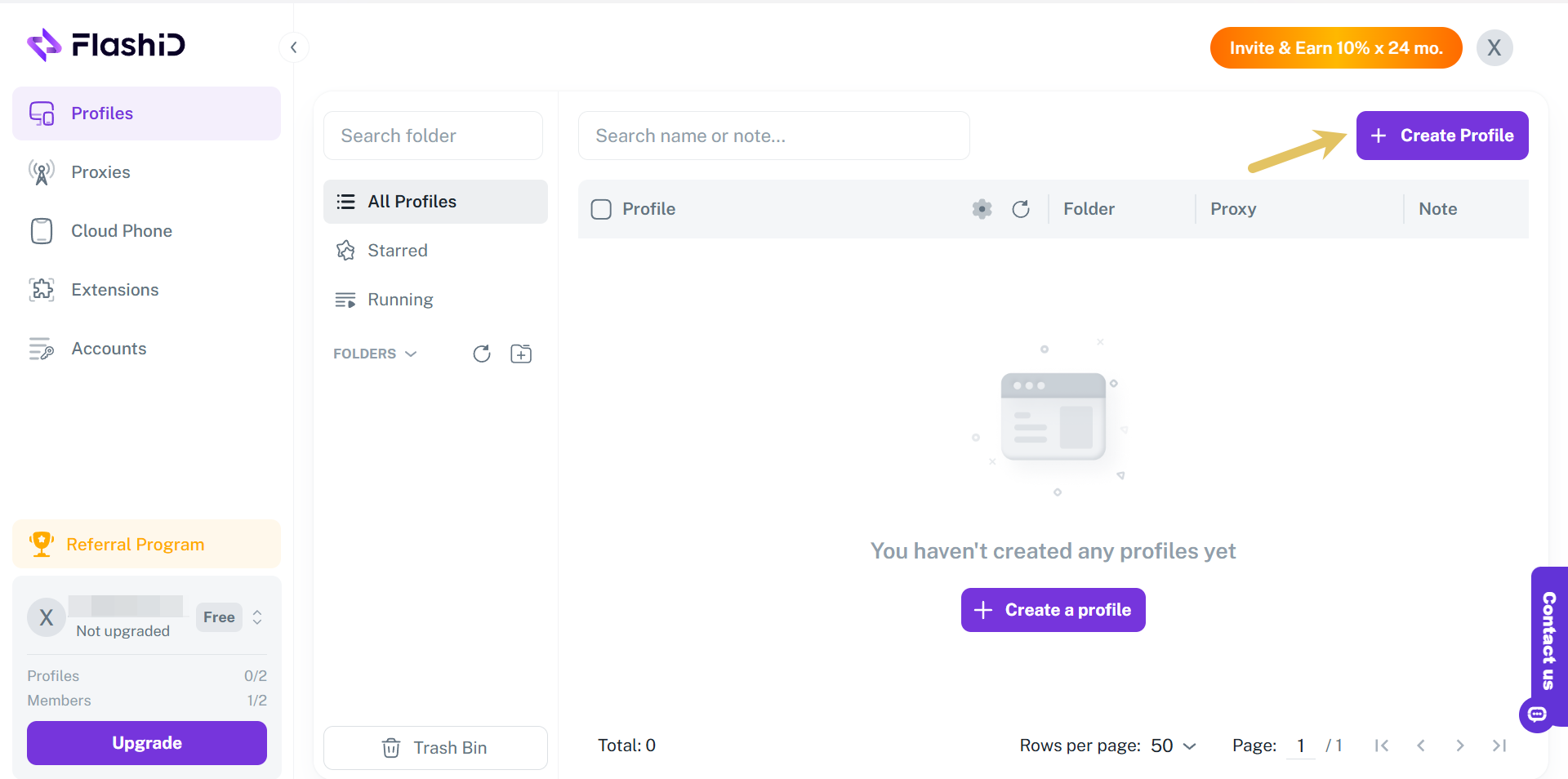
A separate browser profile is created within FlashID for each Google Ads account. Each profile gets its own fingerprint and forms an independent environment.
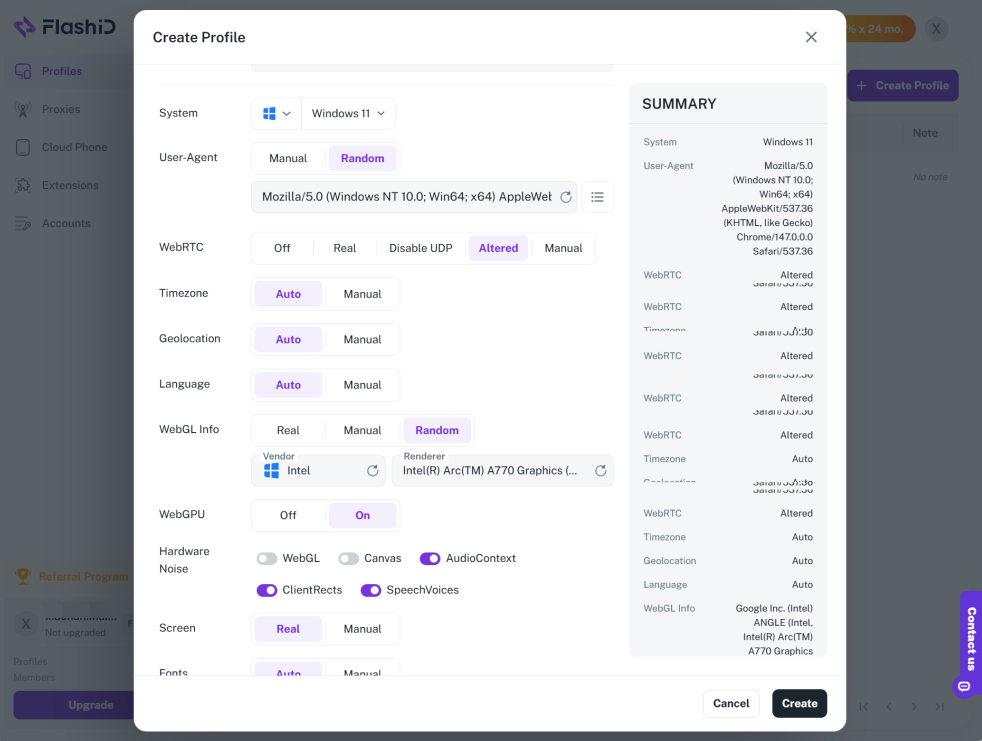
When creating a profile, you can configure a large number of parameters involved in forming the browser fingerprint. This helps reduce the likelihood of accounts being linked and makes the environment's behavior more natural for anti-fraud systems.Typically, when setting up a profile, the following are specified:
operating system;
browser version;
system and browser language;
time zone;
screen resolution;
User-Agent;
Canvas fingerprint;
WebGL parameters;
Audio fingerprint;
WebRTC;
font list;
hardware concurrency;
device RAM volume;
geolocation;
DNS and network parameters.
All these data points form the device's digital footprint, which Google uses to analyze account activity.
Connecting Unique Proxies
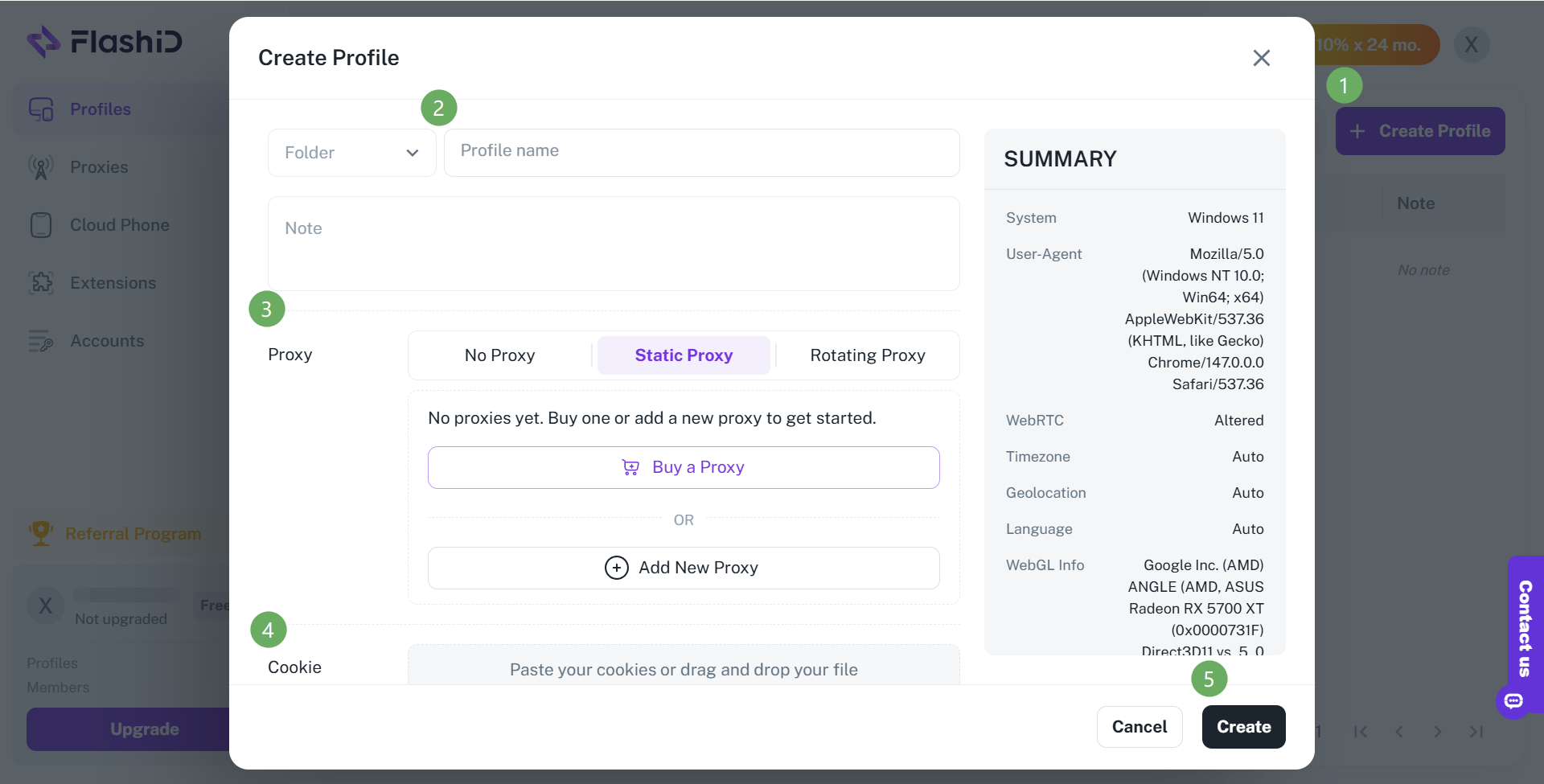
A separate residential or mobile proxy is used for each profile. IP overlap between accounts significantly increases the risk of linkage. FlashID allows you to manage the proxy environment within the system and work with different GEOs.
How to Properly Warm Up Google Ads Accounts
Creating a profile is not enough. A new account requires a gradual warm-up before launching full-scale ads. The main goal of warming up is to demonstrate natural user behavior.
1. Initial Activity PhaseIn the first few days, the account is used only for regular activity:
Google searches;
watching YouTube;
visiting websites;
standard actions within the browser.At this stage, it is better not to launch any ad campaigns.
2. Minimum Launch PhaseAfter a few days, you can start small test campaigns with minimal budgets and safe keywords. Meanwhile, regular activity within the profile continues.
3. Gradual ScalingOnly after the account shows stable operation can you gradually increase budgets and activity. It is crucial to maintain environment consistency: one profile, one proxy, one behavioral logic.
Using Cloaking.House for Traffic Filtering
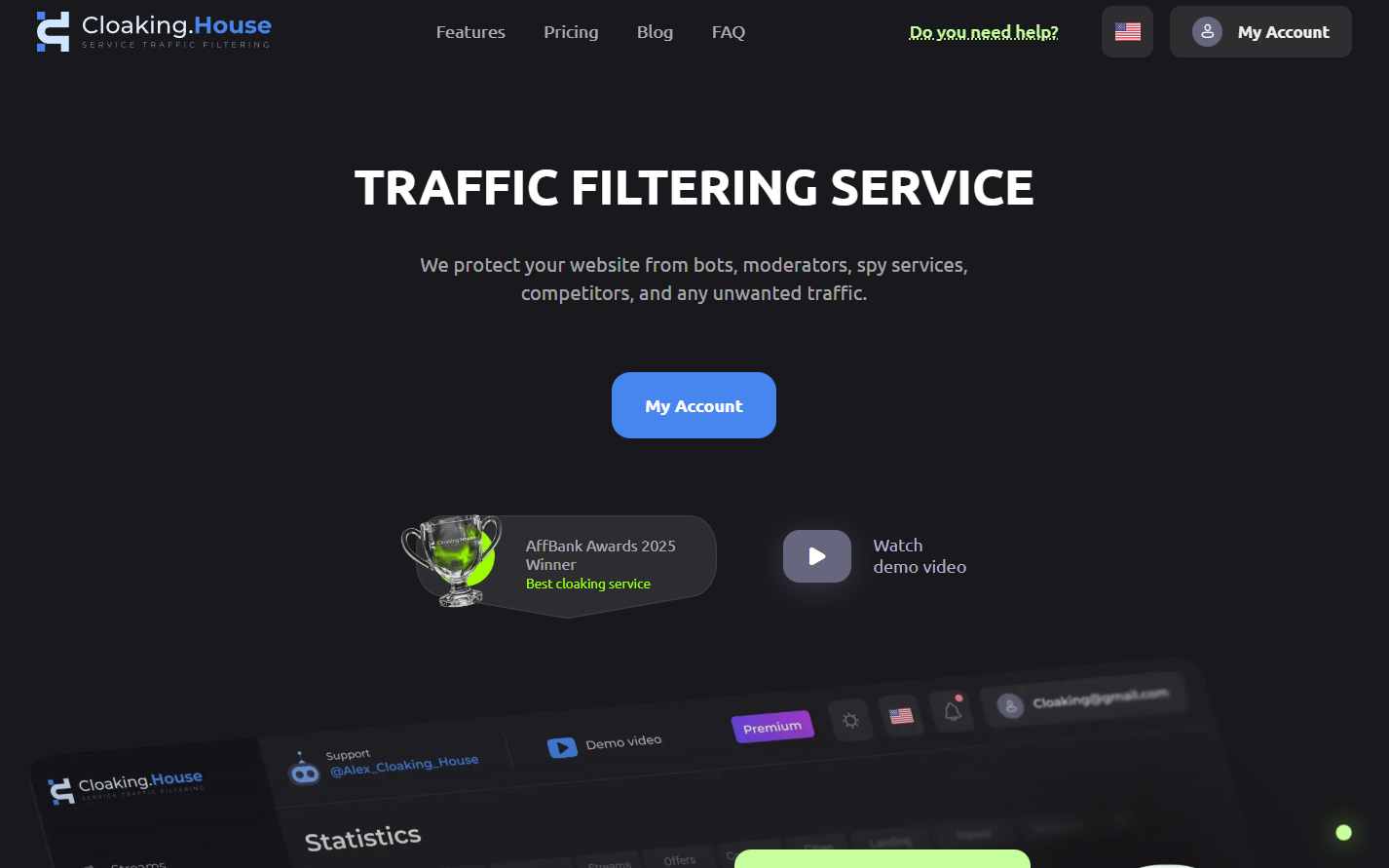
Even with a good infrastructure, problems can arise due to landing pages and ad page moderation. This is where Cloaking.House comes into play. The system allows you to separate real users from checking traffic, showing different content to different types of visitors.
How Traffic Filtering Works
White Page – For moderators, bots, and automated checks, a safe and fully compliant page is shown.
Offer Page – Real users are redirected to the main offer or high-converting landing page.
Cloaking.House analyzes incoming traffic and filters out bots, moderators, proxy/VPN traffic, and suspicious connections from regular users. This helps reduce moderation risks and allows for safer campaign testing in complex verticals.
How to Build Stable Scaling
Successful Google Ads scaling today is built not so much on aggressive launches but on high-quality infrastructure.The most stable systems are usually built on the following principles:
separate environment for each account;
unique proxies without overlaps;
gradual warm-up;
campaign separation;
independent fingerprints;
smooth scaling;
traffic filtering before passing moderation.
When accounts are viewed as long-term assets rather than disposable materials, the system becomes significantly more stable and safer for scaling.
Conclusion
Farming Google Ads accounts is primarily about stability, isolation, and competent infrastructure management. Instead of relying on a single account, teams build a distributed system where each account operates independently.
Using tools like FlashID for browser environment isolation and Cloaking.House for traffic filtering helps mitigate ban risks and more safely scale advertising campaigns.In 2026, stable media buying is no longer about fast launches at any cost, but about an infrastructure capable of withstanding constant pressure from moderation and anti-fraud systems.






Be the first to share your opinion!
We value your feedback — share your thoughts.