


In automation, it is the proxy layer that often determines whether a setup can scale stably or will start falling apart under the pressure of anti-fraud and limits.
A script can be written perfectly. An anti-detect browser can be configured correctly. The action logic can look natural enough. But if the connection source itself looks suspicious, the whole scheme becomes fragile. That is exactly why residential proxies have long become a standard tool for automation, parsing, multi-accounting, and GEO-targeted tasks.
In this article, we will break down what a residential proxy is, how it differs from a datacenter proxy, and why it is so important for modern automation tasks.
What Is a Residential Proxy?
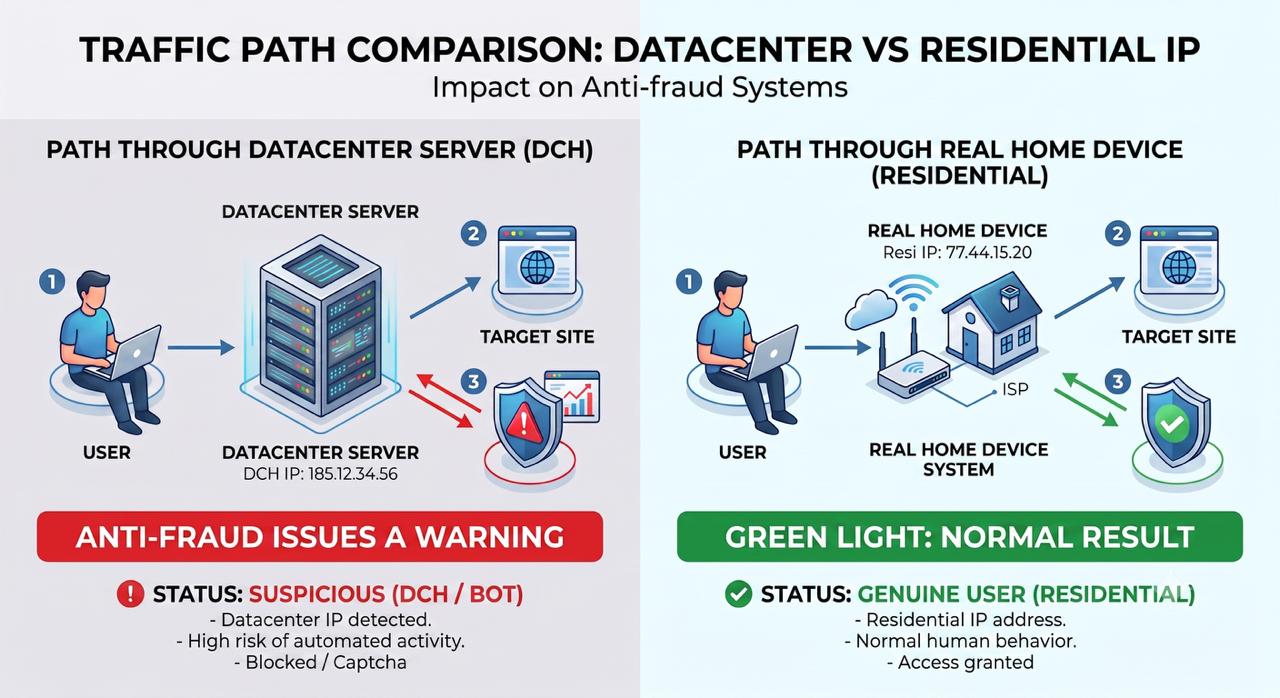
Residential proxy routes your traffic through an IP address assigned by an internet service provider to a real home device.
For the target website, such an IP looks much closer to a regular user connection than a server IP from a datacenter. And this directly affects the trust score, request limits, connection stability, and the platform's overall attitude toward the session.
In practice, a residential proxy does not make automation invisible, but it helps make the network layer more natural. This is especially important when a platform evaluates ASN, geolocation, and the quality of the connection itself.
Why the Proxy Type Matters for Automation
Automation almost always creates repetitive patterns.
Bulk requests, simultaneous sessions, logins, browser actions, regular page checks - all of this attracts the attention of platforms.
As soon as a system starts analyzing not just behavior but also infrastructure, the choice of proxy becomes critical.
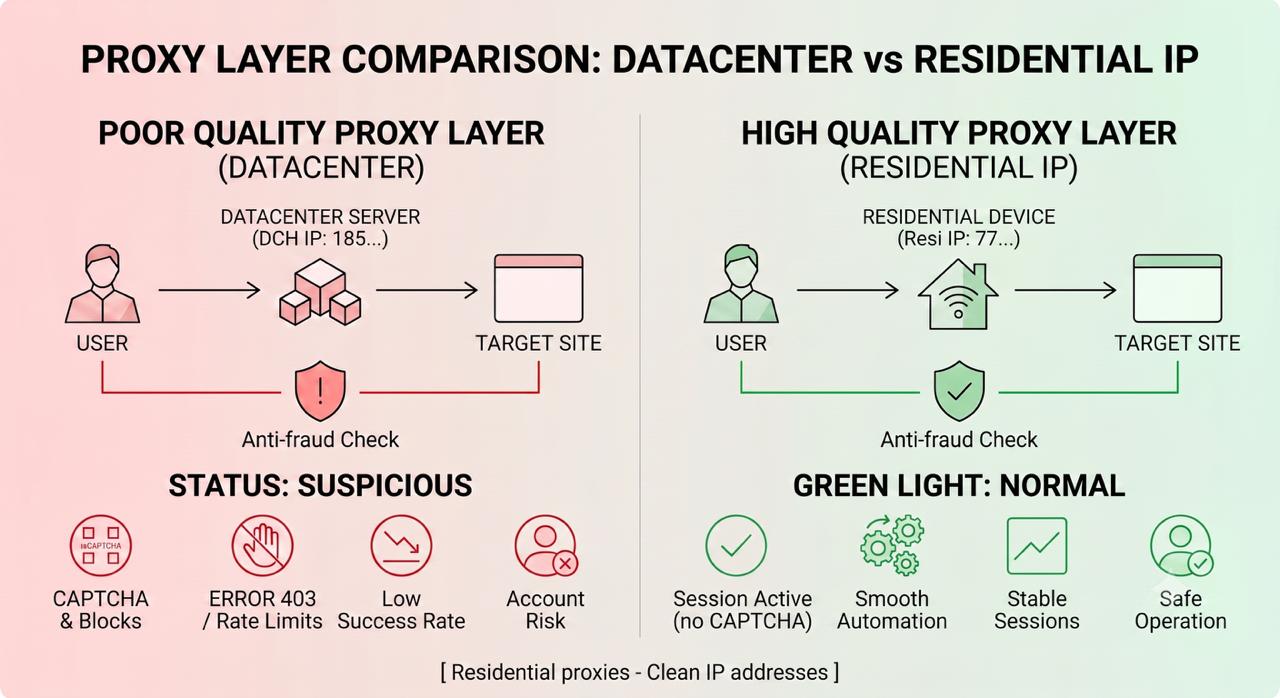
A weak proxy layer usually leads to the following problems:
CAPTCHAs appear more frequently
Rate limits trigger faster
Session stability drops
Success rate during data collection decreases
Risks increase when working with multiple accounts
A higher quality proxy layer gives automation more room to operate. This is where residential proxies show their value.
Key Advantages of Residential Proxies
Higher Trust Level at the Network Layer
A Residential IP is usually perceived better by platforms than a datacenter IP because it comes from the ranges of real internet service providers rather than hosting companies.
More Accurate GEO Model
In many tasks, it is important to see exactly what a real user from a specific country sees. A Residential IP is better suited for localized checks, offer verification, ad review, and gathering region-specific SERPs.
More Stable Browser Scenarios
For account warming, checking ad accounts, researching marketplaces, and browser automation, sticky residential sessions often turn out to be more convenient than constant rotation of server IPs.
More Reliable Performance on Strict Platforms
If we are talking about simple public websites, residential traffic might not even be needed. But when working with marketplaces, social platforms, ad systems, and more sensitive data sources, it usually performs better.
Where Residential Proxies Are Used Most Frequently
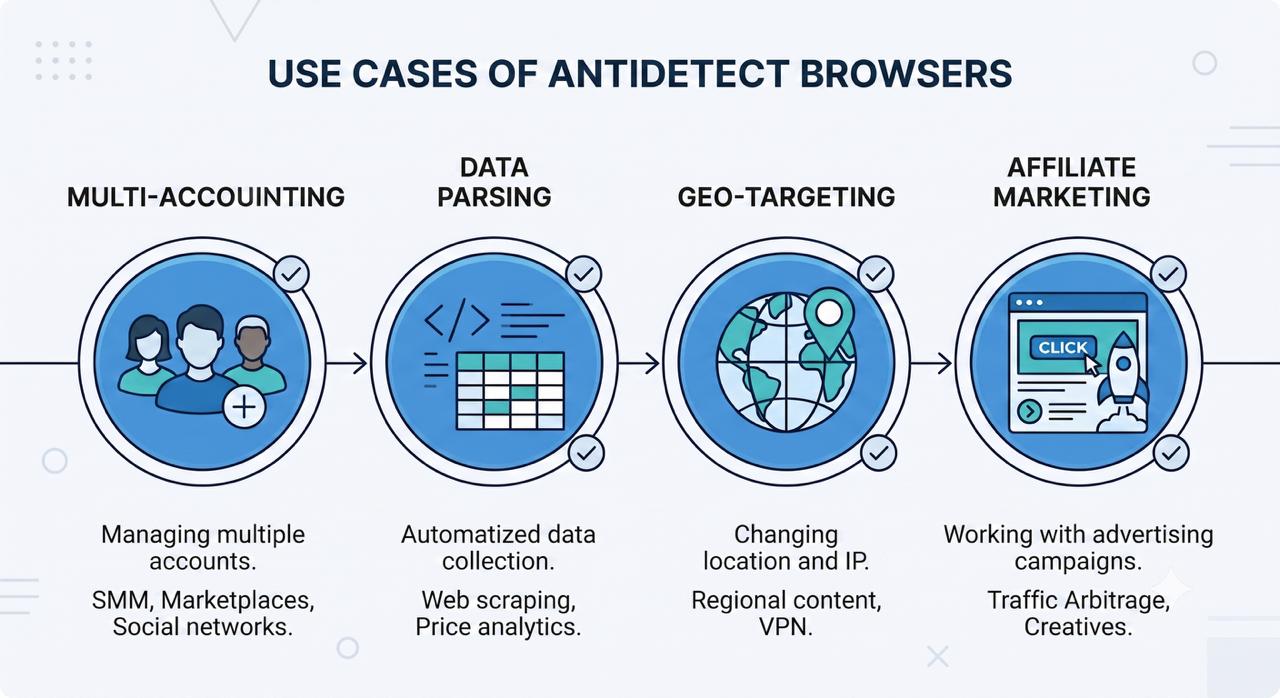
Multi-Accounting
When you need to manage multiple accounts on social networks, ad systems, marketplaces, or messengers, isolation becomes critical. A Residential IP helps separate sessions more naturally at the network layer.
Parsing and Scraping
For high-volume data collection, especially from protected platforms, residential proxies typically provide more stable access and fewer aggressive blocks than popular datacenter ranges.
GEO-Targeted Automation
If a workflow depends on local search results, regional prices, language versions of pages, or country-specific offers, a residential proxy provides a more realistic picture.
Ad Verification and Affiliate Tasks
Marketers and affiliate teams often need to see how creatives, landing pages, and offers are displayed in different countries. Residential traffic allows them to see the picture closer to a real user.
Residential or Datacenter: Which One to Choose?
Datacenter proxies are still useful. They are faster, cheaper, and perfectly suited for low-risk tasks.
Residential proxies become the best choice when:
Account trust is important
The target has a stronger anti-bot system
GEO-realism is critical
Long browser sessions are needed
The cost of a ban is higher than the cost of good IPs
Therefore, the right question is not which proxy is better overall. The question is which one fits a specific goal and workload.
What to Check in a Residential Proxy Provider
Not every residential proxy service is equally useful for automation. Before choosing, it is worth evaluating:
pool size and country coverage
availability of sticky sessions
support for HTTP, HTTPS, and SOCKS5
connection stability under load
compatibility with browser automation and scraping tools
For teams working across multiple GEOs and solving different tasks, it is not just the pool number that matters, but the practical suitability of the service.
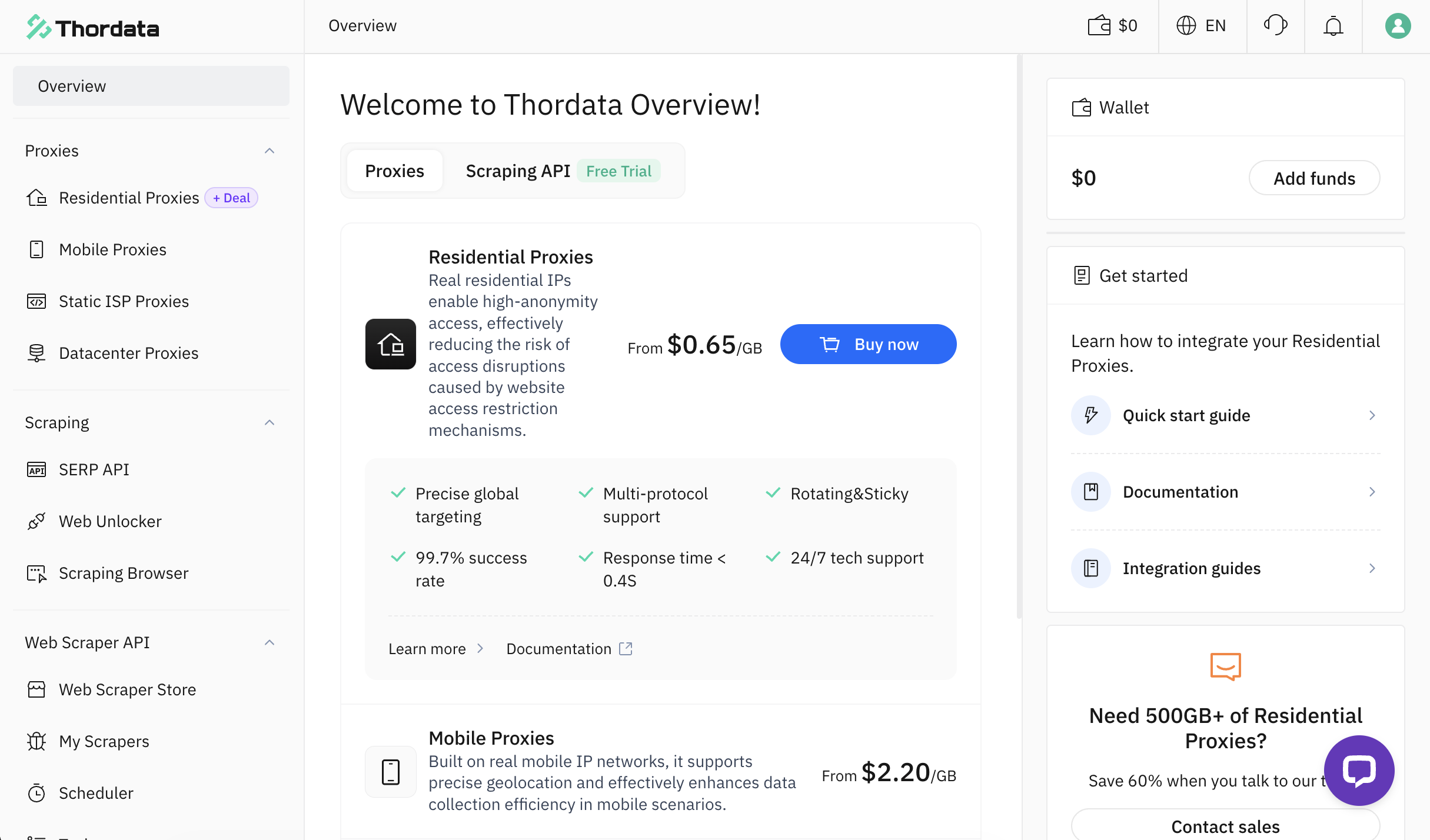
The residential proxies network by Thordata is geared toward teams that need scale, GEO coverage, and compatibility with typical automation scenarios. The service offers:
more than
60M+residential IPscoverage in
190+countriessupport for
HTTP / HTTPS / SOCKS5sticky sessions for longer operations
scenarios for scraping, browser automation, multi-accounting, and GEO checks
For affiliate infrastructure, ad verification, market research, and automated browsing, this looks like a practical set of features without unnecessary complication of the entry point.
Conclusion
A Residential proxy is not just another type of proxy. In many automation scenarios, it is what determines whether sessions will be stable, natural, and scalable.
If the goals are simple, a datacenter IP might be enough. But when trust, localization, and session continuity are important, a residential proxy becomes a more effective choice.
And if the task is to make the automation stack more resilient on strict platforms, then Thordata looks like a completely reasonable option to evaluate.






Be the first to share your opinion!
We value your feedback — share your thoughts.