


Every year someone declares push traffic dead. And every year there are buyers who quietly drive it with a profit, while everyone else is fighting for the Facebook auction. Let's figure out what is actually happening with the push channel in 2026 - without the hype in both directions.
What is push traffic and why does it even exist
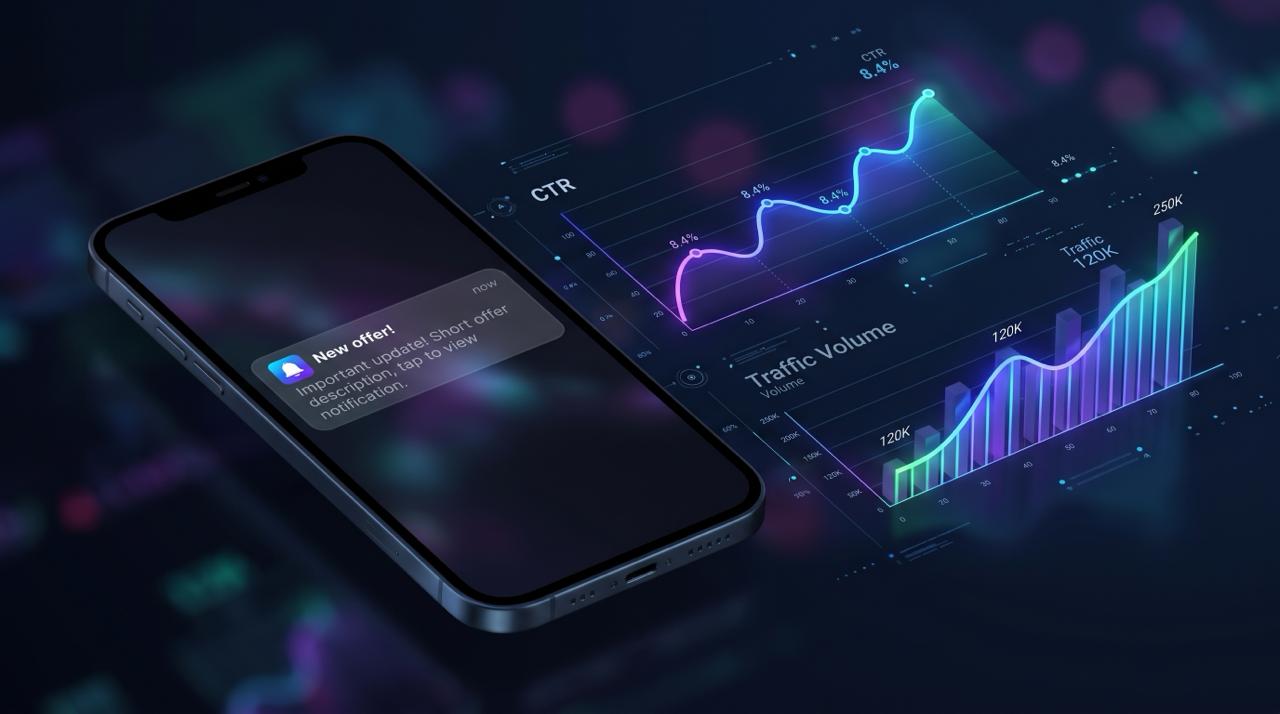
Push notifications are a subscriber base. A user once agreed to receive notifications from some site (news, gaming, file hosting), and now this site or traffic broker can send them ads directly to their phone or desktop. An ad looks like a system notification: an icon, a title, a short text, sometimes an image.
This is not targeted advertising. There are no ML algorithms that optimize for you. There is a subscriber base, your creative, and your bid.
Push works differently than Facebook - and this is its main feature, not a flaw.
Why many people think push is dead
There are several reasons, and they are all real.
Base degradation. Users who subscribed to push 3-5 years ago have long been accustomed to ignoring notifications. The CTR has dropped. Where in 2019 it was 3-5%, now 0.3-1.5% is a normal indicator.
Banner blindness. Android and iOS system notifications have become smarter - they group alerts, and advertising ones drown among messengers and apps.
Traffic quality issues. Some networks drive bots or fraudulent clicks. Without proper filtering - you pay for garbage.
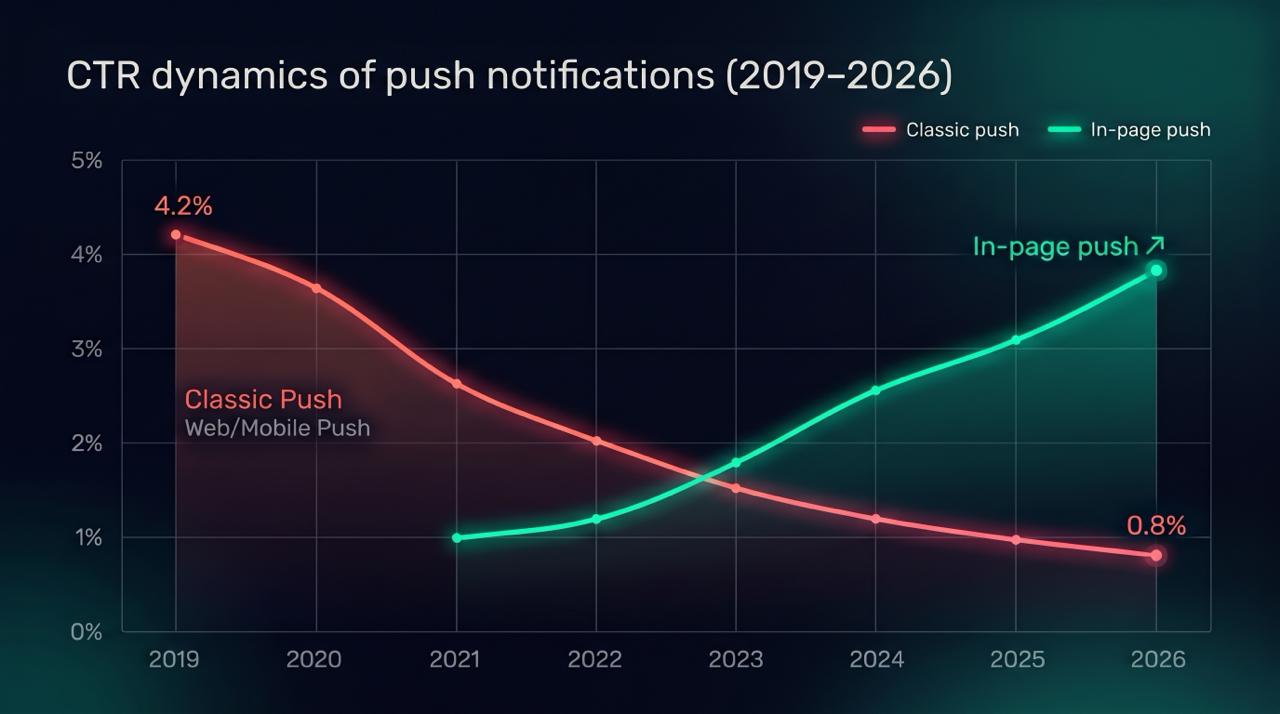
But here is the problem: most people talk about classic push. And the market has long been divided into several formats.
Push traffic formats in 2026: what is relevant
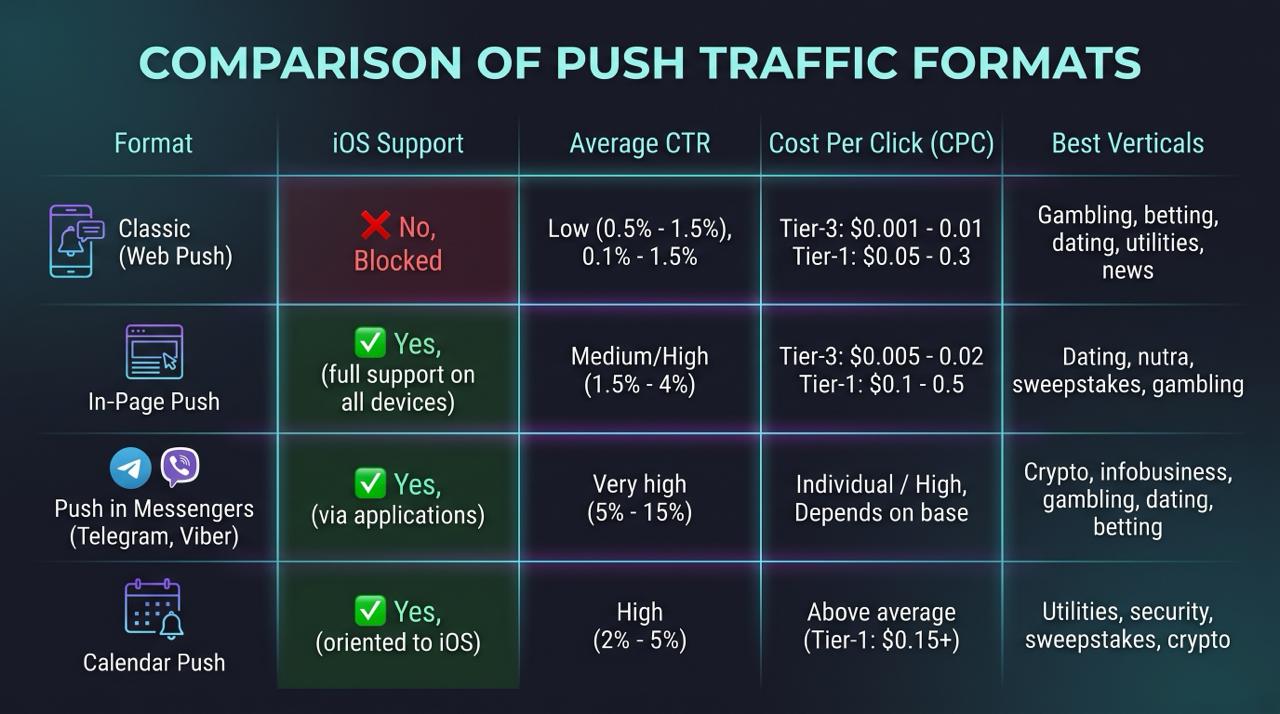
Classic push (Web Push) - the very notification that arrives after subscribing on a site. The CTR is low, but the volumes are huge, and the cost per click is pennies. CPC in Tier-3 GEOs: $0.001-0.01. In Tier-1: $0.05-0.3.
In-Page Push - this is no longer an OS notification, but a banner inside a site that simulates a push notification. It works on iOS (classic push is blocked there). The CTR is higher, the traffic is warmer. It has become the standard for dating and nutra.
Push in messengers - Telegram bots, Viber mailings. Technically a different tool, but the logic is the same: subscriber base + mailing. The ROI can be very high with a quality base.
Calendar Push - subscribing to notifications via the iOS calendar. Exotic, but still converts in some niches.
Where push actually works in 2026
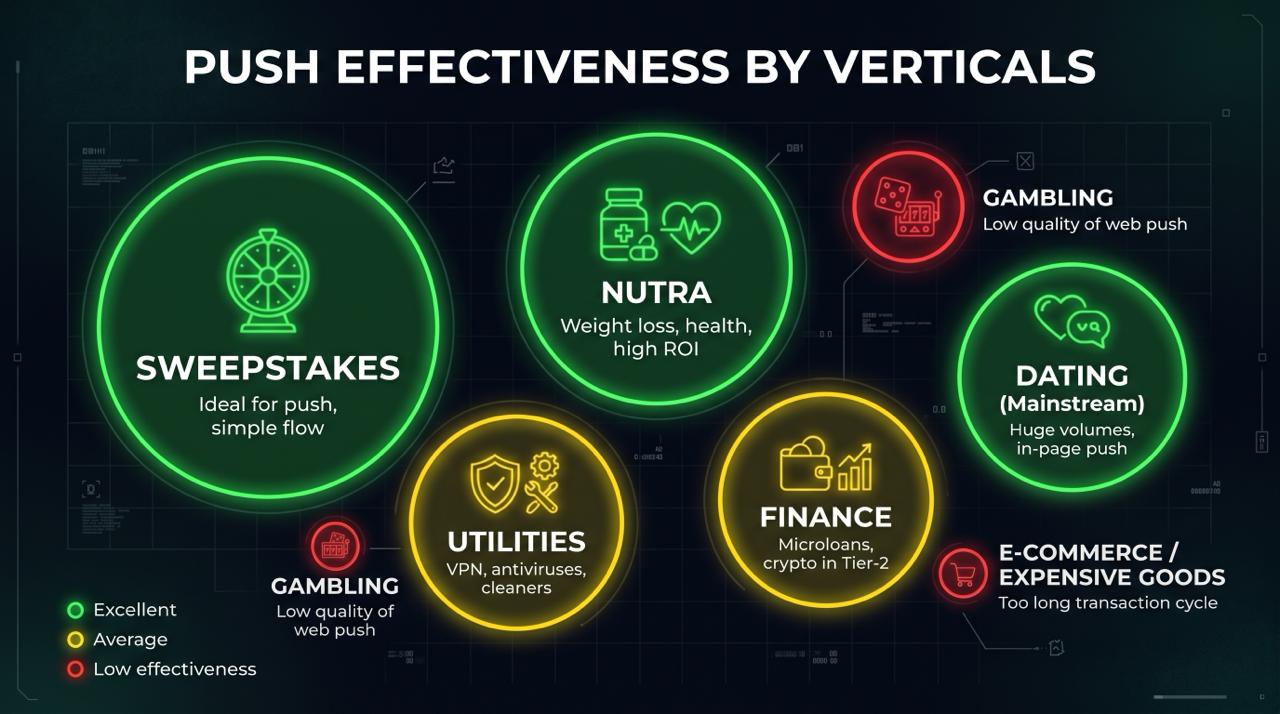
The channel is not universal. There are verticals where it consistently yields ROI, and there are those where you shouldn't meddle.
Works well:
- Nutra - especially weight loss and men's health. A short title with a pain point ("Belly not going away?") and a transition to a pre-lander yield good conversion in LatAm, Asia, and Eastern Europe.
- Sweepstakes - one of the best formats for push. The mechanics are simple: "You have been selected for an iPhone 16 giveaway", click, form, lead. Cheap traffic + simple offer = a working setup.
- Dating (mainstream) - especially in-page push. "Anna from your city wrote to you" still works, and the traffic volumes here are enormous.
- Utilities - VPNs, antiviruses, cleaners. "Your phone is infected" - a classic of the genre.
- Finance (microloans, crypto in Tier-2 GEOs) - with a careful approach to the offer.
Not worth it:
- Gambling via web push - the audience quality is too low for deposit conversions.
- Any offers with a long decision-making cycle.
- Expensive goods - a person who clicked on a notification is not set up for a major purchase.
The main problem of push traffic - and how smart buyers solve it
The main pain of push is traffic quality. There are many bots, VPN users, and non-targeted clicks in networks. You pay per click, but some of these clicks will never reach a real conversion.
Experienced buyers solve this in two ways:
The first - they only work with proven networks with anti-fraud systems (PropellerAds, RichAds, Adcash). The traffic there is cleaner, but more expensive.
The second - they filter traffic on their side. This is critically important: before letting a user go to an offer, you need to check whether they are a bot, a VPN user, or a monitoring service.
This is where cloaking becomes not just a protection against moderation, but a traffic quality tool.
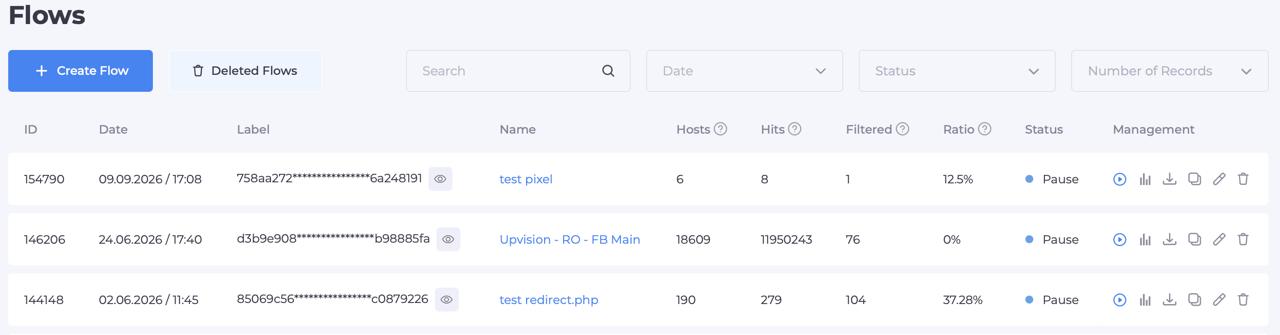
How to set up filtering for push traffic in Cloaking.House:
Step 1. Create a new Flow. In the White Page field, specify a neutral page - a simple landing page or a placeholder. Offer Page - your offer.
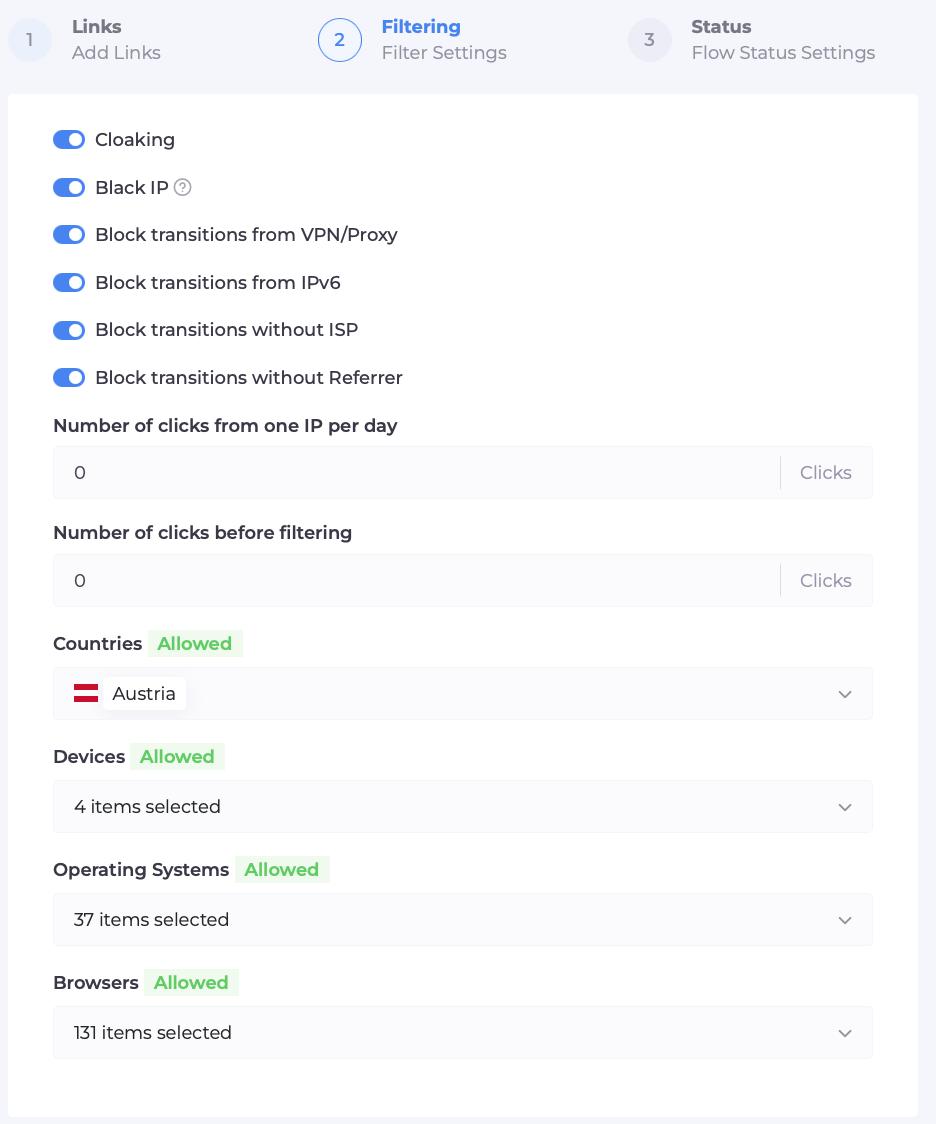
Step 2. Enable all filters.
Step 3. In the "GEO filter" section, restrict traffic only to targeted countries. Push networks often drive mixed GEOs, even if you selected a specific country.
Step 4. Monitor the "Clicks" section in real-time after launch. If you see 50%+ filtered - this is normal for push. If you see 80%+ - loosen the filters.
Economics: real push numbers in 2026
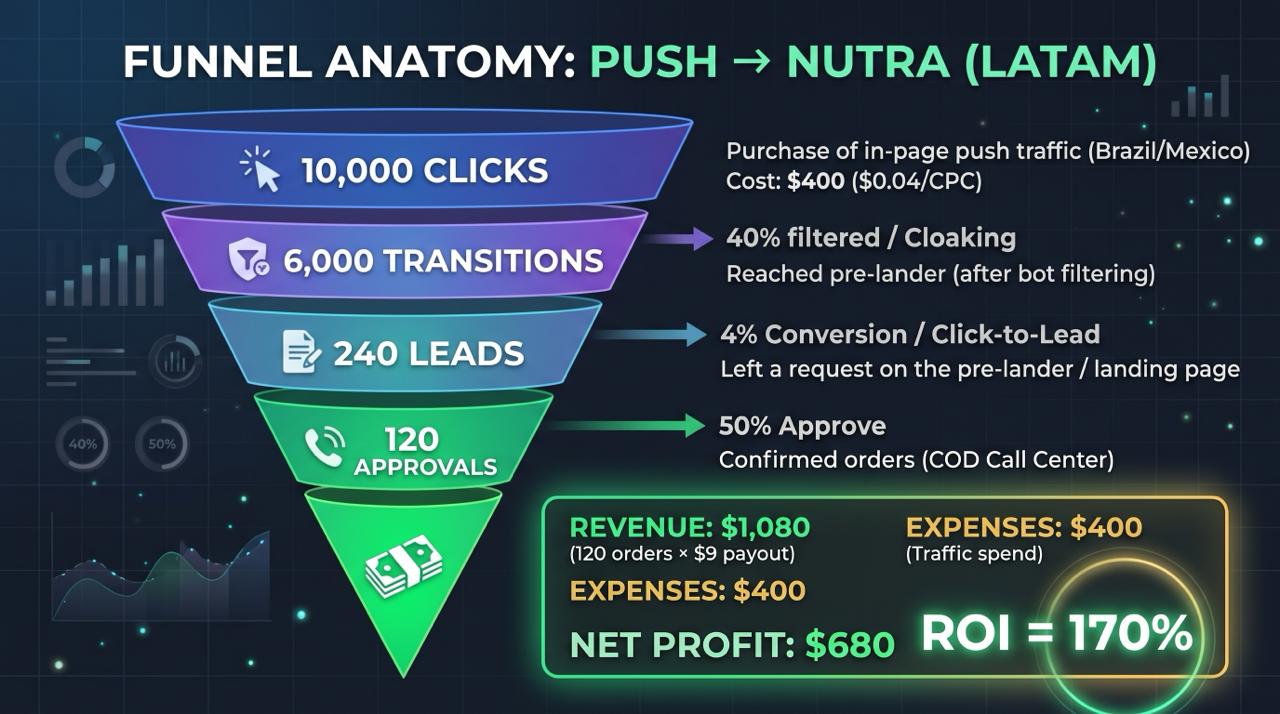
To not be unfounded - the approximate economics of a working setup:
Setup: nutra (weight loss) + in-page push + LatAm (Brazil, Mexico)
- CPC: $0.015-0.04
- CTR: 0.8-1.5%
- Cost of 1000 clicks: ~$15-40
- Click to lead conversion: 3-6%
- Lead cost: $0.5-1.3
- Offer payout: $7-12 (COD, Brazil)
- ROI with a good setup: 120-250%
This is not fiction - these are real figures with filtered traffic and a normal pre-lander. The key word is "filtered".
Is push dead? No. But it requires discipline
Push traffic does not give easy money - it has long been gone everywhere. But it is an accessible, scalable, and relatively cheap channel that works in the right hands.
The formula is simple: quality network + normal pre-lander + strict traffic filtering + the right vertical = a live channel with a good ROI.
Those who say "push is dead" - either do not know how to handle it, or do not filter what is pouring on them.
Start with 7 days for free in Cloaking.House and see how much garbage is going into your campaigns - the result will surprise you.






Be the first to share your opinion!
We value your feedback — share your thoughts.