


If you run paid traffic, the survival of your campaign is determined by two things: the quality of your IP addresses and how you pass moderation on ad platforms. Today this is more relevant than ever, as automated bots generate over half of all web traffic, and advertisers risk losing over $100 billion to ad fraud in just one year. Proxies for affiliate marketing and a reliable cloaking service are no longer optional tools - they are the foundation of any serious media buying stack. This guide explains how residential, mobile, and datacenter proxies work in traffic arbitrage, how they combine with traffic filtering from Cloaking.House, and how the Dexodata network suits campaigns in the Nutra, Gambling, Betting, Dating, Crypto, and Mobile Apps verticals.
Why proxies determine the fate of an affiliate campaign
Ad platforms and affiliate networks closely monitor IP address reputation, and conditions are getting stricter: since bots make up the majority of web traffic, filters are configured to consider anything that looks like public or low-trust addresses as suspicious. Launching multiple accounts, warming them up, testing offers by country, and checking the funnel through the eyes of a local user require clean IP addresses that are not shared with thousands of banned accounts. Reused or low-trust IPs send campaigns to verifications, lower account trust, and burn budget. Under such conditions, the type of proxy and targeting precision decide everything, and the right choice depends on your vertical.
Cloaking.House in detail
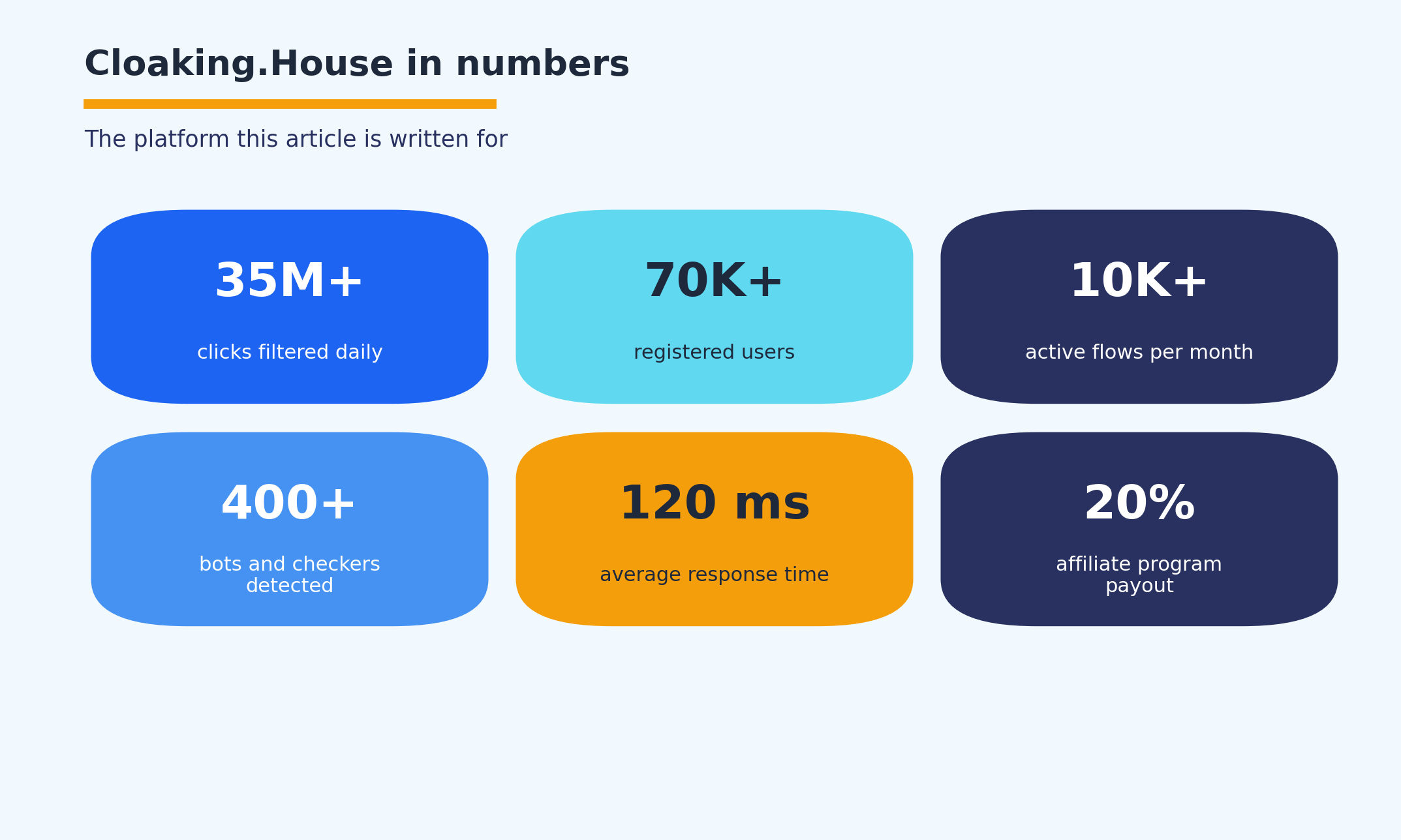
Most readers are already using Cloaking.House, so it is worth assessing its scale. It is a traffic filtering service that automatically divides visitors into targeted and non-targeted: real users are directed to the Offer Page, while moderators, bots, and suspicious traffic land on a safe White Page. The platform analyzes the IP address, device, browser, geolocation, VPN/proxy usage, and other signals. The service was recognized as the Best Cloaking Service at the AffBank Awards 2025.
How cloaking and proxies work together
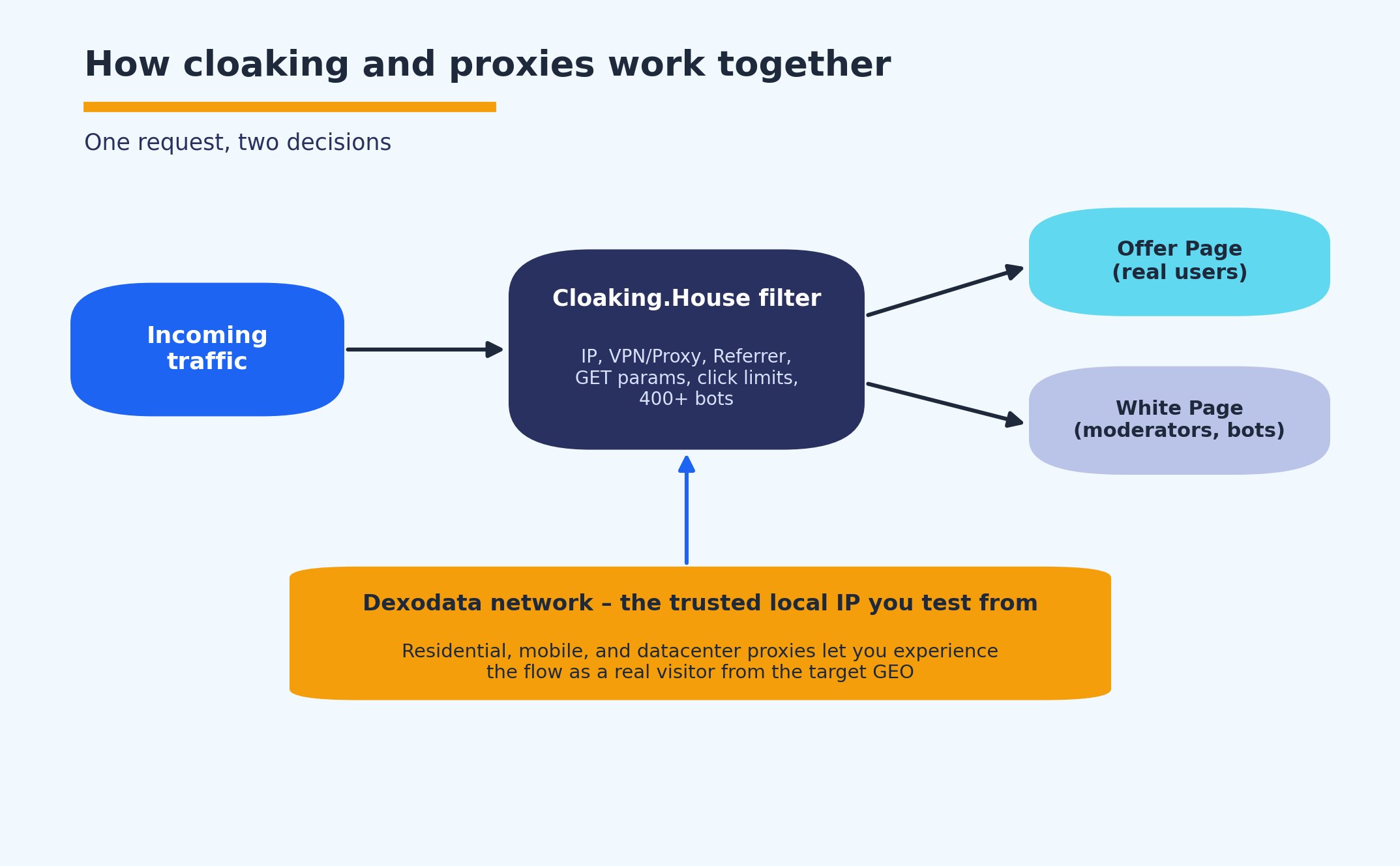
Cloaking and proxies solve two sides of the same task. Cloaking.House determines who sees what: filtering by IP, VPN/Proxy, Referrer, GET parameters, and click limits, it hides your Offer Page from moderators and over 400 known bots and checkers. Proxies, on the other hand, determine your apparent location and connection trust level. Every day, media buyers use proxies to go through their own funnel the way a real user from the target country sees it, to ensure the White Page and Offer Page are displayed correctly in every GEO, to research competitors without exposing their main IP, and to isolate ad accounts from each other. A cloaking Flow that has never been tested from a real local IP is a blind spot, and the Dexodata network helps close it.
Residential, mobile, and datacenter proxies
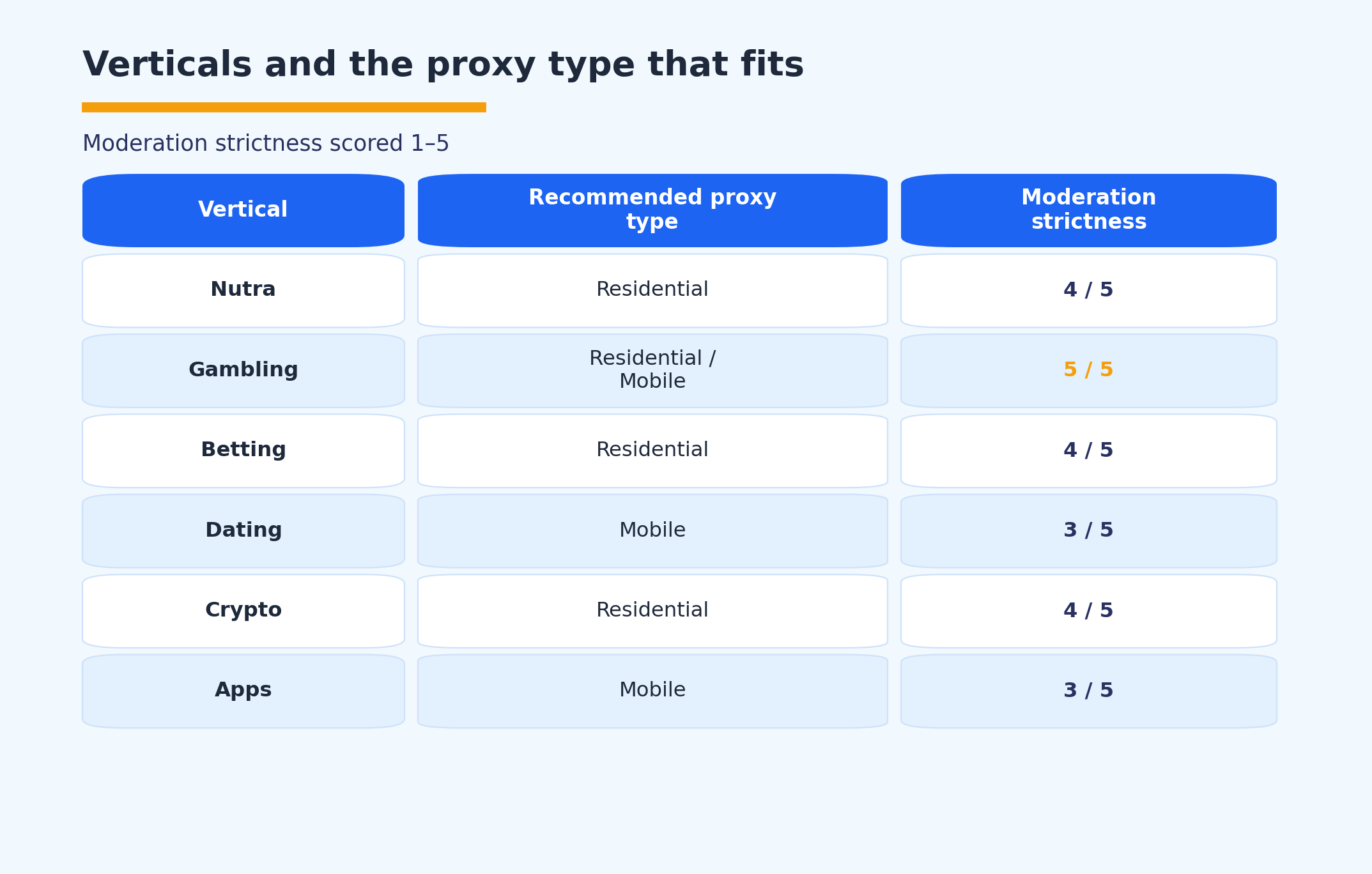
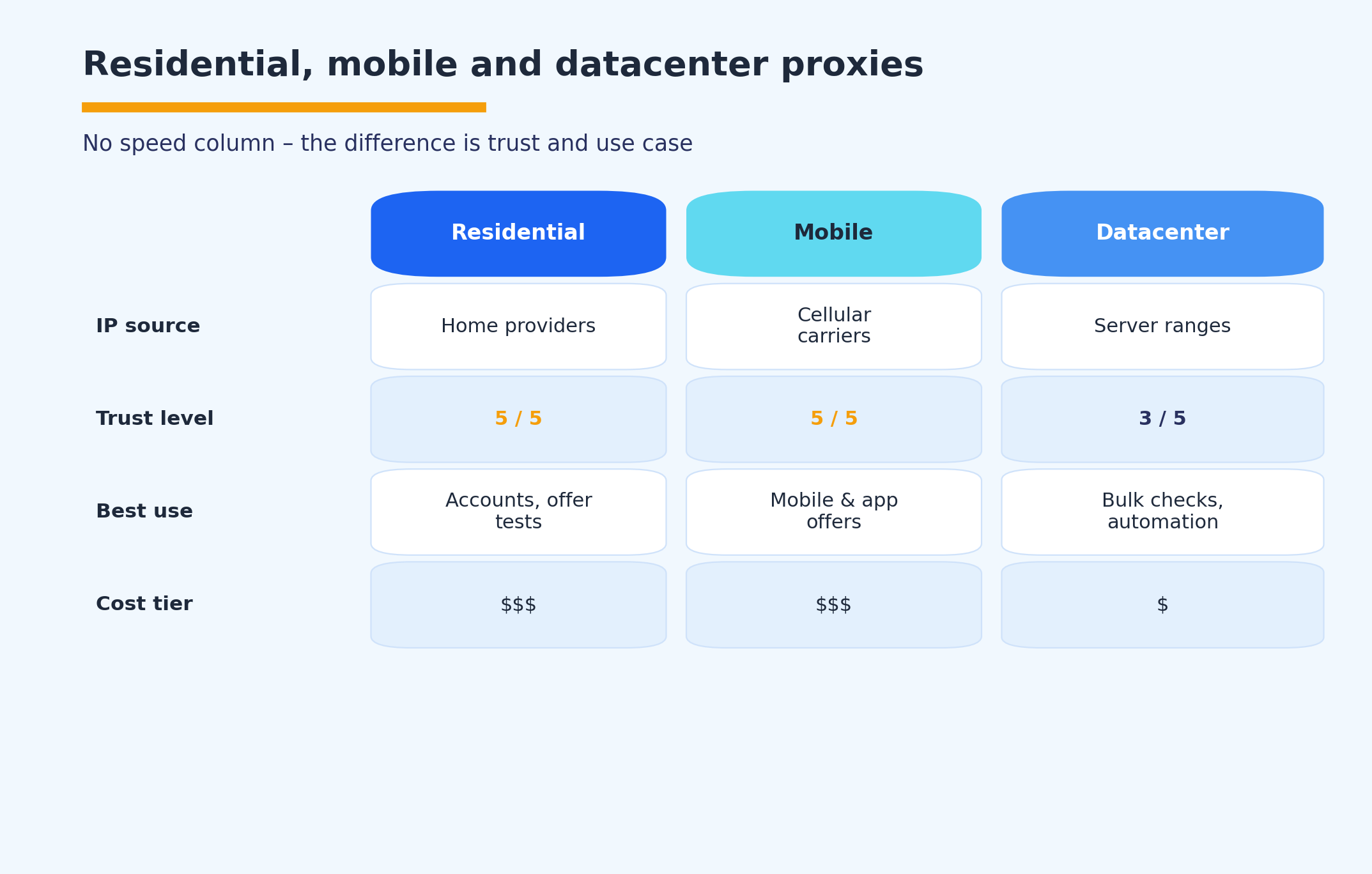
The three types of proxies are not "better" or "worse" in themselves - they are suited for different tasks. Residential proxies use IP addresses of home providers, thus possessing the high trust of regular users, and are suitable for farming accounts and testing offers. Mobile proxies use IP addresses of cellular operators and are the ideal choice for mobile offers and apps, where traffic must come from mobile devices. Datacenter proxies are issued by server centers and are a cost-effective solution for high-volume and less sensitive tasks, such as mass checks and automation. Dexodata provides all three types with precise geo-targeting.
The speed myth that burns budgets
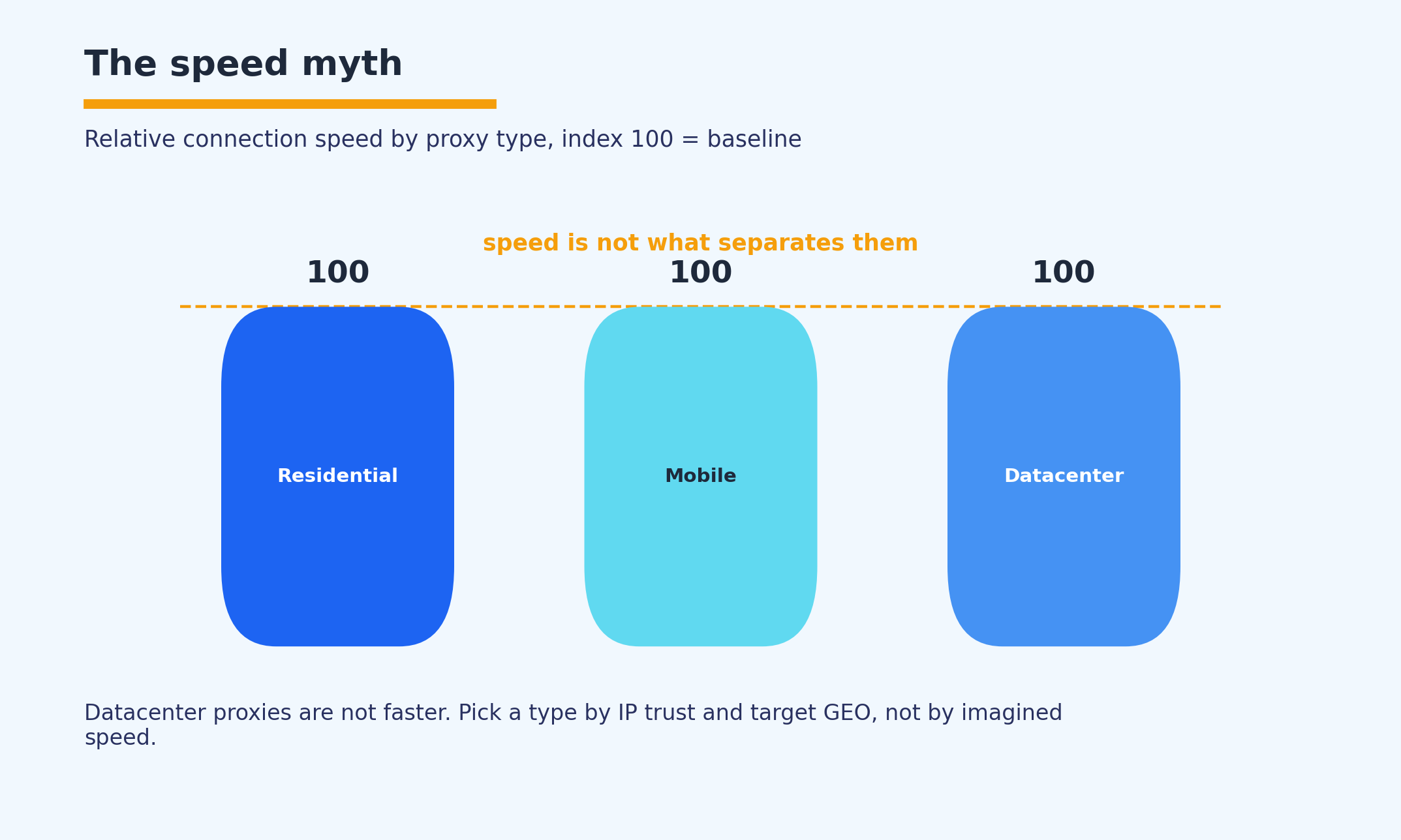
One misconception needs to be debunked: that datacenter proxies are a fast shortcut, while all others work slowly. Datacenter proxies are not faster - connection speeds are comparable across different types, and this is not the factor that determines the success of a campaign. For a media buyer's tasks - from loading landing pages to warming up accounts - the difference between proxies passing moderation and those getting banned lies in IP trust and the right GEO. Choosing a proxy based on mythical speed is a flawed approach; choosing based on trust level and target GEO is what protects a campaign.
Targeting precision and rotation
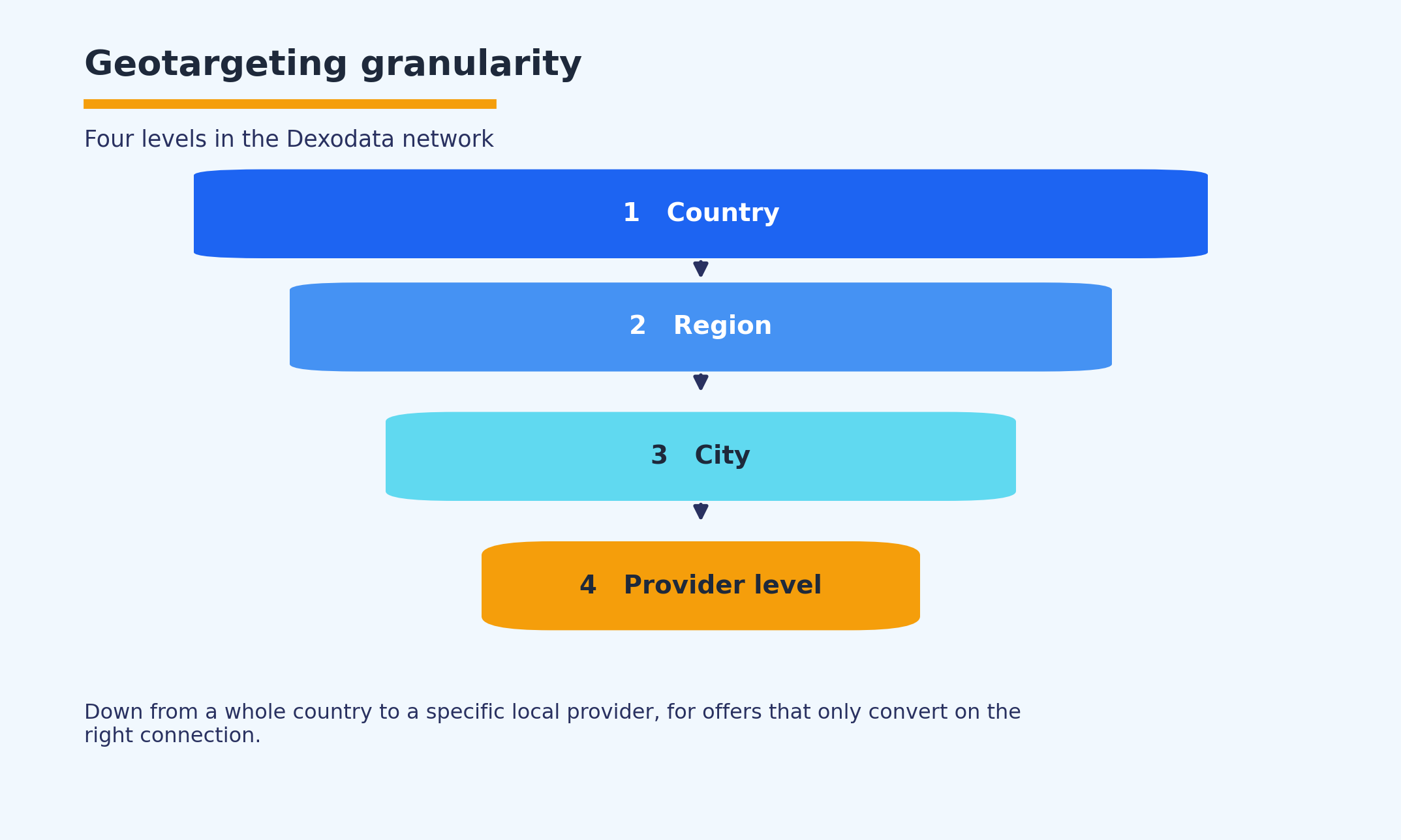
For affiliate marketing, targeting precision often proves to be the most valuable feature. The Dexodata network offers geo-targeting by country, region, city, and even specific ISP, which is critical when an offer converts only on certain local operators. Flexible IP rotation allows you to keep one address for the entire session or rotate it with every request, depending on whether you are warming up an account or performing mass checks.
Features built for media buyers
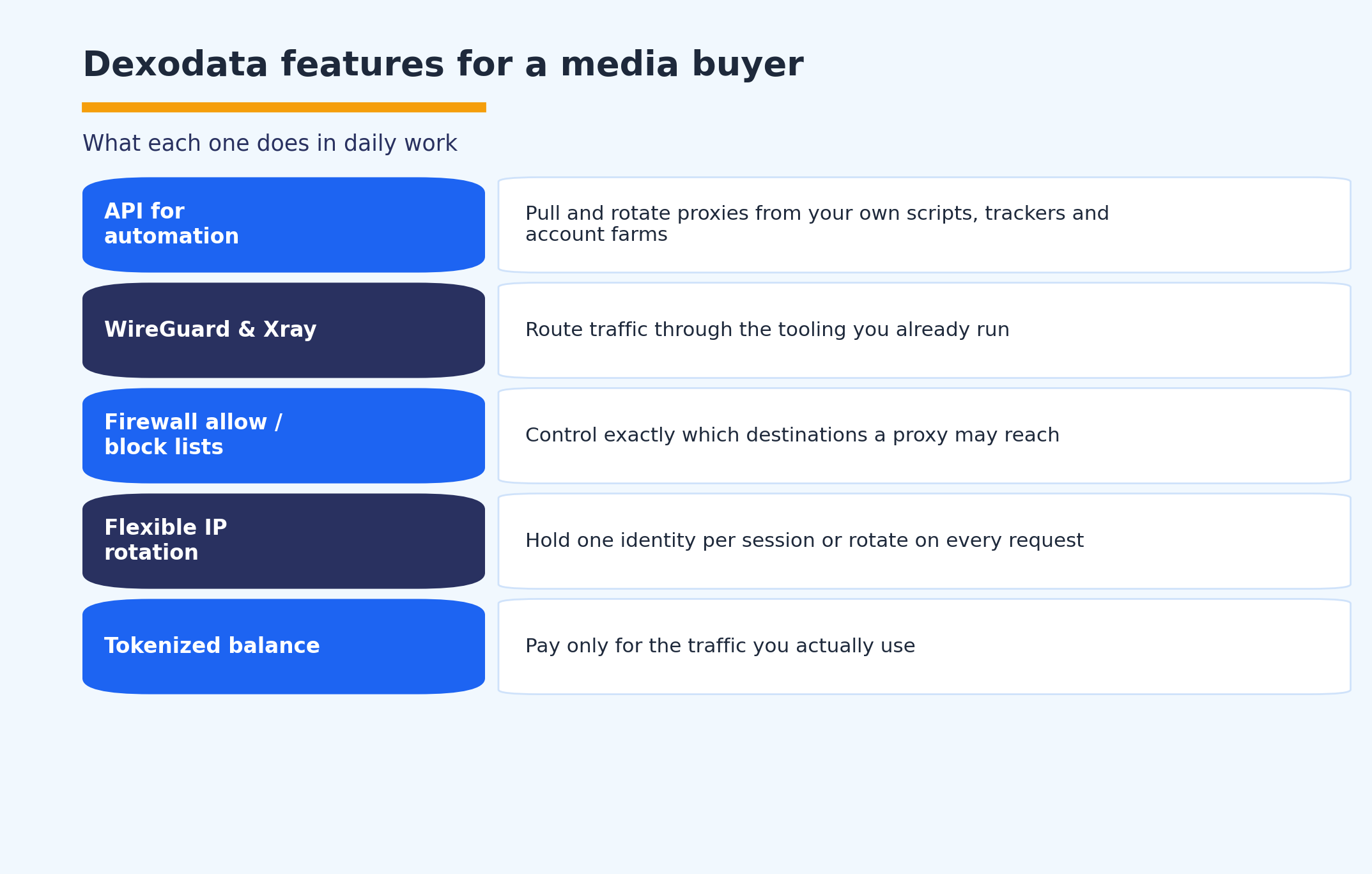
In addition to the IP addresses themselves, Dexodata's features perfectly align with a media buyer's daily work. An API for automation allows you to request and rotate proxies directly from your scripts, trackers, and account farms. Compatibility with WireGuard and Xray lets you route traffic through familiar software tools. A built-in firewall with customizable domain whitelists and blacklists ensures session cleanliness by controlling which resources the proxy can access. All this works within a single Dexodata network, rather than relying on fragmented third-party services.
Step-by-step workflow with the service
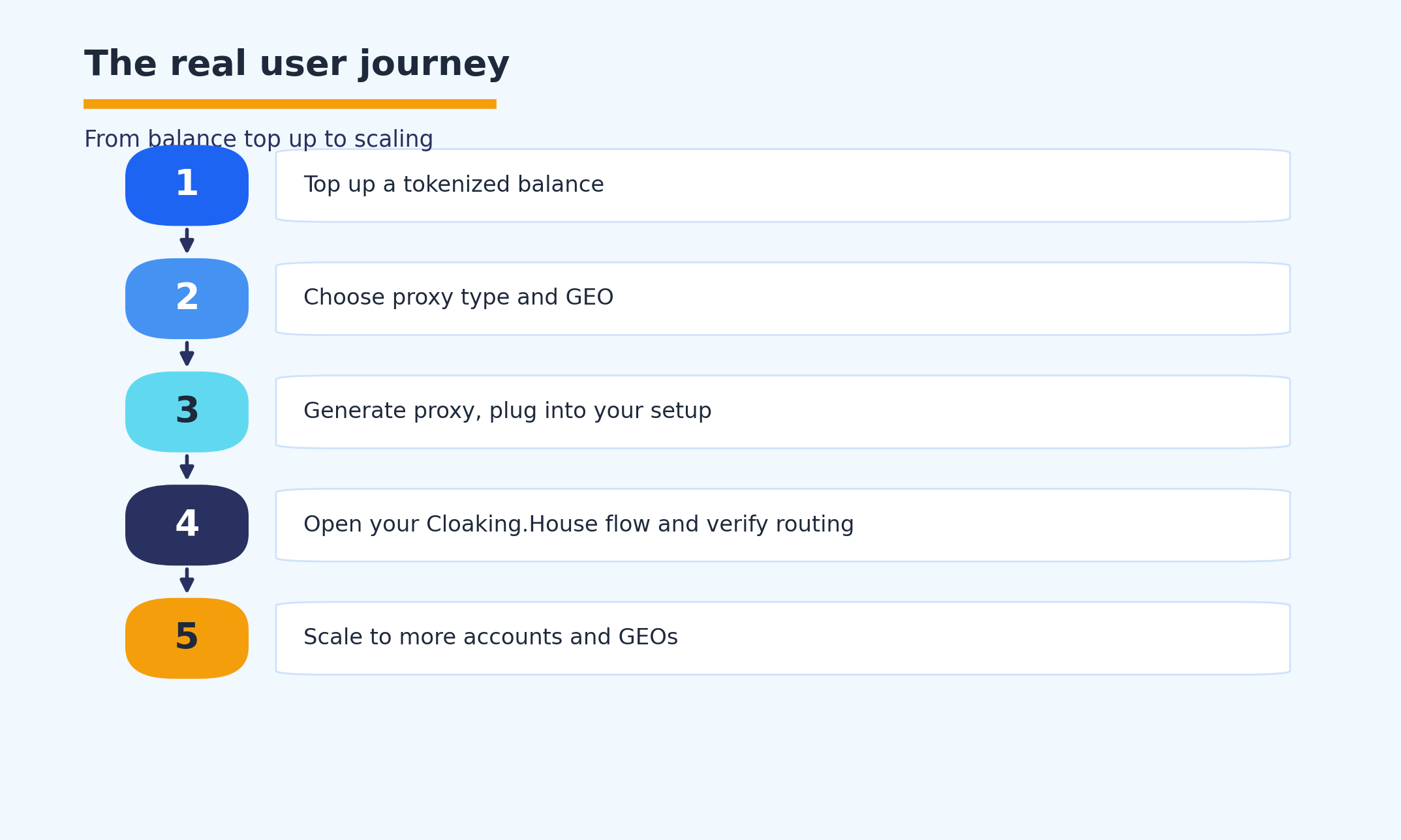
Here is what using Dexodata looks like in practice. First, you top up your balance and pay only for the actual traffic used. Second, you choose the proxy type and the required location for your campaign. Third, you generate a proxy and insert the connection details into an anti-detect browser or tracker. Fourth, you open the Cloaking.House link through this proxy and verify that a user from the target GEO lands on the Offer Page, while bots and moderators - on the White Page. Fifth, after ensuring the funnel is correct, you scale the work to new accounts and GEOs. Since Cloaking.House statistics update in real-time (about once a minute), you see the results of changes almost instantly.
The financial side of the setup
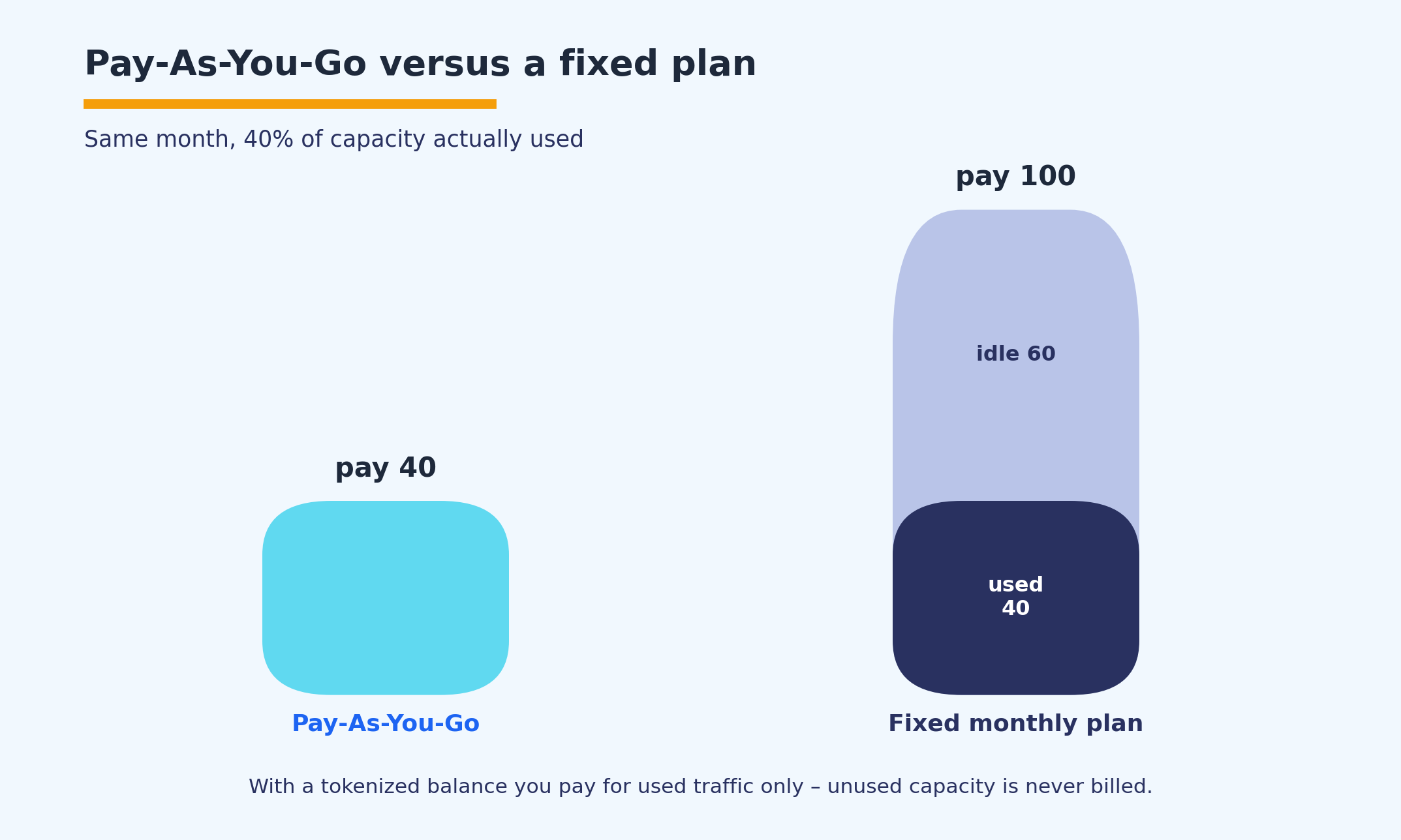
Cost control separates profitable traffic arbitrage from draining budgets. Dexodata uses a Pay-As-You-Go pricing model, so unused traffic does not expire like in fixed monthly subscriptions - this is ideal for irregular expenses during tests. This pairs perfectly with Cloaking.House's pricing: plans start at $49/month when billed monthly (or from $25/month when billed annually) and scale based on the number of active Flows. As a result, you get predictable filtering costs on one hand and flexible proxy expenses for actual traffic used on the other.
Compliance as a factor in campaign lifespan
A factor quietly determining operational longevity is the origin of IP addresses. Since every address in the Dexodata network is obtained with explicit user consent (opt-in), the pool remains cleaner and gets banned far less often compared to questionable sources. Over a span of several months of work, this means fewer sudden verifications and a longer lifespan for accounts.
Conclusion
Proxies and cloaking are two sides of the same workflow: Cloaking.House controls who sees your offer, and the Dexodata network determines how trusted and local your connection looks during setup, testing, and scaling. Set up this combination once, and you will spend less time fighting moderation and more time scaling profitable campaigns. New users can start with a free $1 balance and apply the promo code CLOAKINGHOUSE to get +5% on their first deposit (valid until September 10, 2027).
Start now: dexodata.com
FAQ
What are the best proxies for affiliate marketing and traffic arbitrage? It depends on the task. Residential proxies are suitable for farming accounts and testing offers, mobile ones for mobile offers and apps, and datacenter ones for mass checks. Dexodata provides all three types with targeting by country, region, city, and ISP.
How do proxies and a cloaking service like Cloaking.House work together? Cloaking.House filters visitors and decides who lands on the Offer Page and who on the White Page. Proxies allow you to log in as a real local user to check the filtering and test funnels in different GEOs before scaling.
Are datacenter proxies really slower than residential ones? No. They are simply designed for different tasks. Connection speed is comparable across all types, and the key difference lies in the level of IP trust and the scope of application, so you should choose proxies based on the campaign type rather than chasing nonexistent speed.
Which type of proxy should be used for mobile offers and apps? Mobile proxies, as their IP addresses belong to cellular operators and meet ad networks' expectations for mobile traffic. Use them in combination with Cloaking.House filtering to protect campaigns during moderation.
Does Dexodata support automation for farming accounts and trackers? Yes. The availability of an API, as well as support for WireGuard and Xray, allows connecting proxies to existing scripts, trackers, and multi-accounting systems without manual work.
How is proxy usage billed? From a prepaid balance for the actual traffic used. Practical tip: top up the balance with small amounts during the testing phase and increase the deposit only when the campaign starts generating profit.





Be the first to share your opinion!
We value your feedback — share your thoughts.