



In the field of web development, internet marketing, data parsing, and ensuring privacy, proxies have become a fundamental working tool. However, when purchasing or configuring an intermediary server, users invariably face the need to choose a network protocol.
In this article, we will analyze the features of each protocol in detail, which will help you accurately select the optimal option for specific tasks.
What is a proxy network protocol and why does it matter
A network protocol is a standardized set of rules and algorithms that determines exactly how data is packaged, encrypted, and transmitted between your device, the proxy server, and the internet resource. The proxy server acts as an intermediary, replacing your real IP address and geolocation. The processing of incoming and outgoing traffic fully depends on the protocol used.
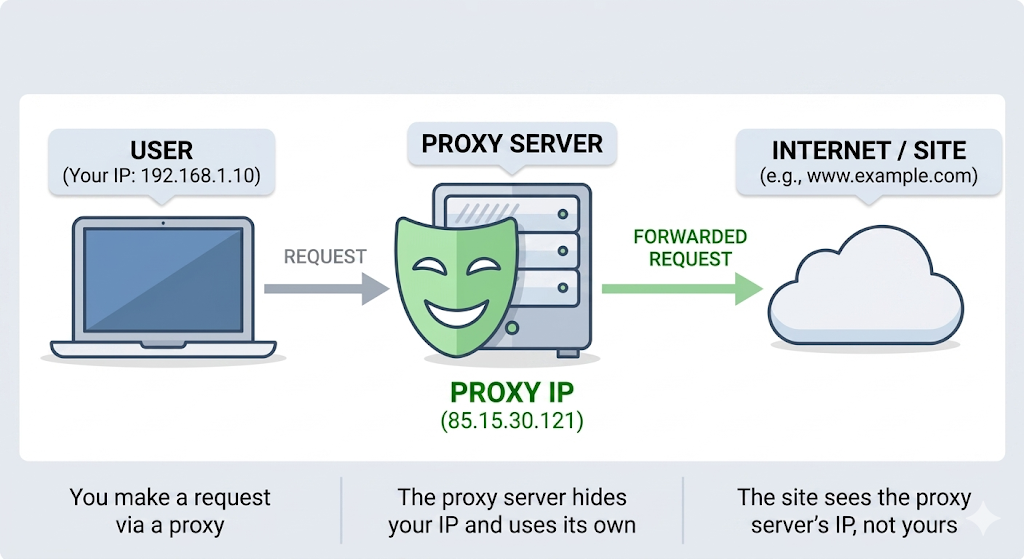
The choice of protocol directly affects the parameters of automation and network operation:
Level of security and anonymity - whether the transmitted data (passwords, files, sessions) is protected.
Speed and throughput - how much overhead information is added to the data packet and how fast the software can send requests.
Compatibility with software - whether your parser, antidetect browser, or bot will be able to recognize the structure of the server response and connect to the target platform.
Detailed breakdown of the rating participants
To compile an objective rating, it is necessary to study the features of each of the four protocols in detail.
HTTP: the classics of web surfing
The HTTP (HyperText Transfer Protocol) protocol is the very first and most common standard for data transmission on the global network. It was created exclusively for working with web pages. When you use an HTTP proxy, the server understands the structure of the web request, can analyze headers, and cache information.
Advantages of HTTP:
high processing speed for standard web pages;
minimal CPU load due to the absence of cryptographic operations;
absolute compatibility with any internet software.
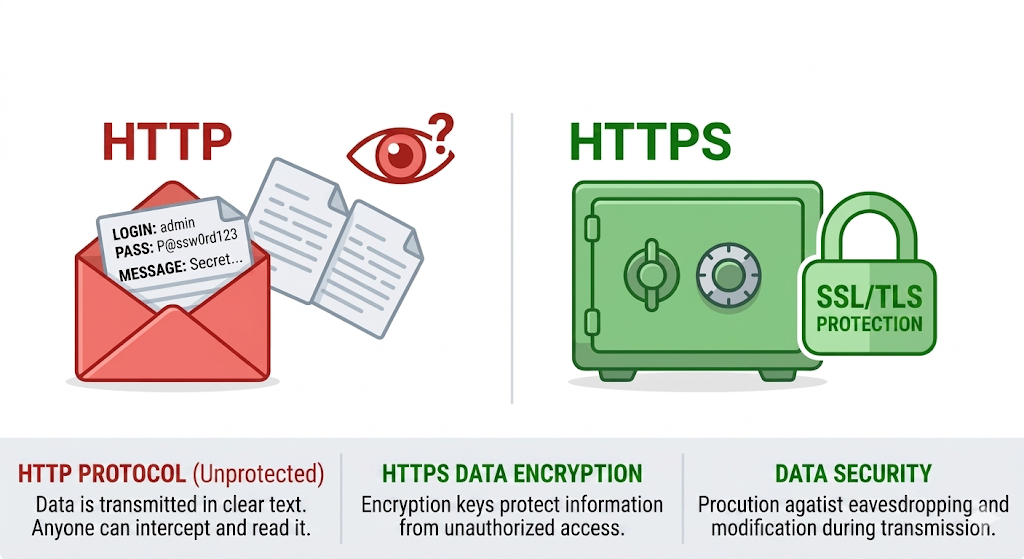
The main disadvantages of the protocol remain the complete lack of data encryption and severe limitations in application, as it is unable to work with online games, email clients, or databases.
HTTPS: the secure standard for commercial tasks
HTTPS (HyperText Transfer Protocol Secure) is a modified, secure version of the HTTP protocol. Data protection is implemented through SSL or TLS cryptographic encryption protocols.
When establishing a connection between your device and the HTTPS proxy server, security certificates are verified (the so-called handshake). After that, a secure tunnel is created. All transmitted data is encrypted on your device.
Among the key advantages of HTTPS are:
maximum confidentiality, excluding information interception by the proxy owner;
high level of trust from anti-fraud systems;
protection against traffic modification and forced injection of third-party ads.
When purchasing high-quality servers, for example, from Proxyline, users most often choose HTTPS for working with personal accounts and social networks.
SOCKS5: a universal tool for professionals
The SOCKS5 protocol is the most advanced and technological solution among universal proxies. Unlike HTTP/HTTPS, it operates at a lower, session layer of the OSI network model. This means that SOCKS5 is absolutely not tied to the structure of web pages and does not analyze the transmitted content. It simply routes all traffic from the client to the target server in its raw form.
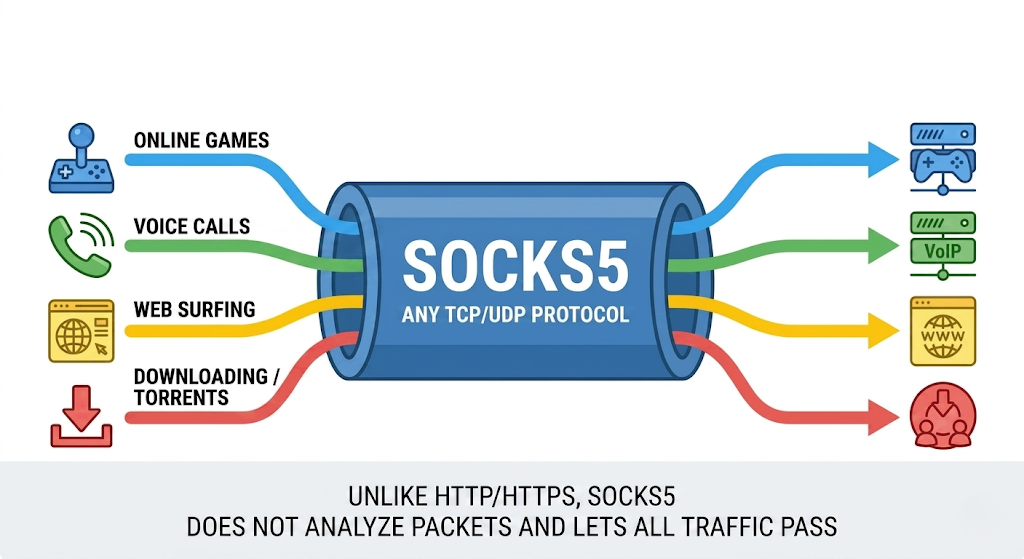
Advantages of SOCKS5 include:
complete independence from the type of traffic;
enhanced anonymity due to the absence of specific proxy headers;
full support for UDP traffic for streaming and IP telephony;
possibility of flexible authentication by login/password or by an IP whitelist.
The disadvantage of SOCKS5 is considered to be the lack of built-in encryption. The protocol transmits information in its original form, so data security in this case entirely depends on whether the target website or the working program itself supports encryption.
MTProto: a specialized protocol for the Telegram ecosystem
MTProto (Mobile Telecommunication Protocol) is a cryptographic protocol developed by the Telegram team to protect user data and ensure a stable connection with the messenger's servers.
Advantages of MTProto:
high resistance to blocking;
ultra-strong built-in data encryption;
minimal ping when working with media files inside the platform;
instant integration into the application by clicking an invite link.
The main and obvious downside is its narrow specialization. This protocol is technically impossible to use for working in regular browsers, online games, or website parsers, it is locked inside a single ecosystem.
Which protocol to choose for specific tasks: a practical guide
Let's move on to the main practical question: which protocol will be the most effective solution for specific areas of internet activity.
Data parsing and SEO monitoring
Collecting information from search engines, monitoring competitor prices on marketplaces, and gathering semantic cores require sending thousands of requests per minute. For these purposes, SOCKS5 or HTTPS are best suited.
In parsing, speed and stream stability are critically important. SOCKS5 does not waste resources on analyzing the header structure of web pages, which allows specialized software to run at maximum performance. If parsing is carried out through standard browser scripts and target sites are protected by strict anti-bot systems, the HTTPS protocol shows excellent results, since its traffic is indistinguishable from the actions of real visitors.
Traffic arbitrage and multi-accounting
Managing dozens and hundreds of advertising accounts in Facebook Ads, Google Ads, TikTok, or maintaining a grid of profiles in Instagram requires complete isolation of accounts from each other. In this niche, the undisputed leader is the HTTPS protocol.
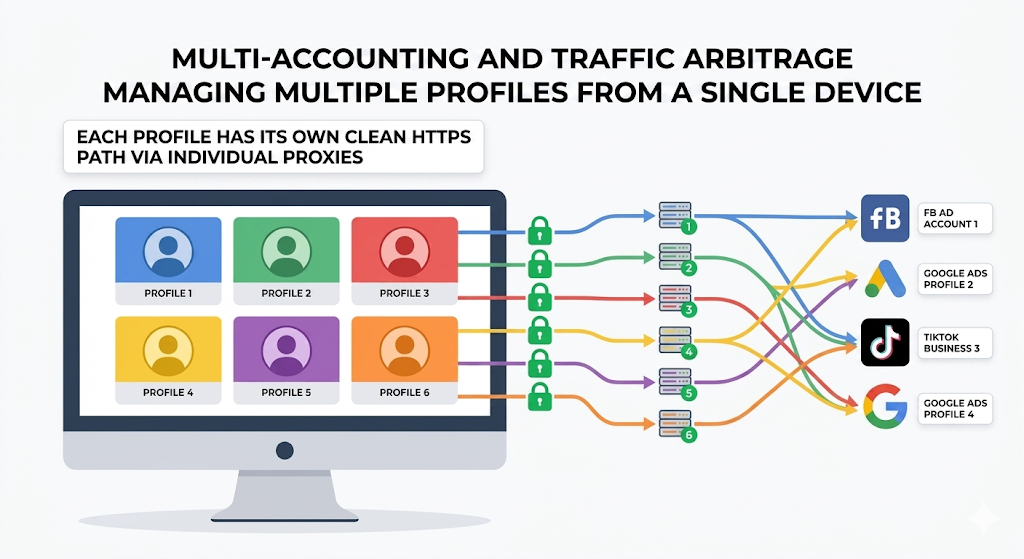
The protective algorithms of global advertising platforms primarily evaluate the security level of the connection. Using an HTTPS proxy guarantees that session cookies, authorization tokens, and personal profile data will be securely encrypted. This prevents accounts from overlapping and getting mass-banned. The HTTPS protocol is perfectly compatible with all popular antidetect browsers.
In addition to high-quality proxies, successful traffic arbitrage is impossible without reliable protection of advertising campaigns from moderators and spy tools. For these purposes, specialized tools such as Cloaking.House are excellent. This service provides a professional cloaking solution, intelligently filtering unwanted traffic, bots, and review algorithms. It redirects them to safe "white" pages (whitepages), while your target audience gets exactly to the right offer. Using such platforms in smart synergy with secure HTTPS proxies guarantees maximum survival of ad campaigns and high ROI.
Promotion and automation in Telegram
Marketing in messengers, creating and maintaining bots, mass broadcasting of notifications, inviting, and running channels require working with a specific network architecture. The choice here depends on the software used and is split between MTProto and SOCKS5.
If you work through official or custom Telegram clients, manage channels, and communicate, the MTProto protocol will provide the best speed, protection against provider blocks, and connection stability. However, if you use complex multi-threaded software for automation, registration, or Telegram parsing that requires standard network libraries, you will need the universal SOCKS5, as it supports low-level TCP/UDP connections required for third-party software scripts.
Online games and bypassing regional restrictions
Multi-window mode in MMORPGs, farming in-game valuables, reducing ping to foreign servers, or accessing digital stores require only the SOCKS5 protocol.
Gaming traffic is a continuous stream of UDP packets containing character coordinates, actions, and system commands. Only the SOCKS5 protocol is capable of correctly processing UDP connections. Due to the lack of unnecessary encryption layers, SOCKS5 minimizes latency, eliminating packet loss during gameplay.
Conclusion
The choice of a network protocol must be based solely on the specifics of your current task, as a one-size-fits-all solution for all areas does not exist. For safe work with social networks, HTTPS is required, for online games and parsing, SOCKS5 is indispensable, and for effective promotion in the messenger, the best choice will be MTProto.






Be the first to share your opinion!
We value your feedback — share your thoughts.