


Every affiliate is familiar with this pain: you launch a campaign, the spend goes (or doesn't start at all), but there are no leads or they come at an unrealistic price.
But let’s face the truth: most often the problem lies at the very first stage of the funnel — in your creative. How to stop guessing and learn to read Facebook metrics? Let’s dive into the details.
1. The Ad Isn't Even Running
The most obvious sign that the offer has nothing to do with it. If your campaign hasn't spent a cent, the problem lies in one of the points of the entire bundle, and one of them is the creative.
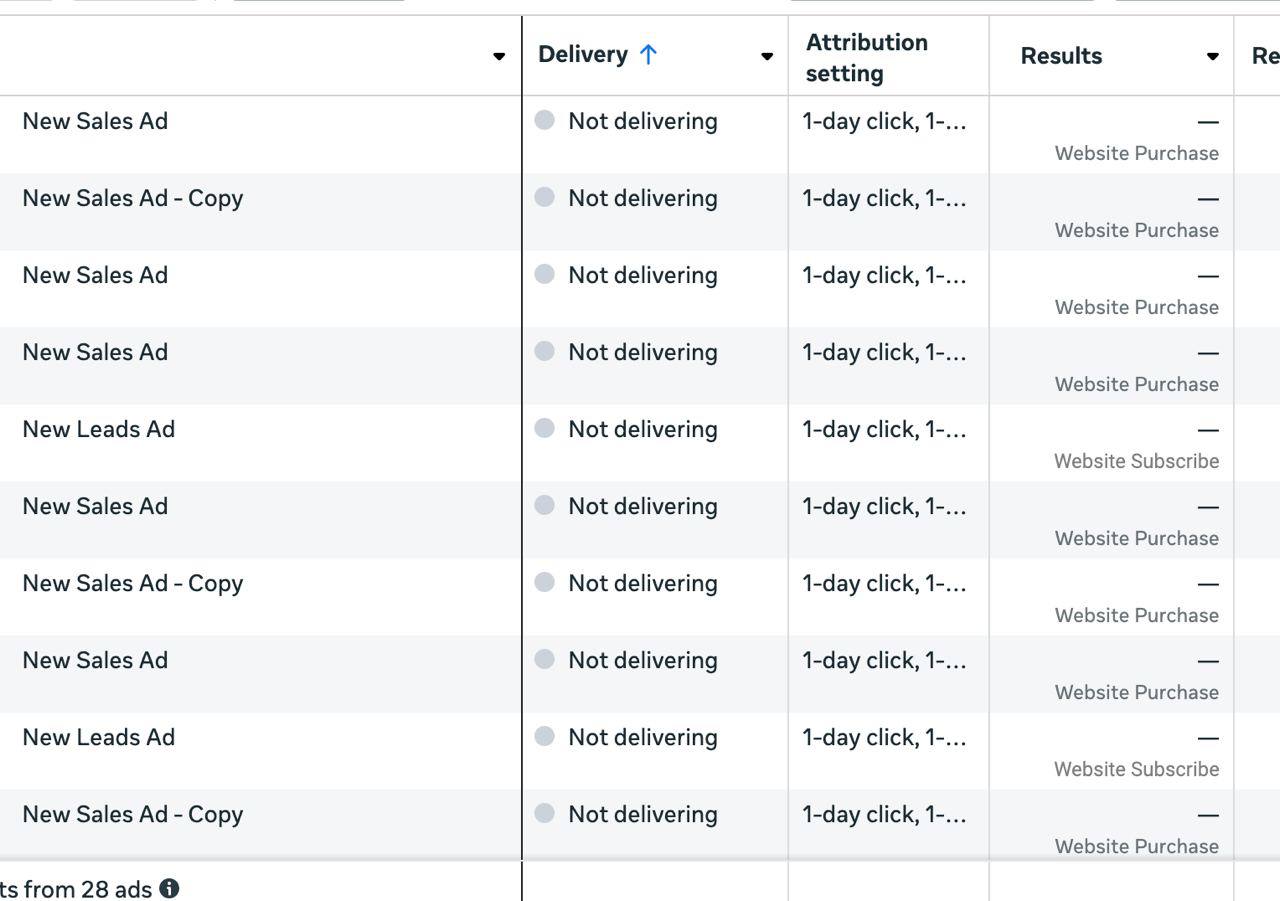
What does this status mean? Facebook reacted to your approach. Moderation didn't even reach the point of evaluating your casino's conversion. It saw trigger words, prohibited elements in the image/video, or simply rejected your white page.
What to do: Soften the creative. Remove direct "Get Bonus" calls, blur casino logos. Switch to a more native approach, for example: storytelling, news, or a streamer's reaction without showing the slot itself.
2. Metrics: Analyzing CPC and Clicks
Suppose you passed moderation. The campaign is running, but there are no deposits. We look at the click-through rate and cost per click in Ads Manager.
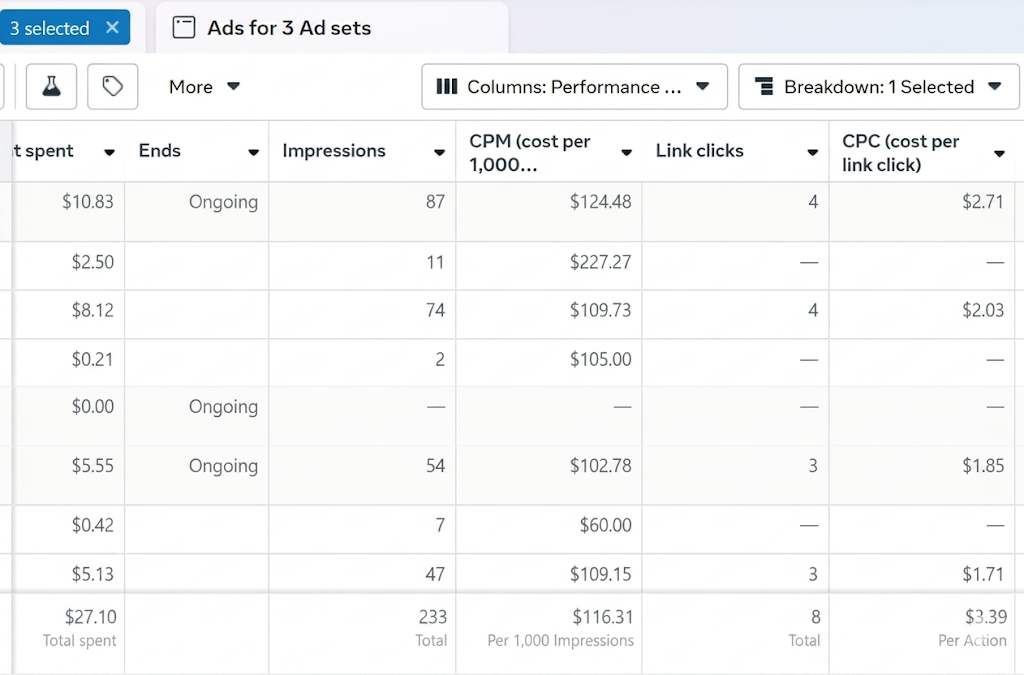
In the screenshot above, there is a typical picture: clicks are too expensive (CPC soaring over $1.70 - $2.00+), there are few impressions, and the spend is going nowhere. This is the first and clearest signal that your creative is not breaking through banner blindness.
Signs that the creative is to blame:
Low CTR (less than 1-1.5% for gambling) and high CPC. Your creative simply doesn't catch the eye. The audience scrolls past it because they have developed banner blindness.
High frequency of impressions (Frequency) with zero results. You have burned out the audience with one creative; it’s time to refresh.
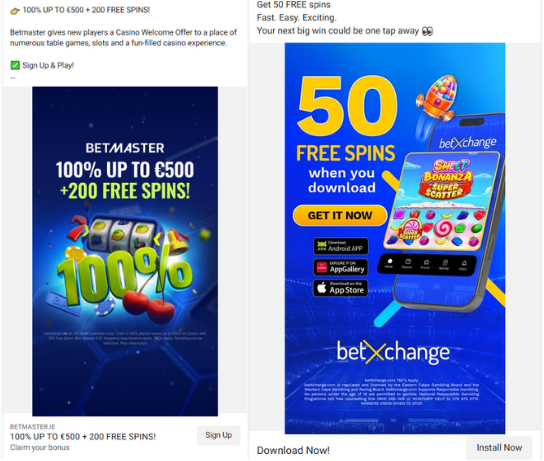
Take a look at these examples from the FB Library. Yes, the classic "bright slot + 200 FS" approach still works, but competition is huge. If your creative looks exactly like 1,000 others in the auction, the user simply won't pay attention to it. Or they will click out of habit and immediately close the tab.
Approximate metrics:
To understand if your indicators are normal, check against market averages:
| Metric | Tier-1 (Europe, Australia, Canada) | Tier-3 (LatAm, Africa, India) |
| CTR | 0.8% - 1.5% | 1.5% - 3%+ |
| Click2Reg | 10% - 15% | 20% - 35% |
| Reg2Dep | 15% - 25% | 5% - 10% |
It is important to understand that metrics can change, and this is only a guide.
3. There's a Click, but No Transition: The Filtering Problem
It happens like this: the creative is great, the click is cheap, but for some reason, people don't reach the offer's landing page. In FB statistics, you see 500 Link Clicks, but in the tracker or affiliate network, only 50 transitions.
Who is to blame? Here the problem is not in the creative itself, but in the technical layer between the creative and the offer. Either your landing page takes 10 seconds to load (and users drop off), or your traffic filtering is set too aggressively.
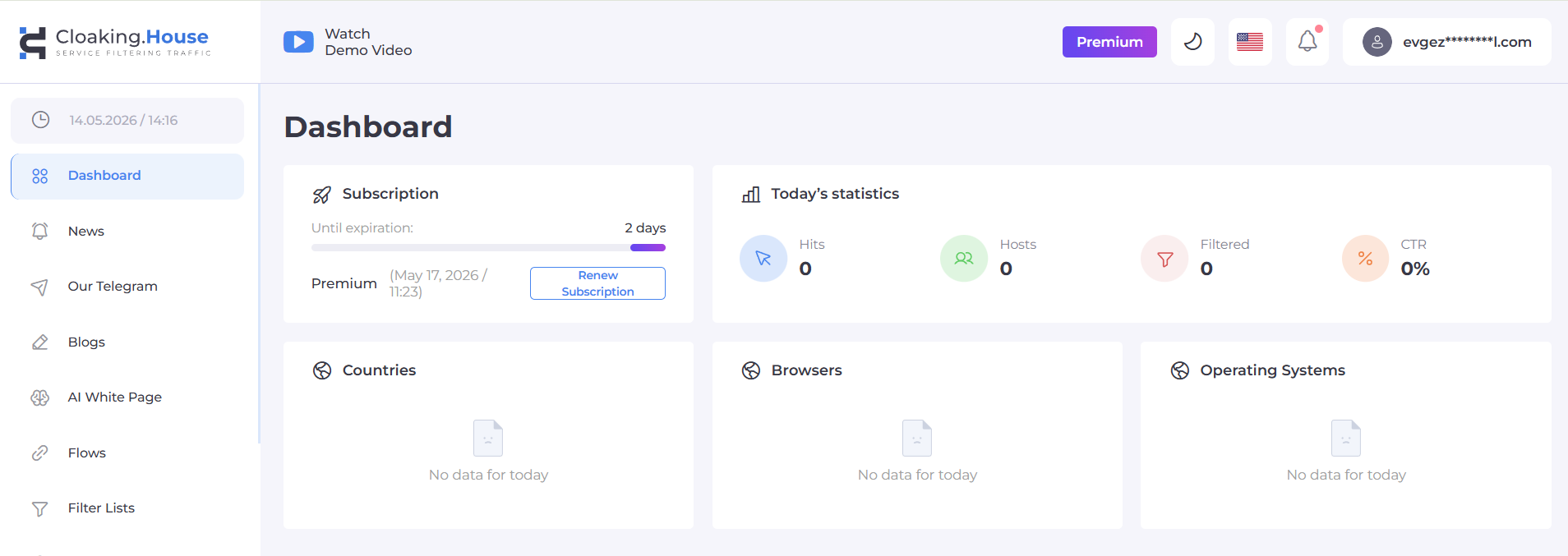
To prevent this from happening, it is important to use proven solutions with flexible filter settings such as Cloaking.House. Thanks to machine learning and up-to-date bot IP databases, Cloaking.House lets Facebook moderators through to a harmless White Page, while all your targeted, live players are immediately redirected to the Black Page (offer) without losing clicks.
4. Mislead: When the Creative Is Detached from the Reality of the Offer
This is a common trap for beginners. You make a super-aggressive creative, promising a $1,000 no-deposit bonus, a brand-new iPhone for registration, and 1,000 free spins.
CTR is astronomical (5-10%).
The click costs pennies.
But the conversion (CR) into registration or deposit tends to zero.
Why does this happen? This is classic mislead, in other words, deception. The user clicks expecting a freebie, goes to the pre-lander or offer page, and there it says in fine print: "Deposit a minimum of $20 to get a 100% bonus". Expectations did not match reality, and the user leaves. The offer might be excellent, but the creative brought people with the wrong mindset.
5. How to Understand That the Problem Is Actually in the Offer?
To be objective, here are situations where the creative performed at 5+, but the problem is on the advertiser's side:
CTR is normal, clicks are cheap, transitions to the landing page are there, but no registrations. Perhaps the offer has a complex form (5-7 fields instead of 1-click registration) or the mobile responsive layout isn't working.
Registrations are going great (good inst2reg/click2reg), but there are no deposits (reg2dep). The creative brought a targeted player, but then they encountered a problem: popular payment methods in this GEO don't work, the checkout crashes, or the minimum deposit (mindep) is too high.
You run the same creative on two different offers (split test). On Offer A, the ROI is +50%, and on Offer B, the ROI is -30%. The conclusion is obvious: the creative is working, Offer B is not converting.
Main Rule of Testing
The main mistake beginners make is changing everything at once: creative, pre-lander, landing page, GEO. If the ROI falls, you don't know exactly what broke. The method of isolating variables removes the guesswork. This is a step-by-step algorithm that ensures you test only one element at a time.
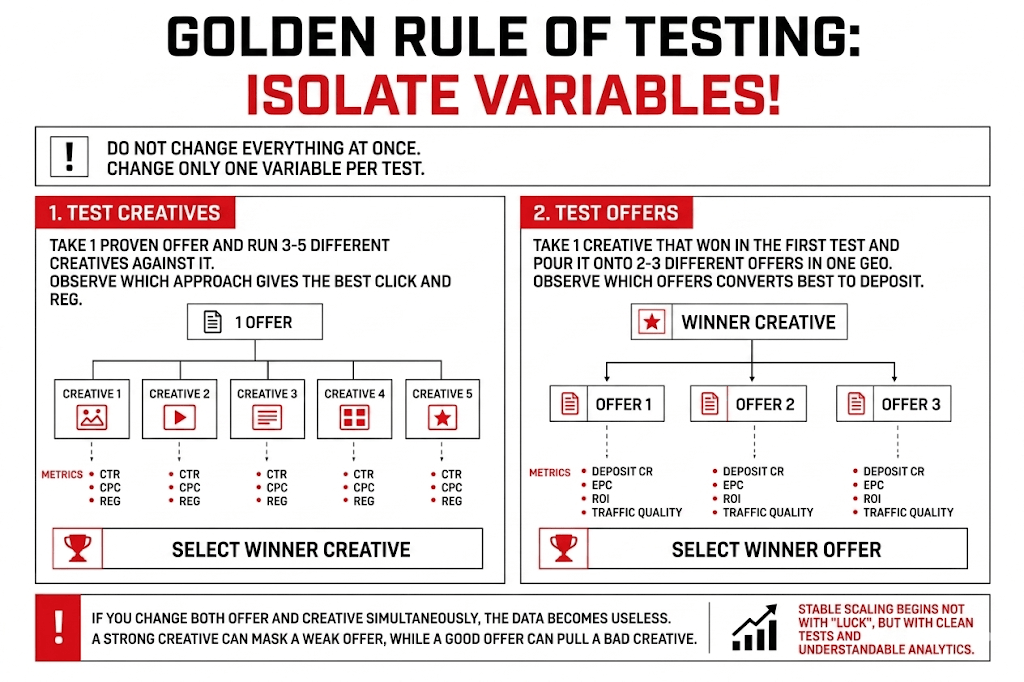
Here is how this two-stage process looks in practice:
1. Creative Test (Finding the Door).
Goal: Find an approach that catches the audience's attention.
Conditions: Take one proven offer (that works with Cloaking.House to exclude bans as a variable) and the same target/pre-lander settings. Launch 3–5 fundamentally different creatives (emotions, news, gameplay).
Result: Determine the winner based on the best CTR and the lowest cost per click/registration.
2. Offer Test (Product Split).
Goal: Find out which product "squeezes" the obtained players better.
Conditions: Take ONLY the creative that won in step 1. Launch it simultaneously on 2–3 different offers in ONE GEO. Check how different checkouts and registration conditions perform.
Result: You see which product has a better Reg2Dep (registration to deposit conversion) and higher ROI. The winner goes into scaling.
Summary
In traffic arbitrage, there is no place for magic or intuition — there is only mathematics and the user funnel. The offer is the foundation of your campaign, but the creative is the front door.
Analyze the numbers at every stage, monitor the alignment of user expectations with the landing page reality, isolate variables during tests, and protect your working setups using high-quality traffic distribution tools. This is the only way to consistently run in profit.





Be the first to share your opinion!
We value your feedback — share your thoughts.