



In 2026, many media buying teams are facing the exact same challenge: a single creative, product, and brand can generate a sky-high click-through rate (CTR) in the US, yet suffer a dismal conversion rate in Mexico. Usually, the issue lies neither in the product itself nor in the ad creative. The reality is that a one-size-fits-all set of marketing materials simply cannot perform universally across diverse markets. Users in different countries exhibit distinct search patterns, content preferences, platform moderation standards, and consumption behaviors.
These regional differences directly impact ad clicks, engagement, and conversions. Understanding these nuances allows teams to allocate budgets wisely and optimize content effectively. For teams launching global ad campaigns and managing operations across multiple regions, upgrading creative quality must go hand-in-hand with comprehensive testing of target regions, landing pages, and device environments to maximize overall ad efficiency.
Key Takeaways:
Market Variance: The same advertisement performs differently across various countries due to ad costs, languages, user habits, and platform rules.
Pre-launch Checklist: Before launching ads in multiple regions, thoroughly verify page language, currency, redirection logic, and localized content.
Traffic Management: Cloaking.House helps teams manage regional landing pages and access rules seamlessly for different geographical locations.
Live Environment Testing: DuoPlus Cloud Phone enables teams to test live in-app ad rendering (e.g., on TikTok) within a genuine Android environment.
Data Transparency: Ad teams must rigorously document accounts, regions, pages, and test results for transparent data analysis and continuous optimization.
1. Why Does the Same Ad Perform Differently Across Countries and Regions?
1.1 Stark Disparities in Regional Ad Costs
The exact same daily budget yields wildly different traffic volumes from one country to another. According to 2026 TikTok ad data, the average CPM (cost per thousand impressions) hovers around $8.5 in the US, drops to $1.8 in Indonesia, and sits at just $1.0 in Nigeria. Google Ads show equally pronounced gaps. For instance, running an ad for sneakers might achieve a 5.8% conversion rate in Japan, but only 2.1% in Mexico. Bidding strategies must be adjusted individually based on local market competition.
1.2 Divergent Search and Consumption Habits
User search queries and purchase decision-making processes vary significantly by region. Users in English-speaking markets generally prefer specific long-tail keywords, such as "running shoes for women with wide feet", whereas users in Southeast Asia are more likely to search directly for "running shoes women".
When it comes to device usage, mobile traffic dominates overwhelmingly in Southeast Asia, yet mobile conversion rates there are often lower compared to desktop. Meanwhile, in the US, consumers approach international shopping with greater caution, frequently worrying about currency conversion fees, extended delivery windows, and complex return procedures. These behavioral gaps mean that both the content and layout of your landing pages must be tailored to each specific market.
1.3 Varied Platform Rules and Content Moderation Standards
Ad placement is heavily dictated by platform policies and local legislation. For example, ads that exaggerate the effects of medical beauty treatments or weight loss products are often rejected instantly in many Southeast Asian countries. South Korea and Japan enforce incredibly strict moderation standards regarding marketing claims for beauty and health products. Without a solid grasp of local compliance, your creatives will likely get filtered out during the review stage.
Furthermore, data privacy compliance is non-negotiable. Stringent regulations like the EU's GDPR and Brazil's LGPD heavily restrict how user data is collected and stored. Any violation can lead to severe ad account restrictions and massive fines.
1.4 Region-Specific Platform Recommendation Mechanisms
A platform's algorithm does not behave identically worldwide. In mature markets like the US and the UK, interest tags and audience targeting are highly refined and precise. Conversely, in emerging markets where user data is more limited, broader targeting strategies often yield better results.
Algorithms constantly adapt their recommendation logic based on local user interactions. Trending topics, peak activity hours, and content consumption rhythms differ by region. Without targeted adjustments, your ad creatives will struggle to break into the recommendation feeds of local users.

2. What Types of Tests Do Multi-Region Ad Campaigns Require?
2.1 Cross-Region Ad Testing
When launching the same ad creative across multiple countries, users must be automatically directed to landing pages, currencies, and product recommendations tailored to their specific region:
US users should see English copy and prices in USD ($).
Japanese users should see Japanese copy and prices in JPY (¥).
Every country must be seamlessly redirected to its respective localized landing page.
2.2 Landing Page A/B Testing
For the exact same ad entry point, marketing teams need to test and compare:
Different copywriting angles
Alternative page structures and layouts
Distinct Call-to-Action (CTA) buttons
Varied product sorting options
This requires setting up traffic splits, comparing the performance of different versions, and tracking conversion metrics for each individual entry path.
2.3 Traffic Management in Affiliate Marketing
Affiliate marketing teams often juggle multiple traffic sources, creative variations, ad entry points, and regions simultaneously. They must:
Effectively manage traffic pouring in from diverse channels.
Track conversion efficiency across every single channel.
Dynamically assign dedicated landing pages based on the specific traffic source.
3. What to Check Before Testing Ads in Multiple Regions
Before scaling your ads across several countries and regions, ensure you audit the following elements during the testing phase:
3.1 Align Audience Targeting with Local User Profiles
In mature markets boasting established consumer systems (e.g., Europe and the US), deploy precision targeting based on user interests and buying power. In emerging markets (e.g., Southeast Asia, South America) where the target audience is broader, utilizing wide targeting options allows for faster exposure and greater initial reach.
3.2 Ensure Language and Copy Resonate with Local Users
Always use common local phrasing and align with regional search preferences while avoiding literal, robotic translations. For instance, American consumers search for sneakers, whereas British consumers look for trainers. Even among Spanish-speaking countries, vocabulary varies: Mexico favors celular and carro for phone and car, while Spain prefers móvil and coche.
The tone and vocabulary of your text should be tailored to local cultural norms. Additionally, make sure your materials do not violate regional cultural or legal boundaries, especially regarding religion and politics. Before a full-scale launch, run a low-budget test campaign to verify that your ads clear moderation and do not trigger user complaints.
3.3 Match Bids and Budgets to Local Competition Levels
Highly competitive markets (e.g., the US, Germany) demand higher bids, but they frequently reward you with superior conversion rates and higher Average Order Values (AOV). Low-competition markets (e.g., Southeast Asia, Latin America) require much lower bidding floors. Research each specific region thoroughly to establish the correct baseline.
3.4 Optimize Landing Pages for Local Audiences
Use fluent, natural native languages (steer clear of automated machine translation), display local currencies and measurement units, optimize page loading speeds for remote regions, and guarantee smooth redirection pathways. Don't forget to integrate preferred local payment methods: digital wallets are essential in Southeast Asia, while credit cards remain dominant in Europe and the US.
3.5 Maintain Clean Account Environments for Multi-Account Operations
Avoid sharing physical devices or digital environments between different regional ad accounts to prevent flagging by platform anti-fraud bots. Map out your regional creatives to dedicated accounts and isolate each country's ad account within a completely independent execution environment.
How to Test the Same Advertisement Across Different Regions
If your team wants to test the performance of a TikTok ad across the US, India, and Japan, your first priority is to guarantee perfect consistency among your creatives, pages, and regional configurations. TikTok’s manual review process looks closely at page language, currency, date formats, address details, and redirection logic. It also assesses mobile responsiveness and how well the landing page content matches the original ad creative.
Step 1: Create Multiple Regional Page Variations
To test the US and India markets, prepare a US version and an Indian version of your landing page. Verify that:
The language perfectly matches the region.
The currency displays accurately.
Contact info, date formats, and button texts look natural.
The page content aligns flawlessly with the ad creative.
Step 2: Configure Test Flows in Cloaking.House
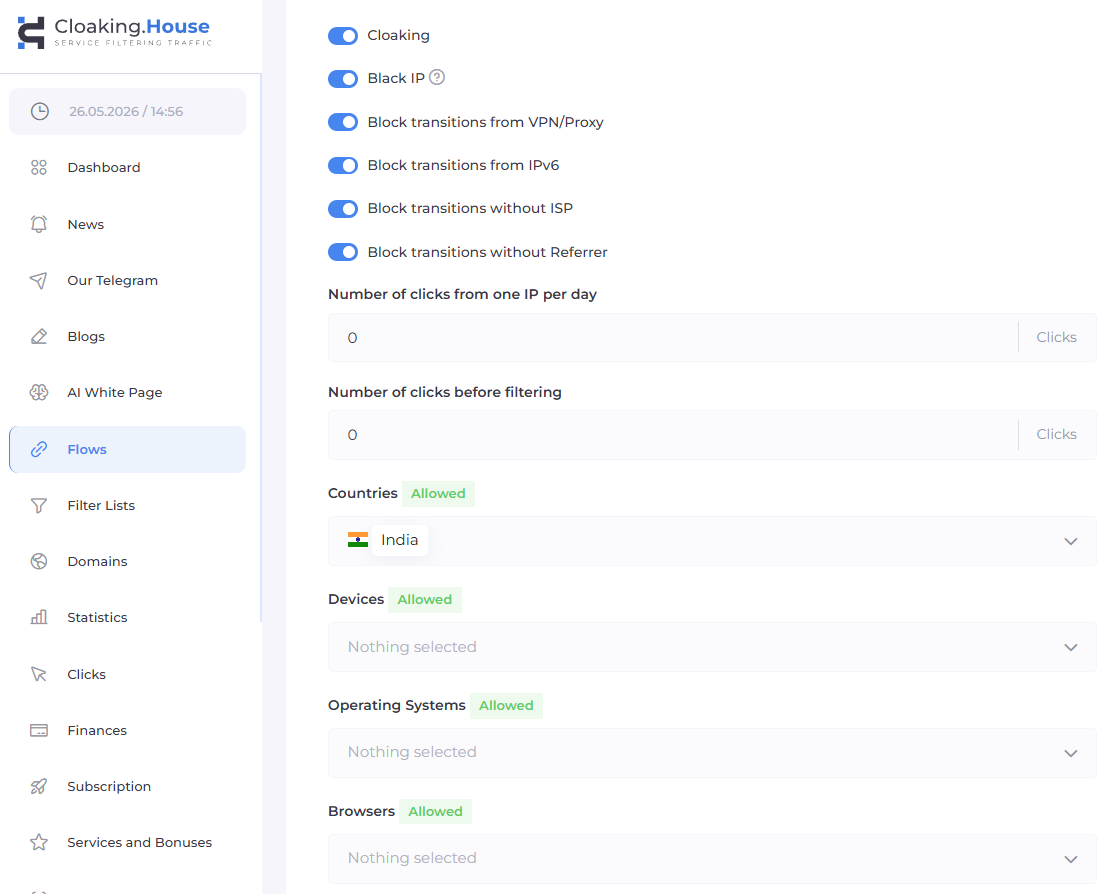
Set up two distinct traffic flows:
A US test flow
An Indian test flow
For each stream, configure:
The corresponding regional landing page.
The matching system language.
The correct redirection path.
Localized access filtering rules.
Step 3: Implement Masked Links in Your Ads
Cloaking.House manages regional pages independently and filters incoming traffic based on geolocation, language, device type, IP address, and other parameters. The moment a US user clicks your ad, Cloaking.House instantly identifies their data and forwards them to the US test page. Indian users are routed straight to the Indian product page, enabling hyper-accurate ad testing and optimization.
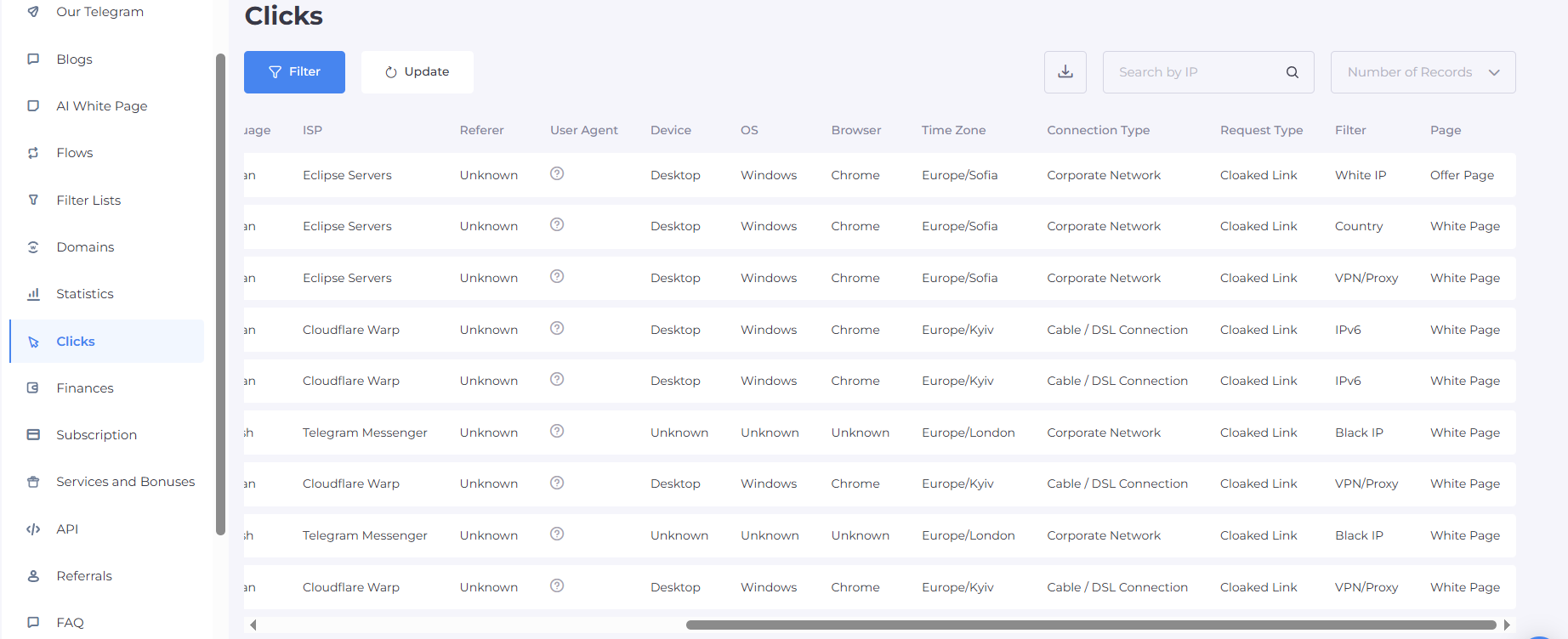
Crucially, Cloaking.House also differentiates real human traffic from platform moderation systems. Real visitors land on the official, localized landing page, while moderators, bots, and other non-targeted traffic are safely redirected to a compliant, safe page.
Step 4: Verify Mobile Ad Rendering via DuoPlus Cloud Phone
Once your page routing rules are live, it is highly recommended to inspect how the ad actually looks on mobile screens. TikTok ads are delivered right inside the app’s native feed. Just because a landing page looks perfect in a desktop browser does not mean it will render correctly for a mobile app user.
Because the vast majority of ad traffic originates from mobile devices, ad platforms analyze real device parameters: device model, system language, GPS data, and SIM card details. Standard desktop browsers and basic proxy services cannot simulate these granular details. DuoPlus Cloud Phone solves this by providing a fully functional, authentic Android OS environment.
Step 5: Execute Real-Environment In-App Ad Testing
With your page distribution rules and interfaces set up, move into real-world environment testing.
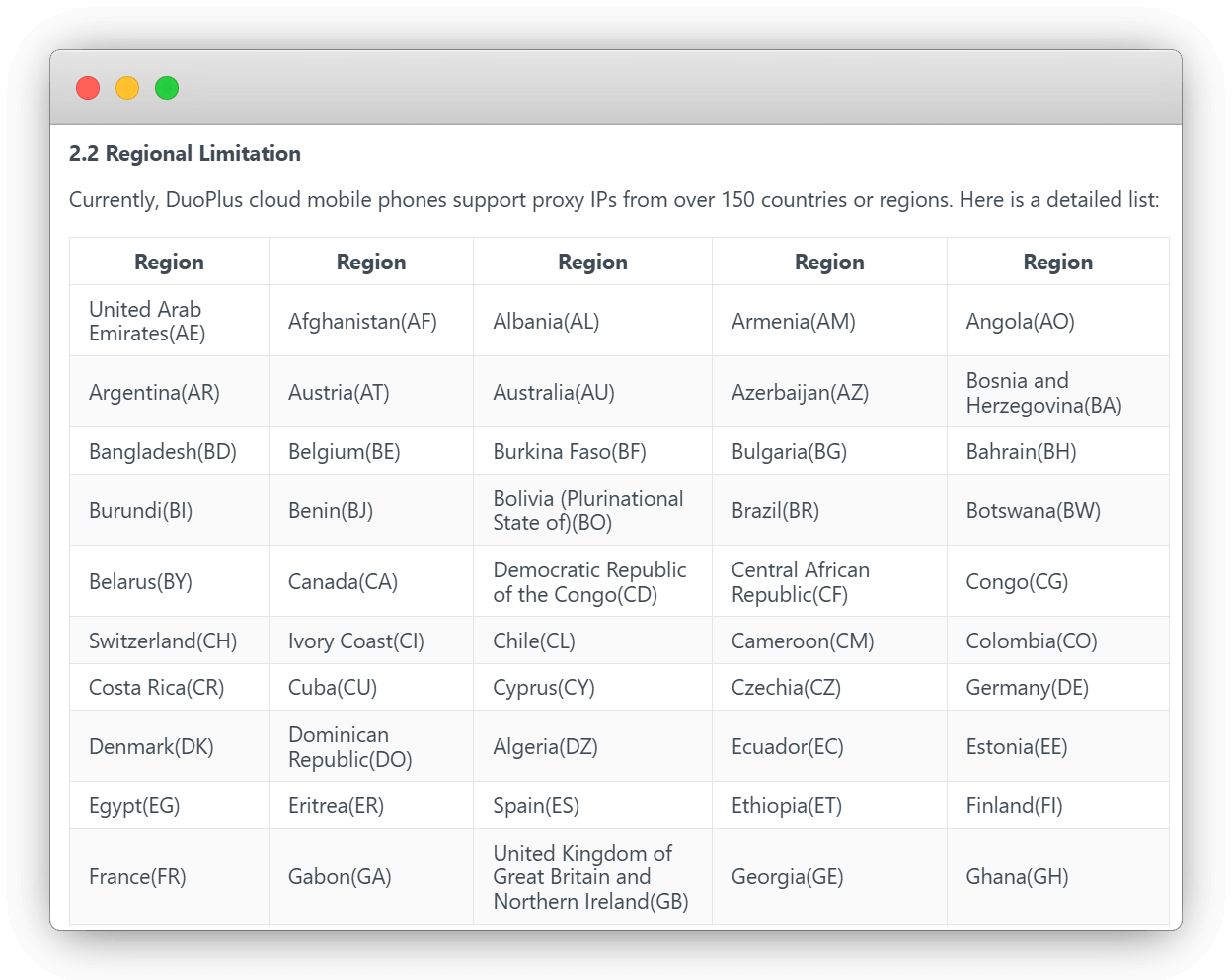
DuoPlus Cloud Phone supports instant switching of network IPs, GPS locations, system languages, and time zones across more than 150 countries and regions. It instantly aligns with localized device parameters, allowing you to audit your ad content exactly as a local user would see it.
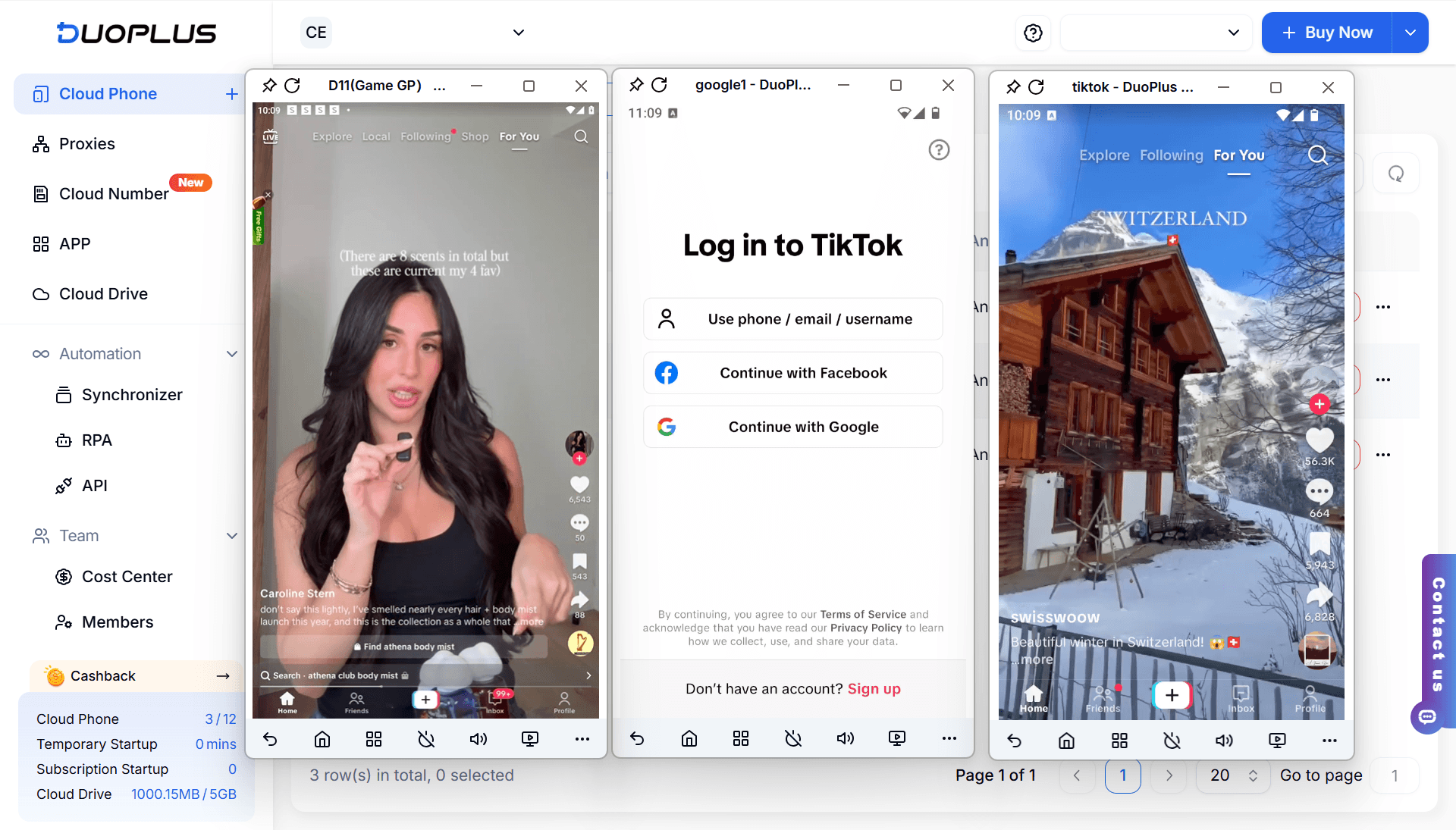
Built on a native Android ARM architecture, the DuoPlus Cloud Phone perfectly mirrors real smartphone behavior. It supports the batch installation of and login for TikTok and other social applications, enabling you to simulate organic user actions like scrolling through feeds, viewing ads, and clicking external links. This allows you to evaluate actual in-app ad performance directly.
Be sure to log these vital metrics:
Ad rendering quality within the app feed.
Redirection smoothness upon clicking the ad.
Page loading speed.
Accuracy of language, currency, and CTA buttons.
Overall user experience naturalness within the target market.
Address any discovered bugs, tweak your redirection paths or page content, and re-verify everything using the cloud phone. Only scale up your ad budget after achieving flawless verification. For multi-country campaigns, run multiple cloud phones in parallel to simulate the US, Japan, Germany, and other markets simultaneously to easily compare display performance.
Best Practices for Multi-Region Ad Deployment
Map your routing early: Establish clear regional redirection rules in Cloaking.House (e.g., US users → Page A; Japanese users → Page B).
Spin up localized environments: Launch cloud phones with dedicated US and Japanese environments using DuoPlus Cloud Phone.
Simulate the user journey: Mimic real ad clicks to ensure users from each region land on the correct page, showing the right language and currency.
Isolate your assets: Bind your respective ad accounts to the cloud phones of their specific target markets prior to the official campaign launch.
Maintain active defenses: During live campaigns, keep Cloaking.House active to continuously filter out platform bots and non-target traffic, while relying on DuoPlus to maintain an isolated, ban-safe environment for each ad account.
Conclusion
The secret to successful multi-region ad testing goes far beyond the creative quality of your assets; it hinges on the synchronized testing of your target regions, landing pages, and device environments. Cloaking.House empowers you to structure your landing pages and segment traffic effectively, while DuoPlus Cloud Phone provides the ultimate verification tool within a live mobile environment. Together, these tools stabilize your global ad deployment and unlock powerful, data-driven optimization.






Be the first to share your opinion!
We value your feedback — share your thoughts.