


When a funnel burns out, the reason is first sought in the creative, the offer, or the account. The payment method is checked last, even though it is the exact thing that most often disables the ad account at the most inconvenient moment. The card got declined, the platform paused the ads, and the traffic you just brought to a good ROI has stopped.
 The good news is that most payment problems are predictable and are cured by discipline, not luck. Below are practical things: how card approval rate works, what to set up in advance, how to act during declines, and how to check a card service before bringing your budget to it. As an example, we use the features of LuckyCards, which are convenient to show what a working toolset looks like.
How the platform "sees" your card
The ad platform does not evaluate the payment like a bank. For it, a card consists of signals: which BIN it belongs to, from which country the issuer is, how long this range has been seen in the system, and what happened to other accounts that paid from it. If a lot of accounts with bans and chargebacks have been on one range, the reputation of the whole range suffers, and your clean account along with it.
An important thought follows from this: the quality of a card is determined not by the design of the dashboard and not by a beautiful interface, but by what stands behind the details. Who the issuer is, how many people use the range at the same time, and how quickly the provider notices problems. Therefore, the first thing to figure out is not the price, but how the service works with BINs.
How to approach BIN selection
BIN is the first digits of the card number, which determine the bank, payment system, and product type. Any BIN burns out over time, and this is normal. The question is how prepared the provider is for this.
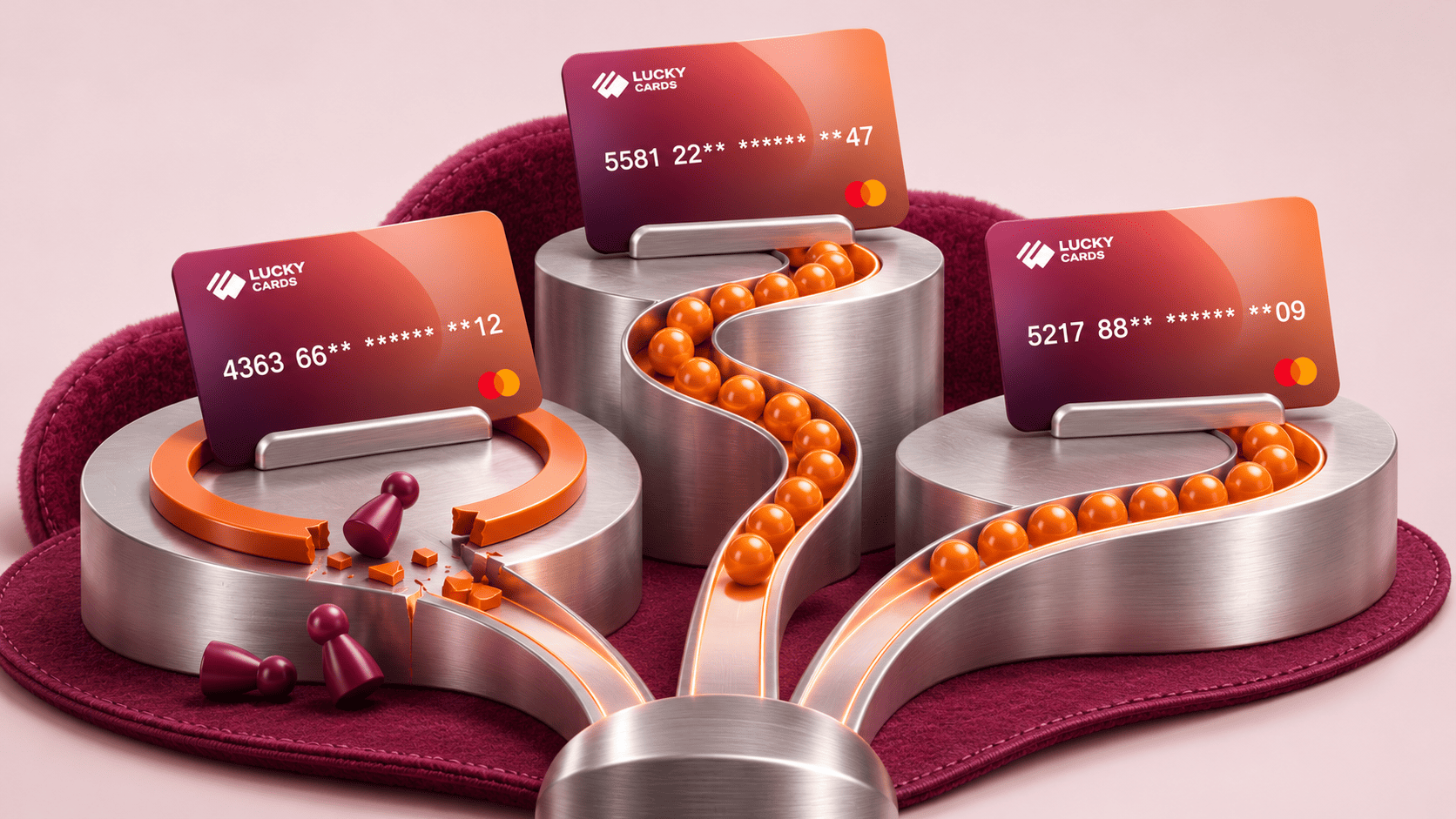 Ask the service a few direct questions. How often are new issuers connected and does the service have a reserve for the case when the usual range stops being approved? Are there exclusive BINs that only they work with? Who selects the range for your platform and GEO: you at random or a manager who sees the statistics? A good answer sounds specific. For example, LuckyCards' pool is updated regularly, some ranges are exclusive, and selection for the platform and GEO is done by a dedicated account manager. Exclusivity is important for a simple reason: when there is no crowd of third-party accounts on a range, the provider sees the entire cash flow and notices the risk before it hits the approval rate.
Practical advice: do not tie your entire budget to one BIN. Distribute your funnels across at least two or three ranges so that the burnout of one does not stop everything at once. If the service has a BIN catalog, check it regularly and test new ranges on small budgets before the old one starts to fall apart.
3DS: when it is needed and why you need to think about it in advance
Some platforms and GEOs request payment confirmation. If the card does not support 3DS, the payment will fail, and no BIN reputation will fix this. Therefore, 3DS support should be a basic requirement, not a bonus. Check it before issuing a large batch, and not at the moment when the first payment did not go through.
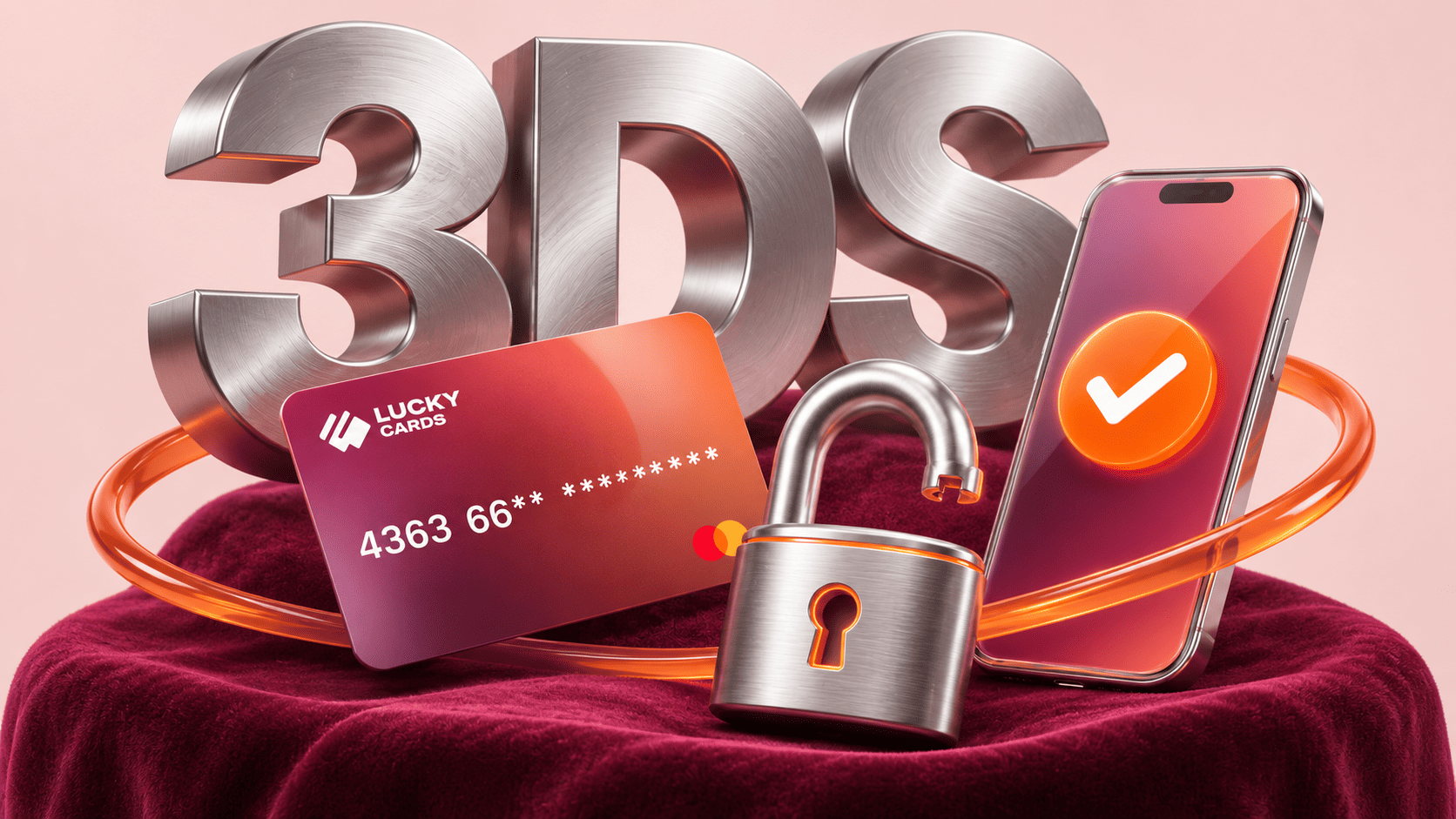 It is also important where the confirmation codes arrive and how fast you receive them. If the team works in different time zones and the confirmations go to one phone, this is a bottleneck. Think about how the code will get to the person who is currently running traffic.
Limits: a setting that saves from "inexplicable" declines
Ad platforms charge money unevenly. There are small verification transactions, and there is the main charge upon reaching the billing threshold. If the transaction limit or card limit is below the billing threshold, the payment fails, and the reason seems mysterious.
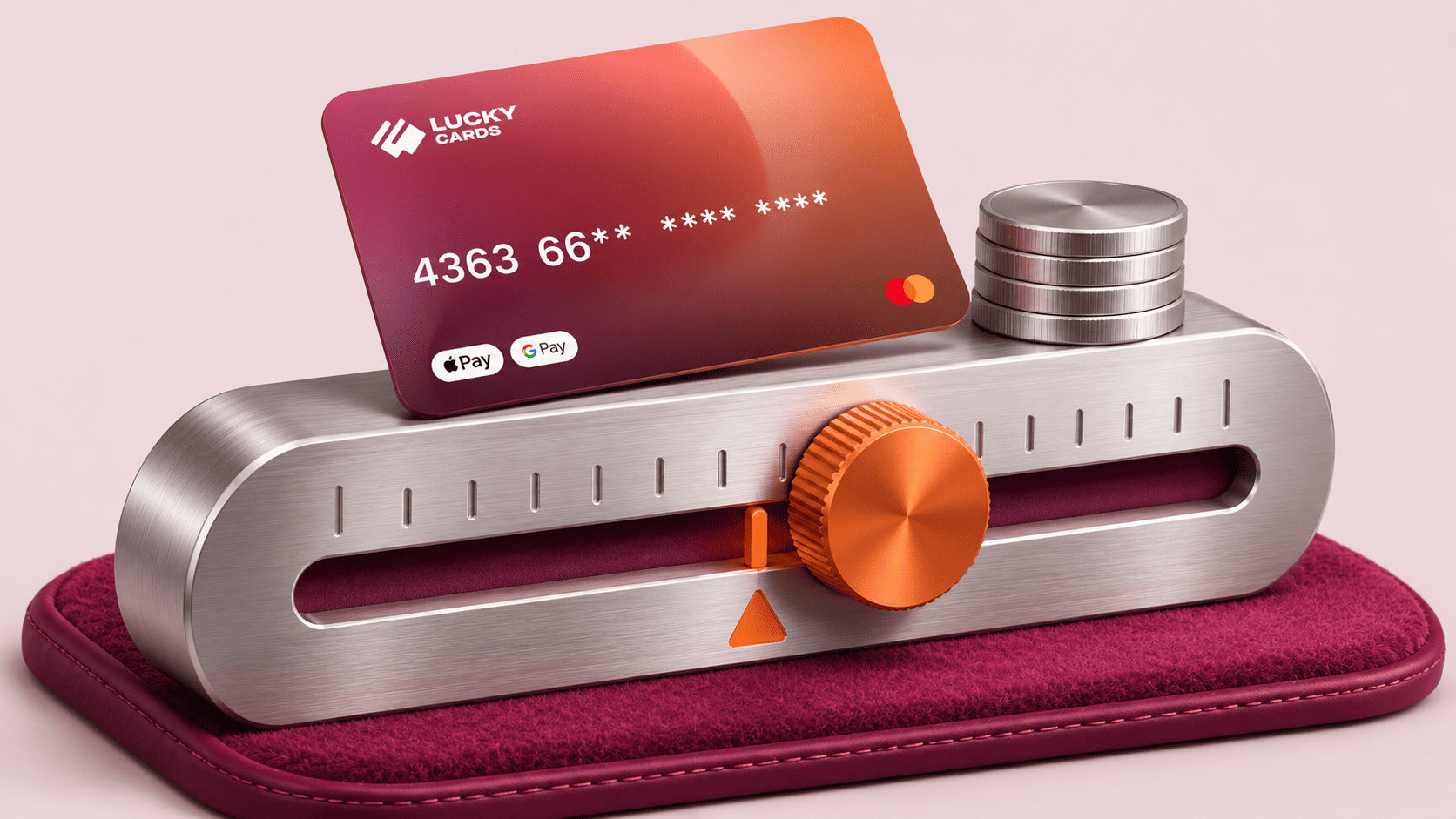
Develop a simple rule. Before linking a card, find out the billing threshold for your platform and account currency, set a limit with a margin, and do not change it in the middle of a campaign unnecessarily. The ability to change limits in bulk comes in handy: when a batch of cards goes into a funnel, editing them one by one is a waste of time and a source of errors. In LuckyCards, transaction and card limits are configured right in the dashboard, including for a whole group of cards.
If the platform requests a small amount for checking during the first charge, do not restrict the card too strictly, otherwise the verification will not pass. A limit that is too low is just as harmful as one that is too high: the first breaks the payment, the second increases losses if the account gets banned anyway.
Balance and auto-replenishment: how not to be left with an empty card
A card with a zero balance at the moment of billing equals a decline, and repeated declines ruin the account's reputation. The easiest way to avoid this is auto-replenishment. If the service supports it, turn it on for cards that are on active funnels.
 If you top up manually, get into the habit of checking the balance before weekends and night hours, when you won't be able to top up quickly. Separately think about the path of money: in what currency and by what method you top up the account. Services that accept cryptocurrency and bank transfers, and keep accounts in dollars and euros to match the currency of the ad accounts, save you from unnecessary conversions.
Account cards or individual cards: what to choose
There are two approaches. Either each card is topped up separately and lives its own life, or as many cards as you want are linked to one account, and the account itself is topped up. The second approach is more convenient at scale: money doesn't get stuck on empty cards, and it's easier to redistribute the budget between funnels.
If you are testing a lot of accounts, account cards almost always save your nerves. If you have a few stable funnels and you want a strict separation of budgets, individual cards with a custom limit give better control. A good service allows you to use both formats.
Teamwork: how not to hand over access to absolutely everything
As long as you are alone, any interface seems convenient. Problems appear when there are several media buyers in the team, each has their own budget, and the owner wants to see the whole picture while not giving everyone full access.
What to check in a service: can the owner invite members, distribute budgets among them, limit the available BINs and limits, and also see all cards and transactions? Does each media buyer see only their own cards and their own balance? If not, you will sooner or later run into confusion: who spent, on what, and why the account stopped. In LuckyCards such a model is implemented, and this is exactly what teams with several people need.
The second important point is automation. If you issue a lot of cards, bulk issuance and API save hours. Through API, you can connect issuance and replenishment to your CRM, rather than copying details manually. But you should not automate what you have not yet debugged by hand: first make sure the process works on a few cards, then scale.
What to do in case of declines: a short procedure
A decline does not necessarily mean a problem with the card. Act in order, and do not panic.
 First look at the reason: is there enough balance, is the limit not exceeded, did the payment request 3DS. This solves most cases. Then check if the decline is related to the account itself: if payment goes through on other cards and other accounts, the problem is in the card-account combination. If not, then in the BIN.
If one BIN starts to fail massively, do not pour additional budget into it. Transfer new funnels to another range and inform your manager about it: a good provider is interested in figuring it out. Do not reuse a card that has already led to an account ban, and do not link it to new accounts: it carries a negative history.
Turn on transaction notifications in Telegram if the service supports it. Then you will see the decline immediately, and not in the morning when reconciling statistics. In affiliate marketing, an hour of downtime of a strong funnel usually costs more than any fee.
Evening test: how to check a service without big expenses
You do not need to believe a single landing page, including any of those mentioned here. A check takes one evening.
Make a small test deposit and issue a few cards. Link them to the platforms you work on, and not only to clean accounts, but also to "moody" ones. See what portion of the cards got linked, how 3DS behaves, and how fast notifications arrive. Change the limits and make sure it is done in a minute. Write to support outside of working hours and evaluate how quickly they answered you. Check internal transfer and balance withdrawal: this is exactly where many services have hidden fees.
If all stages went smoothly, scale gradually. At first, keep a backup service or at least a backup BIN: even a reliable provider can face a problem on the issuer's side.
Payment provider as part of the whole stack
The card is just one element of the scheme. Before payment, the account goes through moderation, and the traffic goes through filtration. If something is wrong at these stages, no card will save you. Therefore, in a well-thought-out stack, the payment layer, proxies, antidetect, and campaign protection are selected together: a clean payment footprint, a neat network profile, and a page that withstands manual review. For the latter, cloaking and an AI-based white page generator in Cloaking.House will come in handy. One complements the other, and a weak link at any point nullifies the efforts in the rest.
Briefly about the main points
When choosing a card service, evaluate not the slogans, but what can be verified:
- How the work with BINs is structured and how fast the pool is updated;
- Whether 3DS is supported;
- Whether you can manage limits yourself;
- What makes up the real cost;
- Whether there are refunds and team tools;
- How fast support responds;
Do not keep your entire budget on one range, set up limits for the platform's billing threshold, turn on notifications and auto-replenishment, and always check any new service with a small test first.
With the promo code HOUSE new users receive 50 cards as a gift from LuckyCards





Be the first to share your opinion!
We value your feedback — share your thoughts.