


A few years ago, proxy servers were associated exclusively with the toolkits of developers or cybersecurity specialists. Today, it is the foundation of any digital project working with an intensive flow of requests: from collecting competitor data and monitoring advertising campaigns to mass account management and deep SEO audits.
 The reason for the change is simple: web resources have become "smarter". Modern marketplaces, social networks, and advertising platforms have implemented multi-level anti-fraud systems. They evaluate not only the fact of the request itself but also the entire background: where the request came from, how often, with what parameters, and to what extent the user's behavior imitates the actions of a real person.
Key takeaway: Your automation is only as effective as how correctly your network "fingerprint" is formed. Proxies - are not a way to bypass blocks, but a professional tool for configuring a network profile for the stable operation of your business.
In this article, we will dissect the structure of proxies, compare protocols and IP formats, and also determine what to pay attention to when choosing a provider so that the infrastructure works like clockwork.
The anatomy of a proxy connection: what happens between a click and the server's response
To appreciate the benefits of proxies, it is worth remembering what a standard network request looks like.
When you go to a website, the browser sends a request directly. The target server records your real IP, provider data, and location. If hundreds of requests come from a single IP per minute, the security system marks the activity as suspicious and restricts access.
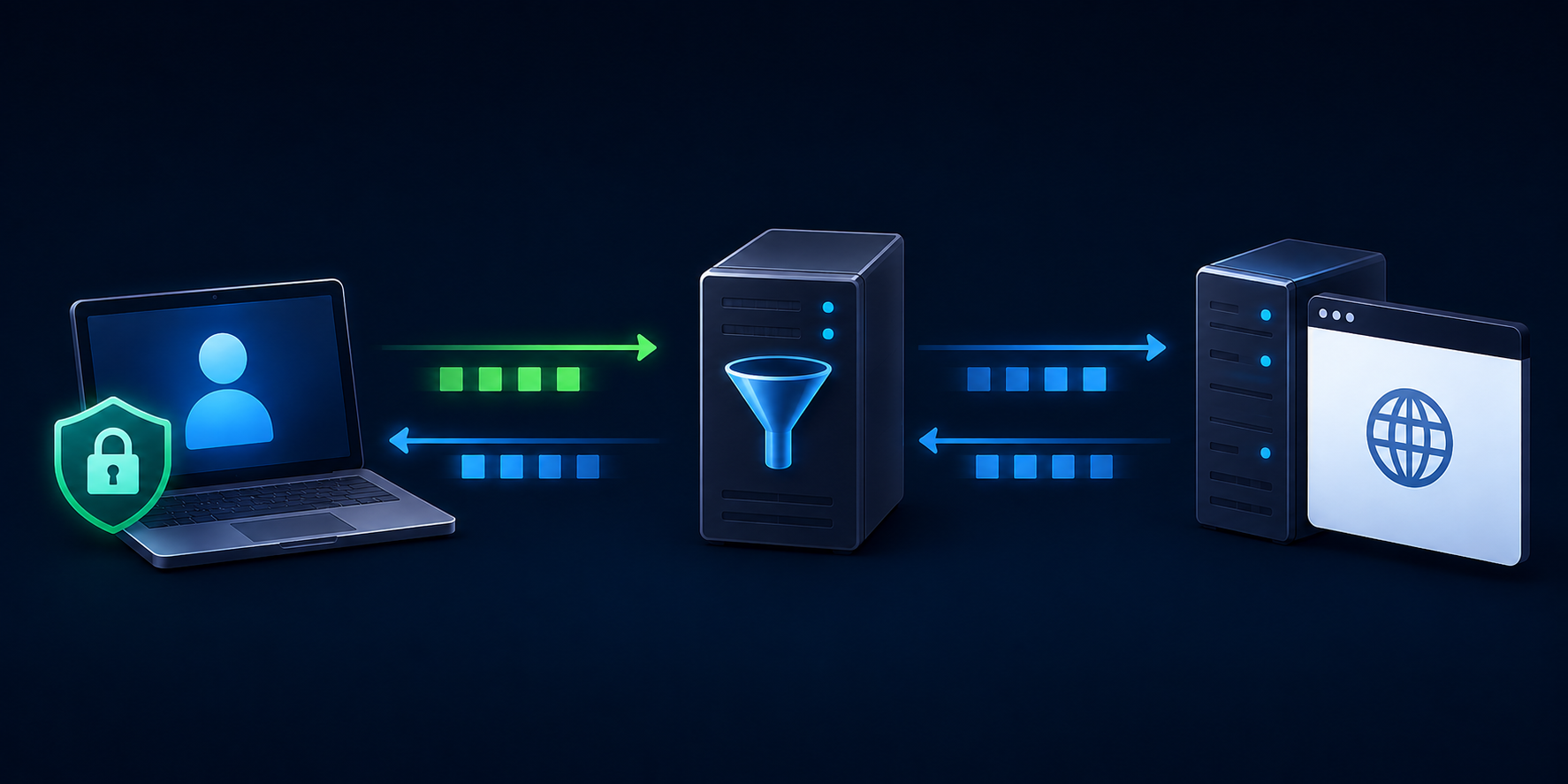
The proxy server acts as a "buffer". Your request is directed to the proxy, which replaces the original headers with its own IP address and transmits the request further. Thus, the target resource interacts with the proxy server's IP, and not with your real address.
Transit scheme:
Your client (hidden IP) → Proxy server (substitution of its own IP) → Target site (sees the proxy IP) → Proxy server (returning the response) → Your client.
Protocols: HTTP/S vs. SOCKS5
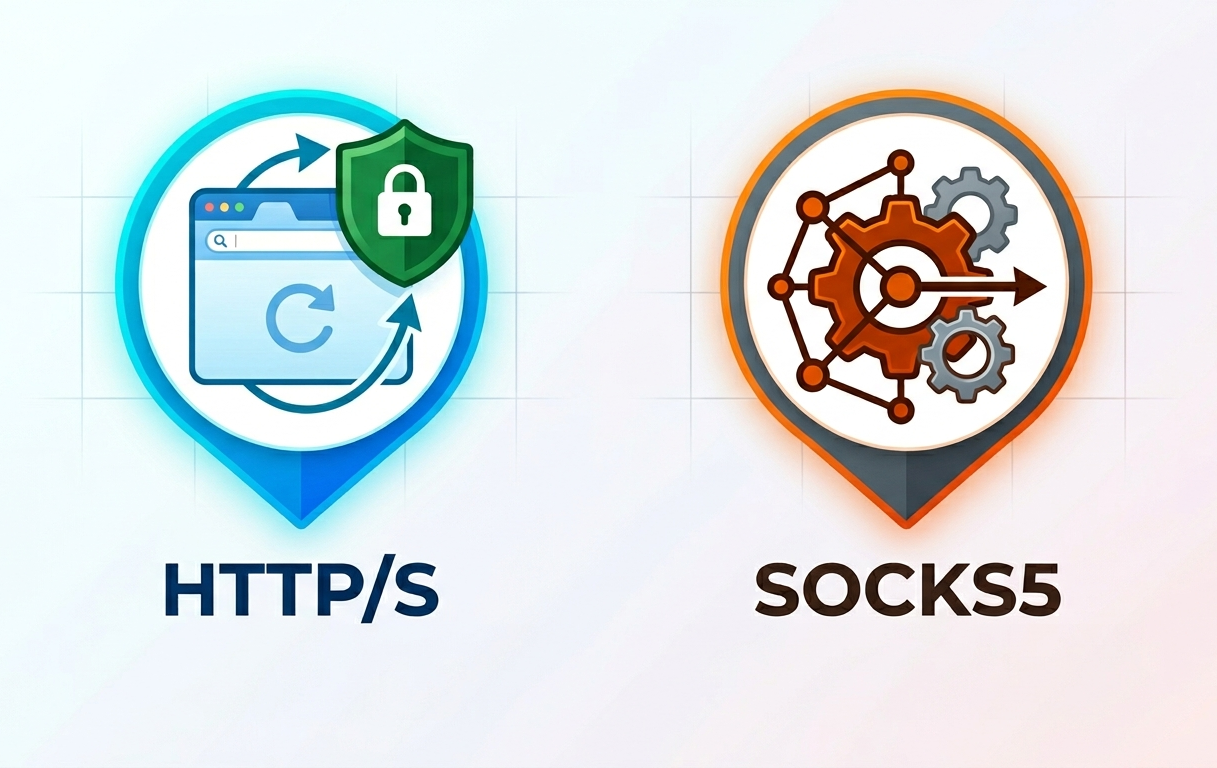
HTTP/HTTPS proxies - the standard for web tasks. They can interpret and, if necessary, modify HTTP headers. The HTTPS version provides data encryption via the CONNECT method, which makes them ideal for scraping and automating browser actions.
SOCKS5 proxies operate at a lower network level. They do not delve into the data structure, but simply transmit streams (TCP/UDP). This makes them universal for any types of connections: from mail protocols and gaming sessions to FTP transfers.
| Parameter | HTTP/HTTPS | SOCKS5 |
| Traffic type | Web only | Any TCP/UDP |
| Speed | Medium | High |
| Headers | Analysis and editing | Transparent transmission |
| UDP | No | Yes |
| Application | Browsers, scrapers | Any software |
Pro tip: If your work is limited to a web interface - HTTP proxies are enough. If you use specialized software or need maximum performance, SOCKS5 will be a more preferable option.
What do anti-bot systems analyze?
Modern security systems evaluate a whole "cocktail" of factors:
IP reputation and its presence in blacklists.
ASN (Autonomous System Number): whether the address is "residential", corporate, or server-based.
Request intensity (RPS).
Header validity (User-Agent, Referer, Accept-Language, etc.).
TLS fingerprints (JA3/JA4 fingerprint).
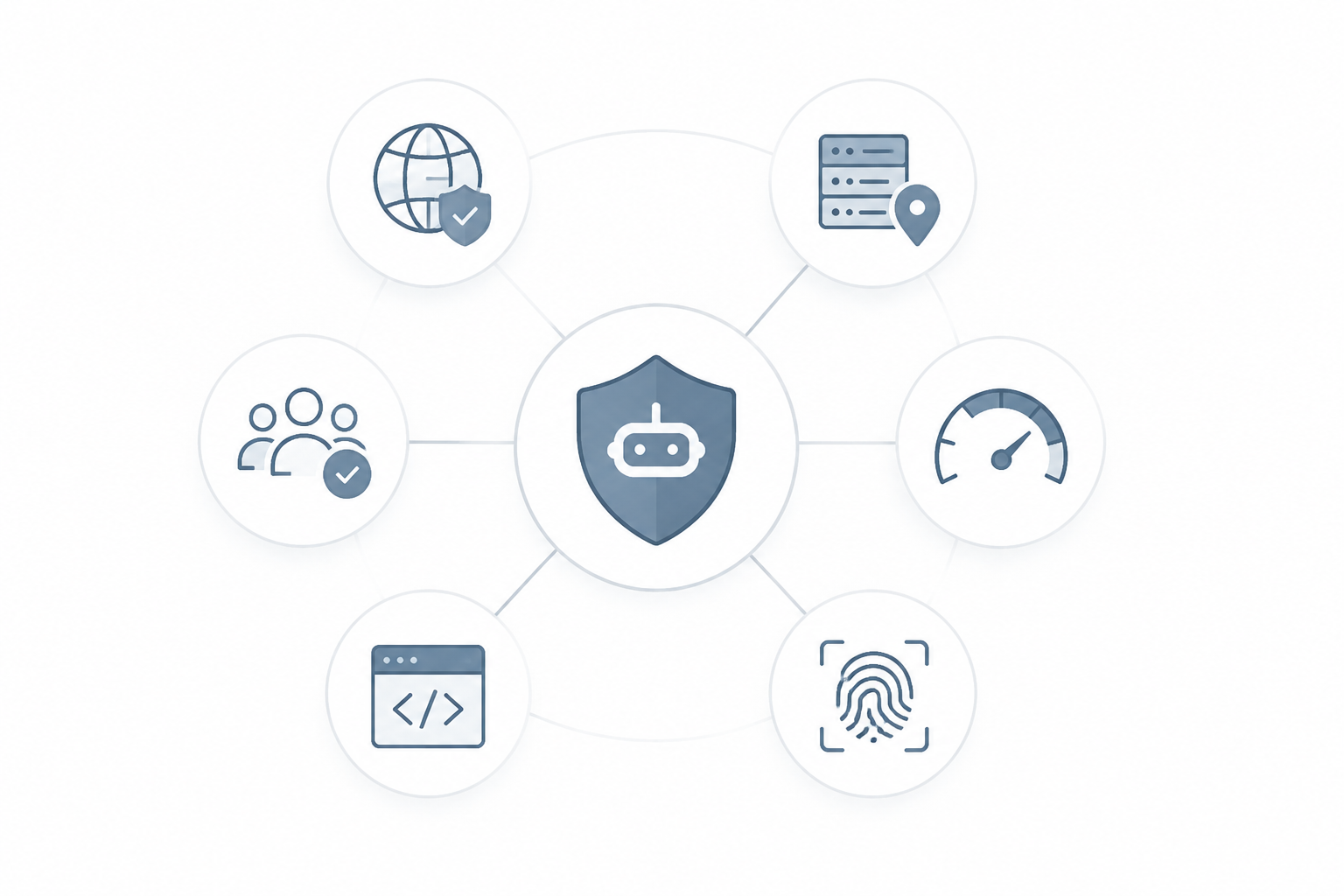 IP address purity and proper ASN configuration - this is the baseline, without which even the most advanced protocol cannot guarantee success.
IPv4 vs. IPv6: what is the difference in practice?
Choosing a protocol - is not only a technical aspect, but also a matter of compatibility of your software with the target platforms.
Availability and compatibility
IPv4 - is a "classic", recognized by all internet resources. IPv6 - is a more modern standard that is not yet accepted everywhere. Although giants like Google or Amazon work with both stacks, many niche sites still do not know how to correctly route IPv6.
Important: Before launching a project, make sure that the target resource supports IPv6. Otherwise, requests will be rejected without explicit error messages.
Technical superiority
IPv4 has a shortage of addresses, which makes them expensive. IPv6 offers almost infinite space, which allows changing IPs as often as possible without the risk of reusing "polluted" addresses. In addition, IPv6 works faster due to the absence of NAT translations.
| Parameter | IPv4 | IPv6 |
| Price | Higher | Lower |
| Compatibility | Full | Limited |
| Pool reputation | Medium | High |
| Speed | Stable | Slightly higher |
Datacenter, residential, or mobile: which architecture to choose?
Your choice determines how platforms will perceive your traffic.
Datacenter: Addresses from server racks. High speed and low price, but they are easier to detect by security.
Residential: IPs of real home users. High level of trust, but higher price and possible connection interruptions.
Mobile: IPs of mobile operators (4G/5G). Maximum level of trust, but the highest cost and session control limitations.
Why datacenter proxies - are the choice for automation?
They are often underestimated, although for large-scale tasks this is the best option:
Speed: Direct connection to datacenter backbones.
Uptime: Stability without accidental disconnects inherent to home routers.
Control: The provider always knows the history of every address in its pool.
Economy: With high request volumes, datacenter proxies are exponentially more profitable than residential ones.
How to determine the reliability of proxy infrastructure using PSBProxy as an example
Choosing a provider - is buying peace of mind for your business process. Let's break down the key reliability markers using PSBProxy as an example.
Quality criteria:
Instant delivery: No waiting - access to resources opens immediately after payment.
Exclusivity (strictly to one user): Each IP is assigned only to you. No "dirty" history due to someone else's actions.
Purity control: If an IP is compromised - it is immediately removed from the pool.
Standards support: Working with both protocols (HTTP/S + SOCKS5) and two stacks (IPv4 + IPv6) in one dashboard.
Uptime: Use of professional datacenters with channel redundancy.
Live support: Help with configuring your scripts, and not just a standard list of answers from a FAQ.
Tip: Test any provider through IPHub, IPQS, or Scamalytics. A professional service is always transparent regarding the reputation of its IPs.
Step-by-step breakdown: how to deploy a proxy infrastructure in 5 minutes
Step 1. Registration
 The PSBProxy interface is tailored to save time: authorize in one click via a Google account or enter your data the classic way. This is convenient for those who do not like entering passwords once again.
Step 2. Choosing the traffic volume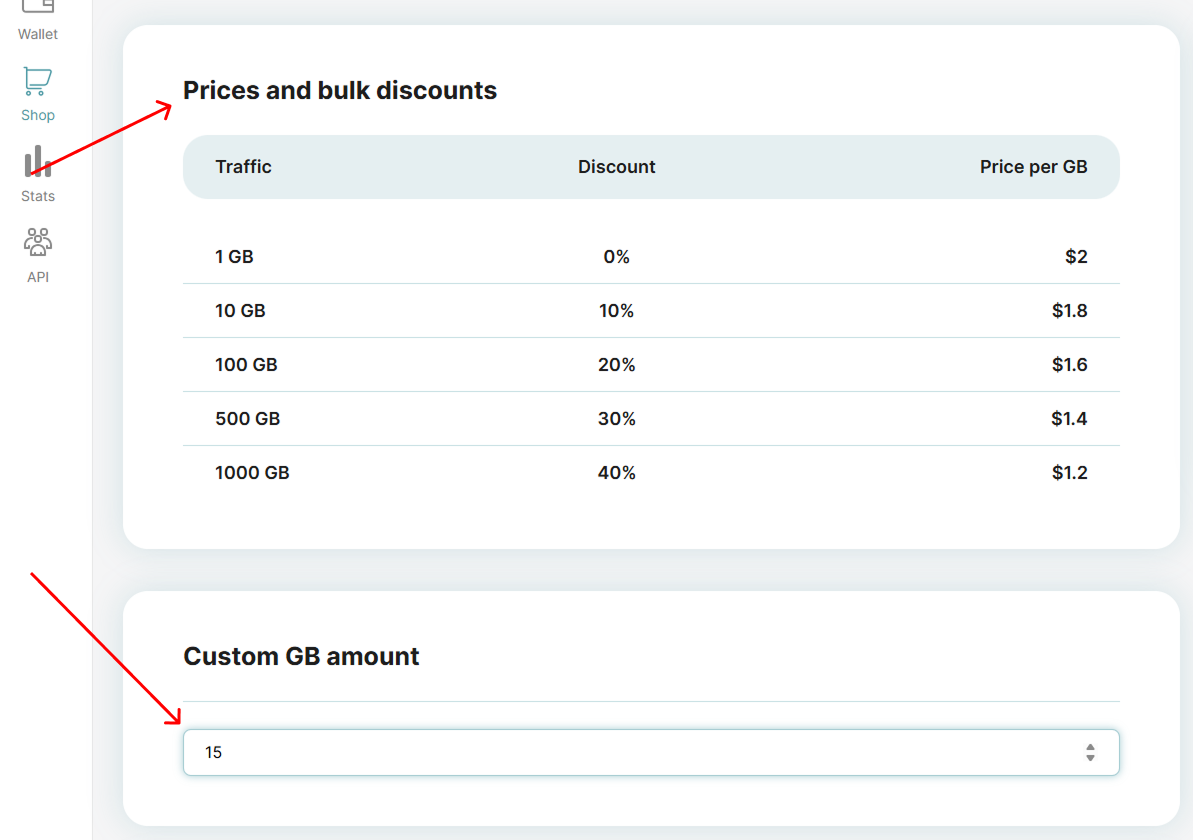 The system offers flexible configuration: a slider or entering exact data in GB. This allows you to test the service on a small volume before massive implementation.
Step 3. Payment Cryptocurrency integration makes the process as fast as possible. This is critically important under tight deadlines.
Step 4. Management and API
In the control panel, you will find everything you need: from getting API keys to usage statistics and profile management. All tools are available in one window, which allows you not to be distracted from work.
The synergy of Cloaking.House and PSB Proxy: maximum protection in arbitrage
In traffic arbitrage, the security and longevity of accounts depend on a comprehensive approach to masking. Real stability is achieved when using professional tools together. The combination of an advanced traffic filtering system Cloaking.House and flawlessly clean IP addresses from PSB Proxy creates an insurmountable barrier for the security algorithms of advertising platforms.
While Cloaking.House effectively recognizes and cuts off unwanted bots and moderators based on behavioral factors, datacenter or mobile solutions from PSB Proxy provide a perfect network fingerprint and maximum level of trust for sessions. The joint integration of PSB Proxy and Cloaking.House - is a ready-made recipe for extending the "life" of your consumables and successfully passing even the toughest anti-fraud checks.
Conclusion: a checklist before launching large-scale processes
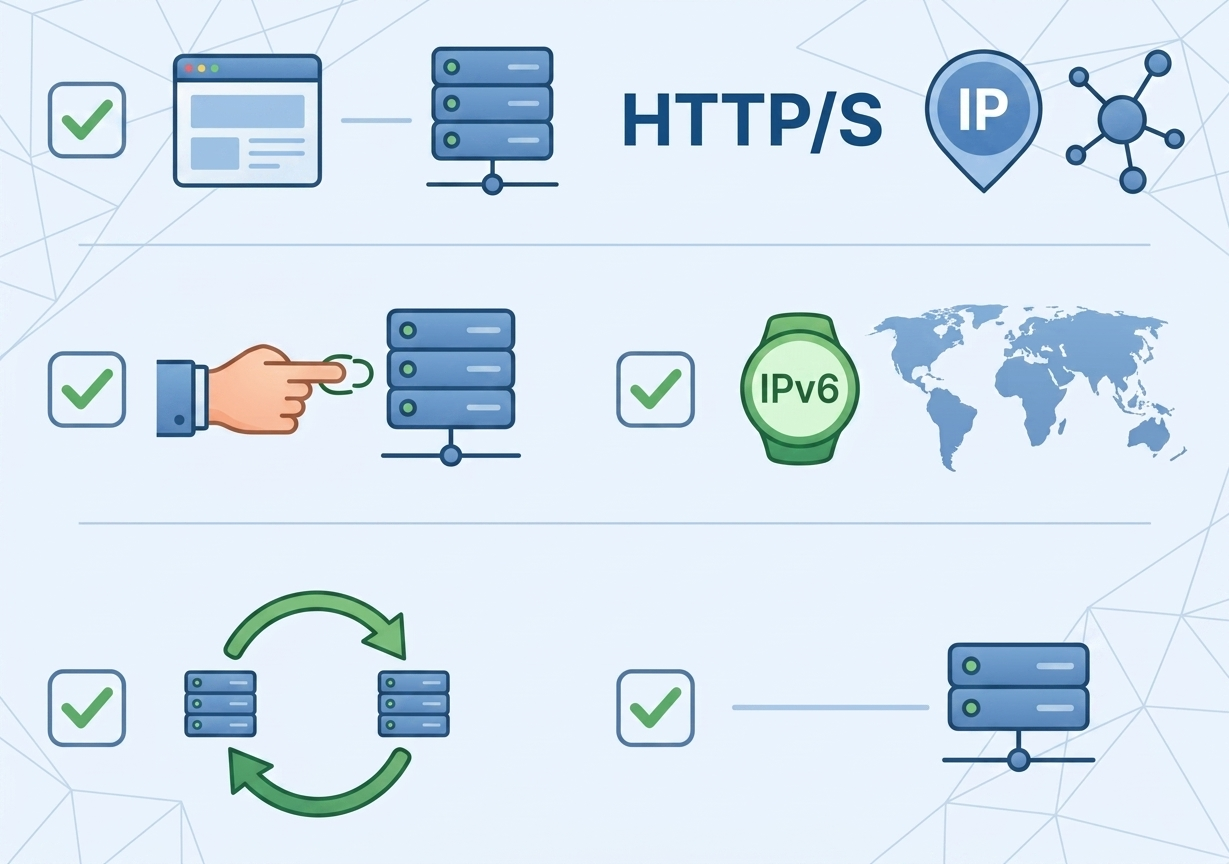 Proxies - are the "network face" of your project. The result of your automation depends on their quality.
Launch checklist:
Choosing a protocol for the task (HTTP/S for web, SOCKS5 for applications).
Checking site compatibility with IPv6.
Guarantee of exclusive access to IPs.
Auditing the pool reputation before scaling.
Presence of SLA and backup channels at the provider.
Choosing between static and rotating IPs.
Availability of tech support in your time zone.
Transparent billing model (traffic or time).
Mandatory testing on a small volume before launching into production.
Remember: a reliable proxy infrastructure - is a foundation that is unnoticeable as long as it works perfectly. By choosing a quality solution, you build a process that will work stably and bring results.






Be the first to share your opinion!
We value your feedback — share your thoughts.