



In affiliate marketing, profitability depends not only on finding attractive offers and affordable traffic. Even campaigns with strong creatives and optimized landing pages can show poor results if visitors in different countries face inconsistent content, broken redirects, or unavailable offers.
For webmasters and affiliate marketers working with multiple GEOs, understanding what the user actually sees is crucial. Geo-testing helps identify these issues before they affect the conversion rate and ad budgets.
By using residential proxies, marketers can check regional landing pages, affiliate links, and campaign performance from different geographic locations.
Why Geo-Testing is Important in Affiliate Marketing
Affiliate marketing involves buying traffic and directing visitors to landing pages, affiliate offers, or monetized websites. The goal is to generate revenue that exceeds the cost of acquiring that traffic.
However, campaigns often behave differently depending on the country. An offer available in the US might redirect German visitors elsewhere, and a landing page targeted at Brazil might display the wrong language or currency.
Imagine a media buyer running campaigns in the US, Germany, and Brazil. While all three markets generate clicks, conversions in Brazil remain unexpectedly low. The problem might not be traffic quality. Visitors could be landing on an outdated page, facing regional restrictions, or incorrect redirects.
Without geo-testing, marketers risk wasting ad budgets by optimizing the wrong campaign elements.
How Residential Proxies Improve Geo-Testing
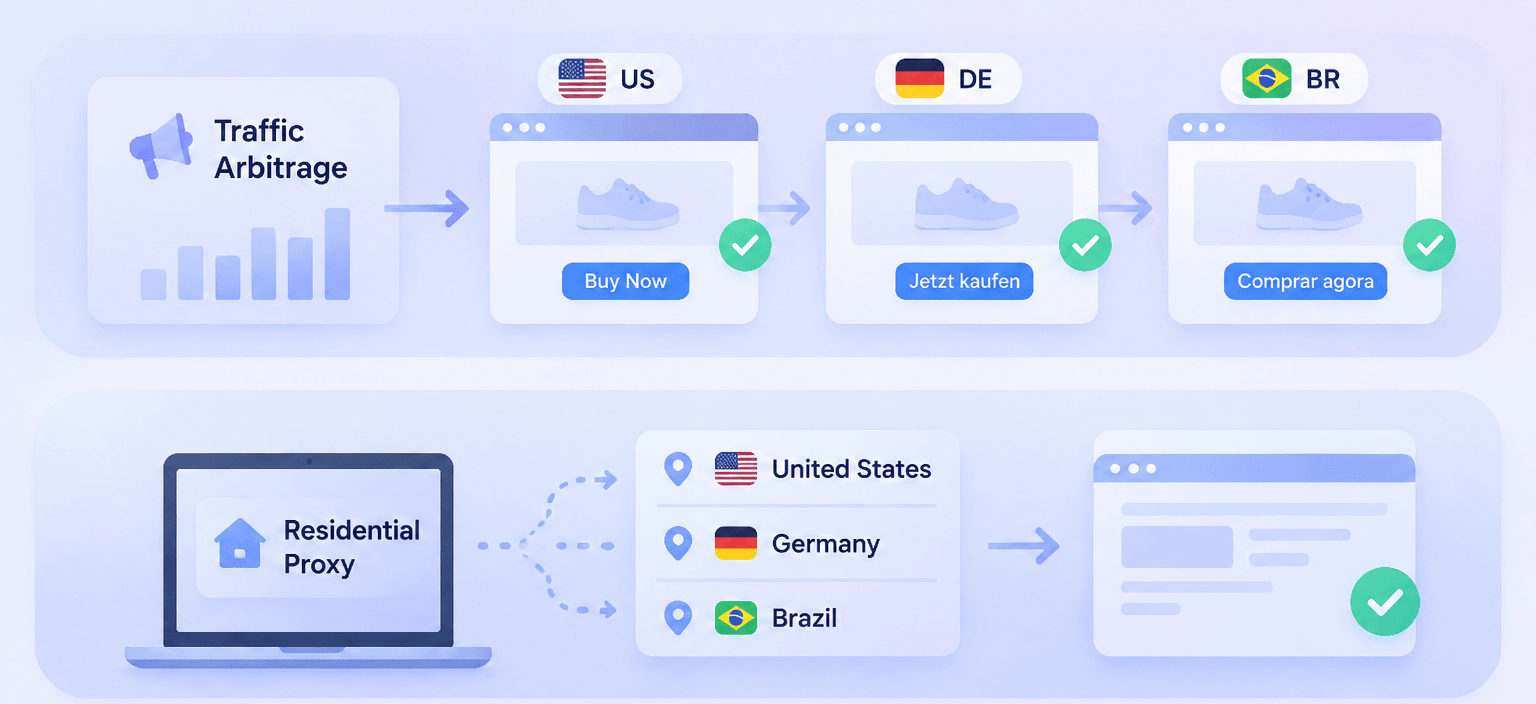
Residential proxies route internet requests through IP addresses associated with real user connections. This allows marketers to check location-dependent website content from different countries. Instead of relying on a single local connection, affiliate teams can use residential proxies to study how landing pages, affiliate offers, and redirects perform in their target markets.
For example, a marketer promoting an e-commerce offer in France can check if French visitors see the correct language, prices, and promotional info. The same test can confirm if the product is available locally, if shipping information is relevant, and if the checkout (payment page) supports methods typically used by French customers.
Residential proxies are also useful for checking affiliate tracking links and identifying country-specific accessibility issues. A link might appear to work but redirect visitors from one location to a fallback page. In other cases, the final offer might be correct, but a crucial tracking parameter could be lost during the redirect process.
However, for accurate testing, browser language, cookies, device settings, and campaign targeting must be considered alongside IP location. A German IP address combined with a US time zone, English browser language, and old cookies might not replicate the user experience of a typical German visitor.
The session type also matters:
Rotating connections are useful when teams need to compare results from multiple IPs or check overall accessibility.
Sticky sessions are more suitable for multi-step funnels, as they maintain the same connection while the tester moves from the tracking link to the landing page, form, and final conversion step.
Four Practical Applications of Geo-Testing
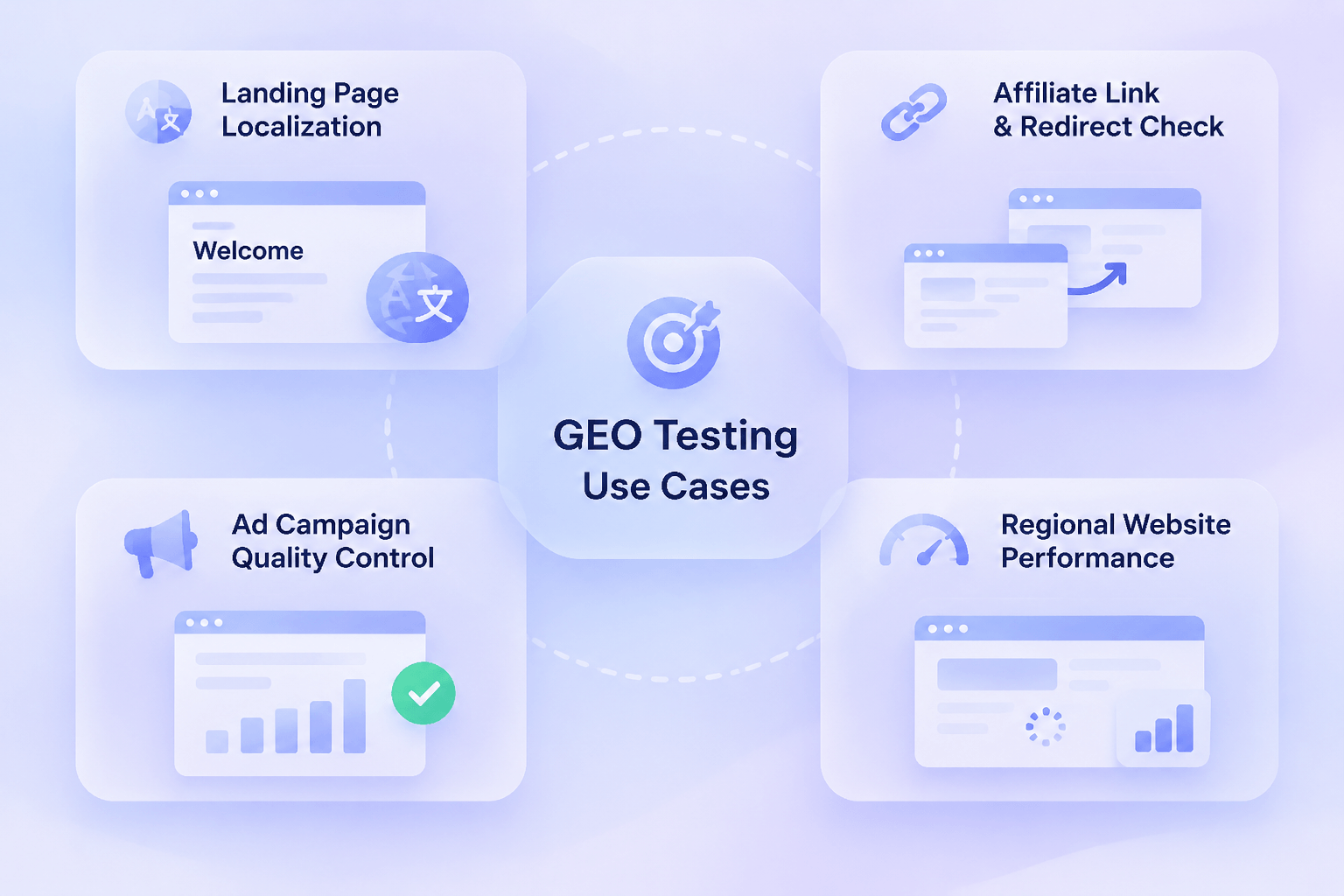
Landing Page Localization - A landing page that performs well in one country may not provide the same user experience in another. Marketers should check regional languages, currencies, product availability, and promotional messages. Localization errors can reduce user trust and negatively impact the conversion rate. Testers should also pay attention to date and number formats, shipping terms, legal notices, contact info, and accepted payment methods. Automatic translation might make the page readable, but it doesn't guarantee the offer is commercially viable for that market.
Checking Affiliate Links and Redirects - Affiliate campaigns often involve multiple redirects between tracking links and final offers. Testing these links from different GEOs helps identify incorrect destinations, unavailable offers, and missing tracking parameters before significant ad budgets are spent. The tester should start with the exact campaign URL, capture each redirect, and ensure that campaign IDs, click IDs, and sub-IDs remain in place where expected. A successful status code doesn't always mean the path was completed correctly. A visitor might land on a homepage, country selection screen, or an unrelated fallback offer.
Ad Campaign Quality Control - Marketers can check if their campaign landing pages match the advertised offers in each target market. This helps maintain consistency across ad creatives, landing pages, and affiliate offers, while simultaneously identifying regional content discrepancies. A campaign promoting a specific discount should not direct local users to a page where that discount is unavailable. Similarly, prices, product names, and conditions shown in the ad must match the landing page.
Regional Website Performance - Website accessibility and loading speed can vary across countries. Testing landing pages from different locations helps webmasters identify slow-loading resources, connection issues, and regional accessibility problems that could affect campaign results. The main page might load, while the pricing API, checkout widget, video player, or cookie consent tool throws an error because they load from a different domain.
Building an Effective Geo-Testing Workflow
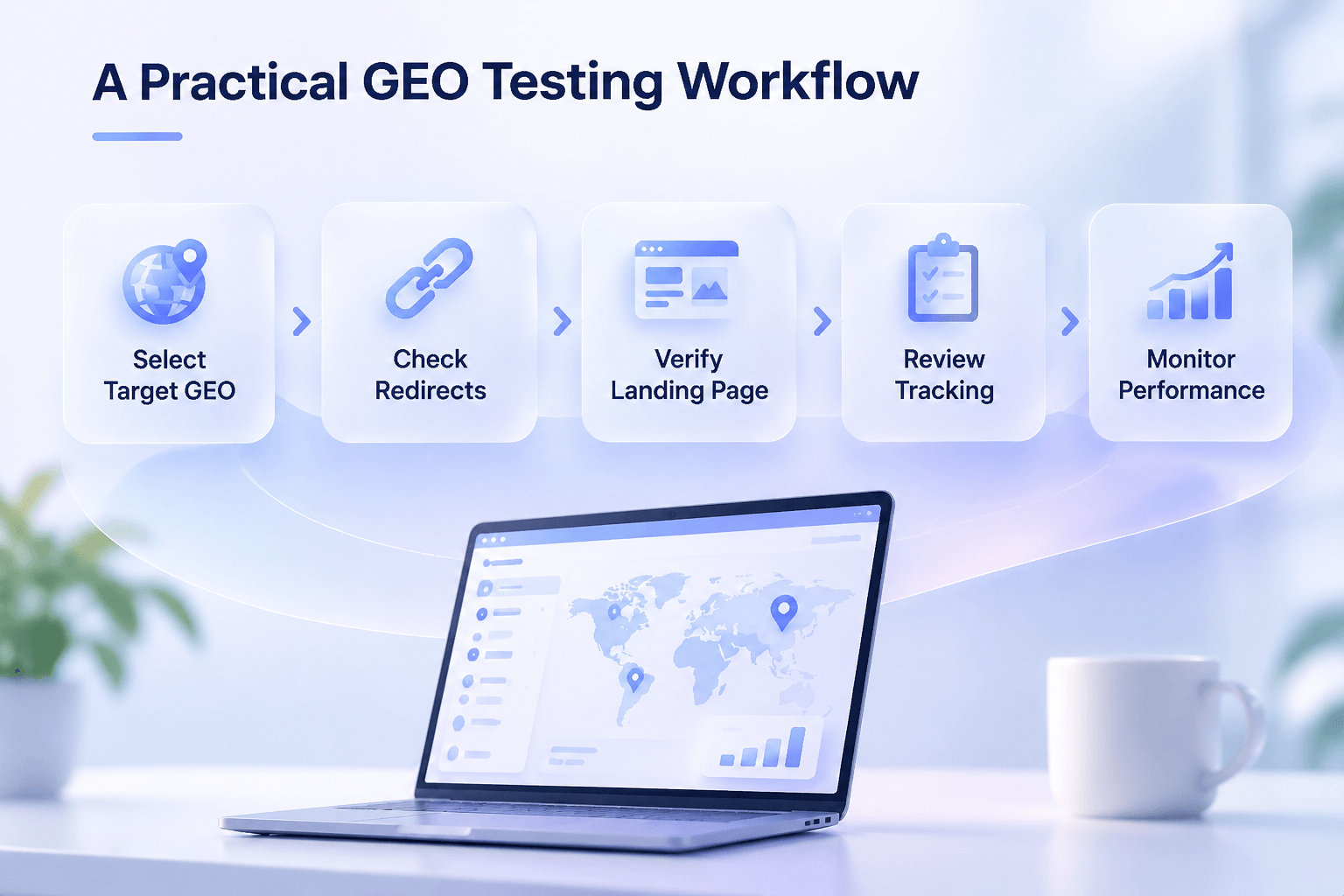
A practical geo-testing workflow begins with identifying the countries and campaigns that account for the largest share of ad spend. Before launching a campaign, marketers should check landing page accessibility, affiliate redirects, and tracking parameters in the intended target markets. These checks should also be repeated after landing page updates, affiliate network changes, or unexpected drops in conversion.
| Campaign Element | What to Check |
| Target GEO | Correctness of regional content |
| Landing Page | Language, currency, accessibility |
| Affiliate Links | Redirects and tracking parameters |
| Offer Landing Page | Site accessibility and offer availability |
| Website Performance | Loading speed and errors |
Using sequential sessions when testing a multi-step funnel can help yield more reliable results. Automated checks must comply with website and affiliate network policies and avoid generating artificial ad activity.
In turn, to protect real campaigns from parasitic traffic generation by competitors, bots, or moderators, it is recommended to use reliable filtering tools - such solutions as Cloaking.House allow you to efficiently distribute flows and cut off any unwanted and non-targeted traffic.
Every failed test should include enough evidence for another person to reproduce it, such as time, country, device profile, start and end URLs, redirect history, screenshot, and visible error.
When conversion rates drop suddenly, teams can check the user journey in a fixed order. First, ensure the page is accessible. Then check redirects, localization, tracking parameters, conversion elements, and loading behavior. This sequence helps prevent unnecessary bid and creative changes before the technical funnel is verified.
For example, suppose a Brazilian mobile campaign usually converts at 2.4%, but drops to 0.8%, while clicks and ad spend remain stable. A regional test reveals that the landing page still opens, but mobile visitors are now routed through a new tracking domain and land on an international fallback offer with USD pricing. The data points to a routing issue, not poor traffic quality. The team can pause the affected route, request a fix, and re-test the Brazilian offer before resuming normal spend.
How RapidProxy Supports Affiliate Teams

A reliable proxy infrastructure helps webmasters conduct geo-testing across multiple markets without depending on a single internet connection. RapidProxy provides access to over 90 million residential IPs worldwide, supporting country and city-level targeting, smart IP rotation, sticky sessions, and HTTP(S)/SOCKS5 protocols.
Sticky sessions allow marketers to maintain a stable connection while exploring multi-step affiliate funnels, whereas rotating residential IPs support broader geographic testing. RapidProxy also offers high concurrency (multi-threading), non-expiring traffic, and 99.99% uptime, making it suitable for webmasters managing campaigns in different markets. With plans starting at $0.55 per GB, marketers can access residential proxy infrastructure without unnecessary long-term traffic commitments.
New users can get started with RapidProxy and use the promo code RAPID10 to get a 10% discount on eligible purchases.
Final Thoughts
Successful affiliate marketing requires more than just effective ad creatives and competitive traffic prices. Technical issues within landing pages, affiliate redirects, and regional user experiences can significantly impact campaign profitability.
Regular geo-testing helps webmasters identify these problems, improve campaign quality control, and make more informed advertising decisions.
With residential proxy-based solutions like RapidProxy, affiliate teams can more effectively monitor regional campaign experiences and reduce preventable ad budget waste.






Be the first to share your opinion!
We value your feedback — share your thoughts.