


Cloaking has long been one of the key tools for working with gray verticals and is used in almost all popular ad networks — including Meta Ads, Google Ads, and Bing Ads. If you work with cloaking regularly, you have likely encountered a situation where moderation exposes the Offer Page. At such moments, it is not always worth immediately blaming the cloaking system itself: in many cases, the reason lies in configuration errors, weak masking, or overlooked precautions. That is why it is important to understand in advance how ad networks detect cloaking, what signals give away the setup, and why even a working scheme can be quickly exposed.
If you opened this material before encountering the problem, that’s even better. In this article, we will break down the most frequent mistakes that lead to cloaking detection during launch, and examine which factors most often lead to the exposure of a setup by advertising platforms.
Use of Built-in Ad Network Metrics
The use of built-in metrics from advertising platforms is one of the most common factors that helps ad networks detect cloaking. Many affiliates and media buyers connect tools such as Facebook Pixel or Google Analytics to more accurately track conversions, clicks, and user behavior on the Offer Page. However, it is at this stage that a serious vulnerability arises: the moderation system receives an additional data source and can correlate the ad link, the user path, and the actual page where analytics are collected.
 From the ad network's perspective, such a link looks suspicious and illogical: the ad and the White Page formally point to one entry point, while events, pixels, and analytical signals are recorded on a different page. Such a discrepancy between the declared destination and the real place of data collection becomes a noticeable marker for automated verification systems and manual moderation. This is why the use of metrics directly linked to the advertising platform is often considered one of the factors accelerating the exposure of the Offer Page and the entire cloaking scheme.
Obvious Differences Between Offer Themes and White Page Content
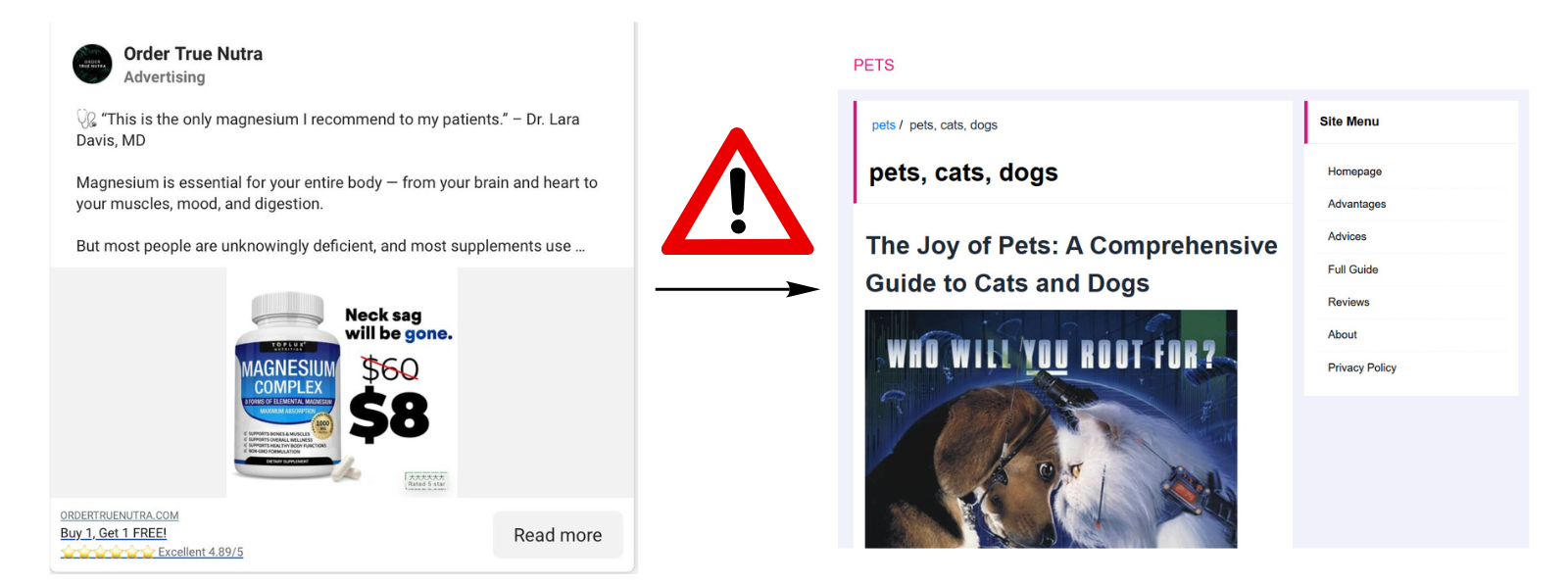 A frequent reason ad networks detect cloaking is an obvious thematic mismatch between the Offer Page, the ad, and the White Page. If the ad creative and the offer explicitly talk about weight loss, dietary supplements, or another specific product category, while the White Page is dedicated to an entirely different topic, this gap quickly turns into an obvious signal for moderation. The desire to make the page as "safe" as possible often leads to the opposite effect: instead of natural logic, the advertising system sees an artificial substitution of meaning, and it is these inconsistencies that most often become a trigger for additional verification.
For advertising platforms, not only the formal cleanliness of the page is important, but also the general logic of the user journey. When an ad promises one thing, the domain and transition seem to lead in one direction, but the content of the White Page falls out of the general theme, it looks like an attempt to hide the real essence of the offer. This is why the semantic gap between the advertisement, the Offer Page, and the landing page is considered one of the most noticeable signs by which the system can suspect manipulation and expose cloaking.
Use of Direct Redirection to the WhitePage
Cloaking House uses two methods for displaying a White Page, and each of them affects how ad networks analyze the user transition differently. Loading involves loading page content directly from the hosting, while redirect involves redirecting suspicious traffic to a separate URL. In the first case, the user and moderation remain within the same address, while in the second, an additional transition appears in the chain, which itself becomes a separate object for verification.
 In the context of this topic, this is particularly important because any unnecessary changes in the route, differences in URLs, and discrepancies in transition logic can increase suspicion from ad platform moderation. The more complex the path from the ad to the final page appears, the higher the probability that the platform will scrutinize the addresses, redirects, and actual content more closely. This is why, when analyzing such links, it is important to consider not only the White Page itself but also the method of its display, as it also creates signals by which the ad network can identify inconsistencies.
Weak Filtration Settings
The most obvious reason ad networks detect cloaking remains weak or inconsistent traffic filtration settings.
To put it simply, filtration in Cloaking House systems works like a set of checkpoints on the traffic path. Each of them is responsible for a specific type of signal and helps filter out visits that look suspicious in terms of source, technical parameters, or the nature of the transition. When one of these levels works weakly, incompletely, or unstable, the ad network begins to see discrepancies in the user route. And any such discrepancies are already a serious reason for additional verification and one of the key factors why cloaking is exposed during launch.
Basic levels of primary filtration are especially important, as they are the first to react to anomalous visits and non-standard technical signals. Depending on the system logic, different signs can be analyzed:
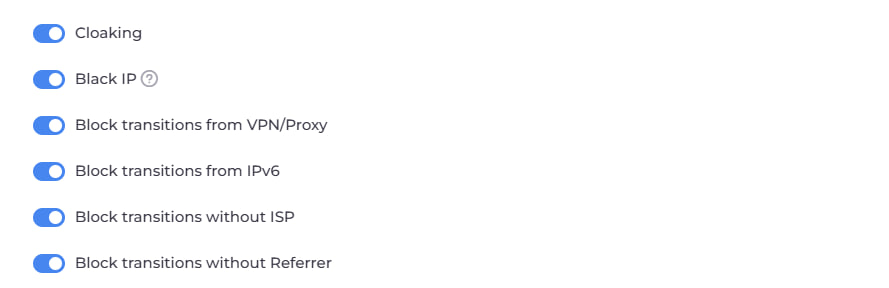 Cloaking Filter — a basic protection mechanism designed to cut off bots and verification traffic from any advertising channels. When activated, suspicious visits are automatically redirected to the White Page.
Black IP Filter — turns on if the system has previously recorded undesirable activity from a specific IP address. This can occur when detecting bots, moderators, the inability to determine the country or provider, as well as during attempts of transitions from unidentified devices. If triggered, the user is directed to the White Page.
VPN / Proxy Filter — reacts when a visitor's IP address is recognized as belonging to a proxy server or VPN. It works only when explicitly enabled in the flow parameters. When activated, traffic goes to the White Page.
IPv6 Filter — applies if the system determines that the visit is made from an IPv6 address. Triggering the filter leads to the display of the White Page.
ISP Filter — used in situations where it is impossible to establish the user's internet service provider by their IP address. When the filter is activated, the White Page is displayed.
Referrer Filter — activated if the transition source (Referer) is missing or cannot be determined, including cases of direct link entry into the browser address bar. When triggered, the visitor is redirected to the White Page.
Low-Quality White Page
Cloaking requires perfect technical configuration, but the most common and fatal error, where the system inevitably exposes the substitution, is a low-quality White Page. Ad networks like Google Ads and Facebook are constantly improving their artificial intelligence algorithms. If your "white" site looks like a hastily assembled placeholder, an account block is only a matter of time.
Let's break down the key triggers that give away an affiliate to moderators and understand how to create the perfect white page.
1. Visual and Functional Inferiority of the Site
Your page should look like a real, live, and functional web resource created for people. Any feeling of a fake is immediately recorded by assessors and bots.
Complete Structure: The site must have not only a main page but also "About Us," "Contacts," "Privacy Policy," and a user agreement.
Loading Speed: A White Page must open instantly and without delays. Slow loading is the first red flag for Google. Use lightweight templates, optimize images, and choose reliable hosting.
Responsiveness: The site must display correctly on any devices, especially on mobile phones.
Important Rule: A moderator or bot must believe they are looking at a real business or information portal that provides value to the user.
2. Blind Copying of Other Sites
Among beginners, the practice of downloading and copying already existing trust sites for use as a White Page is popular. This is a huge mistake.
Google algorithms are particularly careful about the uniqueness of content and structure. If a bot sees that your site is a complete clone of a resource already indexed on the web, it will immediately mark it as phishing or spam. To create a white, use unique content generators, neural networks, or uniqualize downloaded templates beyond recognition: change meta tags, code structure, texts, and images.
3. Violation of Domain Hygiene
Another common reason for ad account blocks lies in incorrect work with domains.
Campaign Isolation: Never use the same domain for different ad campaigns or offers.
Toxic History: If you have already received a ban (block) on a certain domain, forget about it. Ad networks put such addresses on blacklists. An attempt to launch a new campaign on it will lead to an immediate chain ban, even if you changed the creatives and the White Page.
Relevance: The domain name must logically correspond to the theme of your "white" site.
4. Technical Flaws: Absence of SSL Certificate
In modern internet realities, the HTTPS protocol is not an advantage, but a basic requirement.
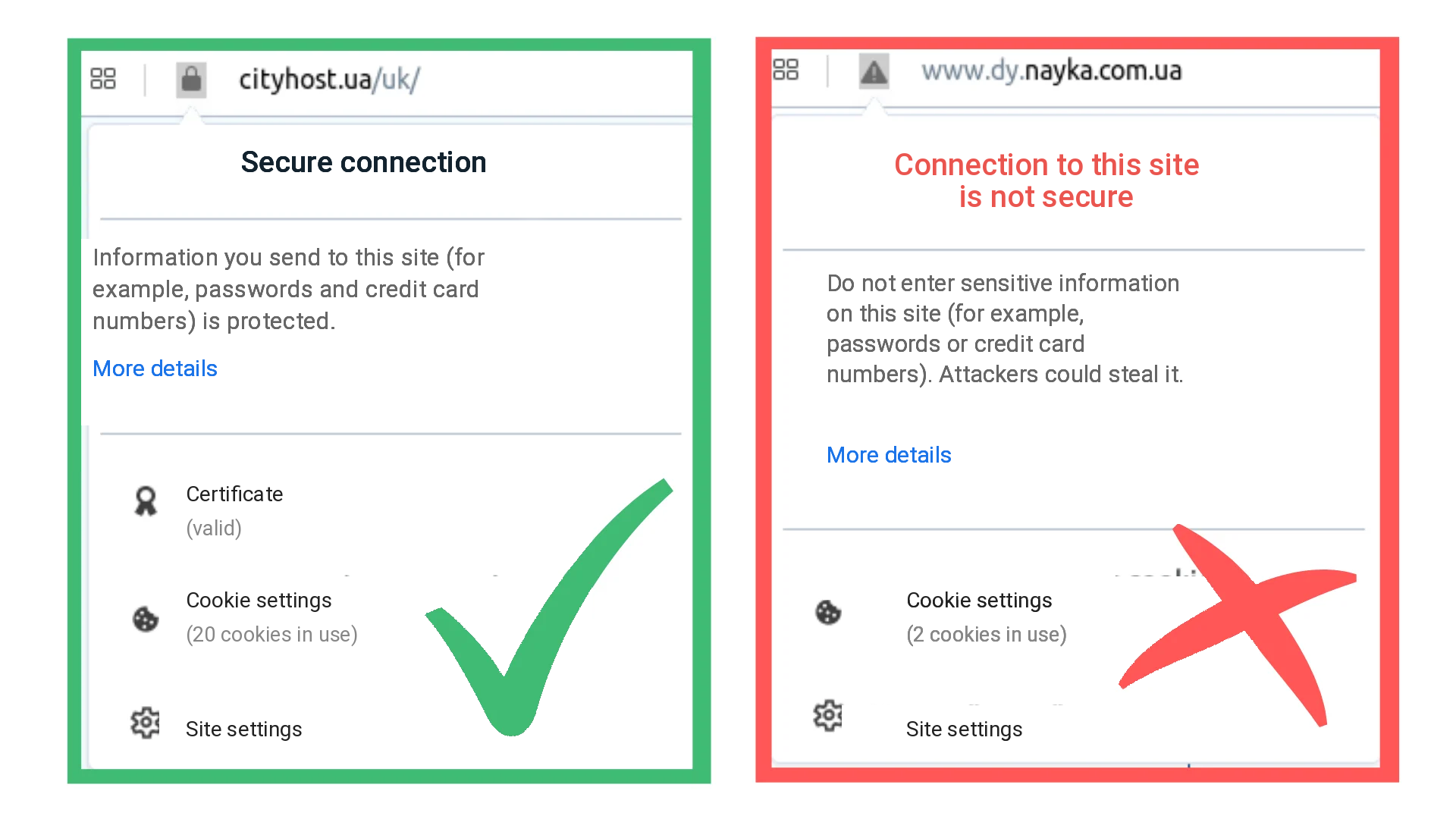 If your White Page operates via HTTP and does not have a basic SSL certificate, it automatically raises massive suspicion from ad platforms and browsers. The browser marks such sites as "Unsafe," which leads to an immediate rejection of ads during moderation. Installing a free certificate (e.g., Let's Encrypt) takes a few minutes but saves your advertising budget from ridiculous losses.
Conclusion:
The exposure of cloaking by ad networks is a logical result of technical shortcomings, haste, and inattention to detail, rather than a vulnerability of the traffic distribution systems themselves. As practice shows, Meta, Google, or Bing moderation algorithms latch onto the slightest inconsistencies in the logic of the user journey. A successful and long-term launch into gray verticals requires a comprehensive approach from the affiliate, where every technical detail carries critical weight.
Setup security begins with rigid isolation of analytics so that ad platform pixels do not receive data from the final Offer Page, and continues with thorough work on semantic relevance between the creative, the advertisement, and the White Page. Any break in the pattern or unnatural route immediately raises suspicion in trainable algorithms. Furthermore, it is vital to minimize suspicious chains of redirects in favor of direct content loading and set up uncompromising multi-level traffic filtration, ruthlessly cutting off bots, VPN connections, IPv6, and transitions without a referrer.
The foundation of this security architecture is always the White Page itself. It must be not just a placeholder, but a full-fledged, unique resource: technically flawless, with high loading speed, responsive design, protected by an SSL certificate, and strictly hosted on a clean domain without a toxic history. Only an impeccable imitation of a transparent, legal business at all stages of the funnel is capable of lulling the vigilance of bots and manual assessors, ensuring your ad campaigns stable budget burn and protection from premature blocks.






Be the first to share your opinion!
We value your feedback — share your thoughts.