


A media buyer sees at 11 AM that the budget can be increased on a source. The campaign can absorb this money, the unit economics add up, and the decision itself takes a couple of minutes. The money actually hits the account only the next day - part of the amount was on the balance of another platform, and the transfer had to go through the finance department. There is nothing wrong with the campaign itself. The team simply lost a day between seeing the opportunity and being able to use it.
The same gap occurs when a new geo is ready for launch, but the necessary account is still being prepared, or when an active campaign is paused due to an account review, and the case goes through several levels of support before reaching someone who can actually resolve it. With significant budget volumes, such delays stop being background noise and start directly impacting the economics of acquisition - while almost all of this cost is completely unreflected in the ad account itself.
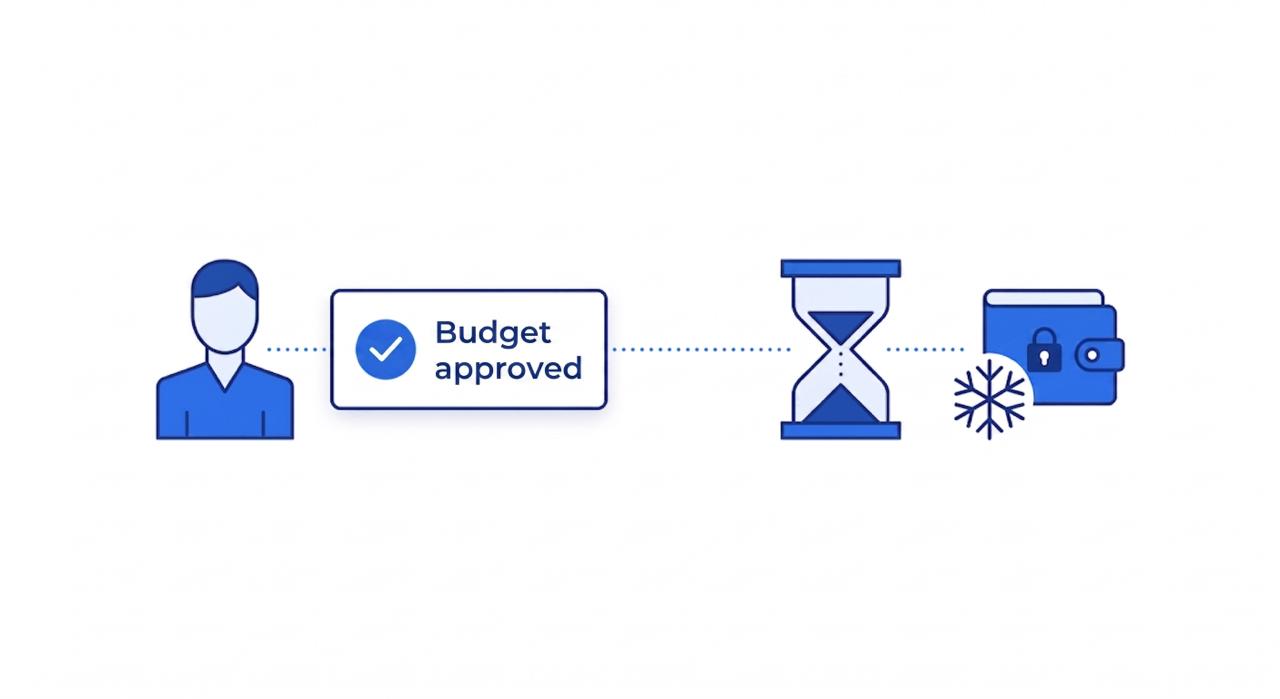
The budget is there. Flexibility - absent
The team might have enough money for acquisition but very little ability to actually manage it. Part of the monthly budget might already be prepaid on Meta, another part on TikTok, and in-app sources keep their own separate balances. Agencies replicate this same fragmented structure for each client, each with its own media plan and funding cycle.
Imagine $300,000 allocated for acquisition for the month, of which $80,000 is already distributed across platform balances. Technically, all the money is "available" - but its next application is partially predetermined by where it currently sits, rather than where efficiency points. When results change faster than the financial setup can adjust, a source might start showing better economics, but the team still has to deposit fresh money - simply because existing funds are locked in balances that are slow to reallocate.
- Account fees mean more when viewed alongside the volume of working capital frozen in prepaid balances, rather than separately from it.
- Net 30 terms change the calculation even more - the agency funds a smaller portion of the client's ad spend upfront out of pocket.
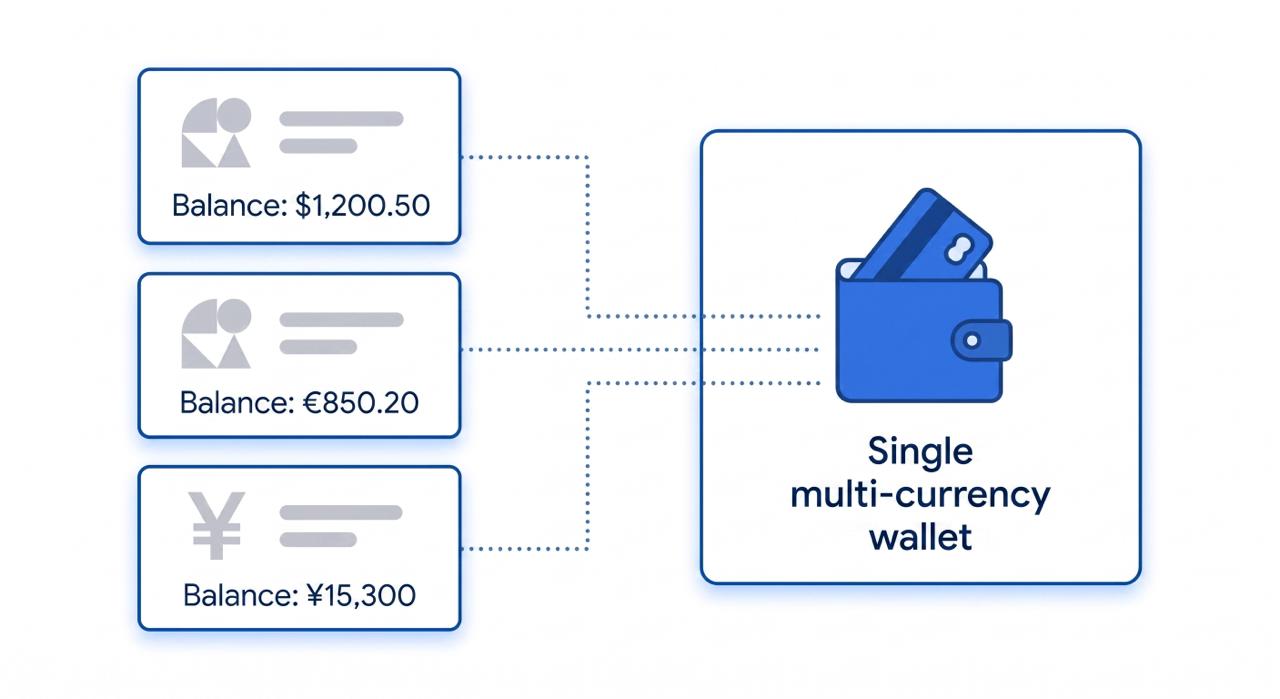
- A single multi-currency wallet, through which multiple sources are funded at once, gives the finance department fewer scattered balances to control and shortens the path between the media buyer's decision and the actual movement of money.
A campaign can outgrow its account infrastructure
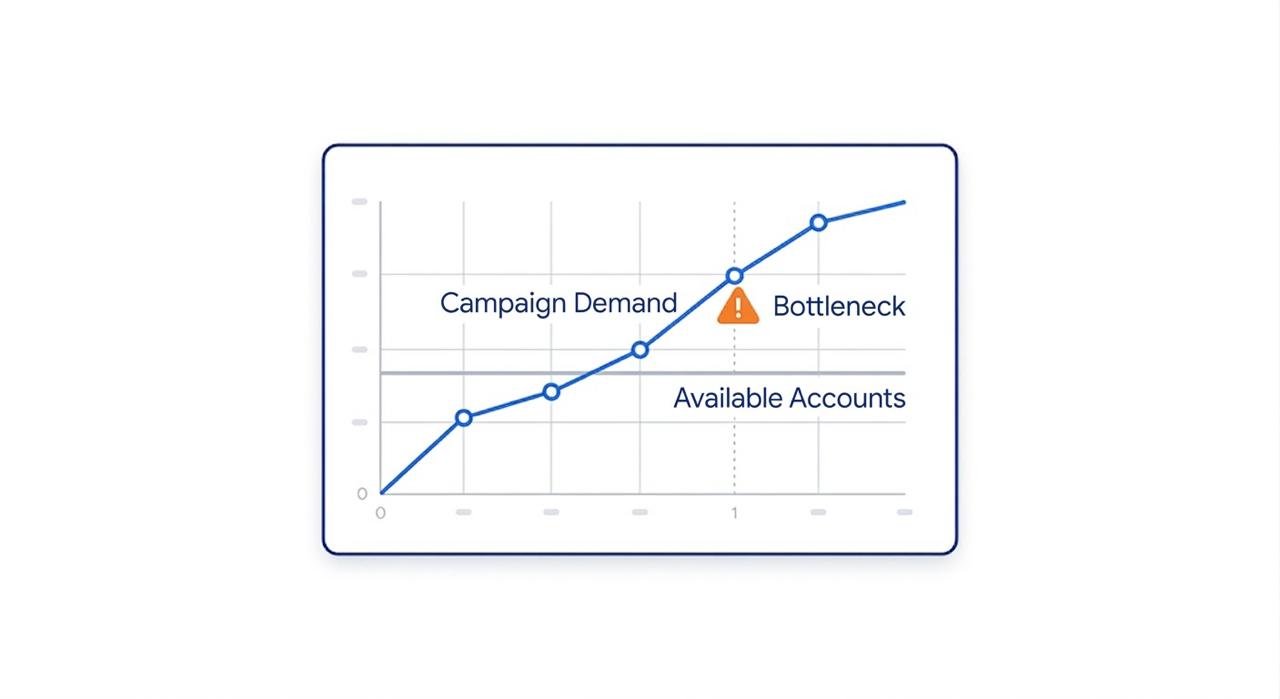
Let's say a campaign is ready to absorb another $30,000 this week. The client approved the increase, the source has room for volume, and the current economics justify it. The real question is different - whether the account structure can handle such a volume at all.
A provider can list Google, TikTok, and Meta on their website and still become a bottleneck the moment a client needs several new accounts at once. A new geo creates the same pressure as several launches for different agency clients falling on the same week. In such a situation, the list of platforms on the provider's website says almost nothing about the actual capacity behind it.
The need for three additional accounts by tomorrow brings the speed of their issuance to the forefront - something unnoticeable during quiet periods. A sharp spike in volume tests the ability to withstand spend load, and an account review shows how quickly the infrastructure can recover lost traffic. All this remains invisible while everything is stable and becomes critically important as soon as media buying starts moving faster than the infrastructure beneath it.
For agencies, this directly hits client growth: a successful campaign creates demand for additional volume, and the availability of accounts determines how quickly that volume can actually be captured. Asking a provider if they have access to a needed source is only the first step; it is much more important to understand how this access behaves when demand actually surges.
Support becomes expensive when traffic is already running
At a $5,000 daily budget, one hour of downtime is approximately $208 in missed ad spend. Twelve hours bring this figure closer to $2,500. A full day of downtime crosses the $5,000 mark - even before anyone starts calculating lost conversions or the effect of interrupted ad delivery.
A moderation issue at this spend level carries a completely different commercial weight than the same issue during a $200 test - and the path a case takes through support really starts to matter. Some problems are solved right inside the account. Others require clarification directly from the ad platform, where a standard support queue can drag out the resolution time while the campaign simply idles, losing not money directly, but time.
- Certified partner status means something only if there is real substance behind it - dedicated contacts, managers on the platform's side, a clear escalation path for client cases - and not just a badge on a website.
- Funds remaining on the account after a restriction are part of the same conversation. For teams with large prepaid balances, the amount can be significant, so the refund procedure and access to those who can actually help with the case are as much a part of the financial setup as they are a part of support.
- When comparing providers, it is worth asking directly how long cases requiring platform involvement remain unresolved on average - with high daily spend, this answer is often more important than a small difference in fees.
Twenty sources can still lead to one wrong decision
A broad portfolio of sources gives the media buying team more room to choose - but the quality of this choice still depends on whether a specific platform fits the product, audience, and market.
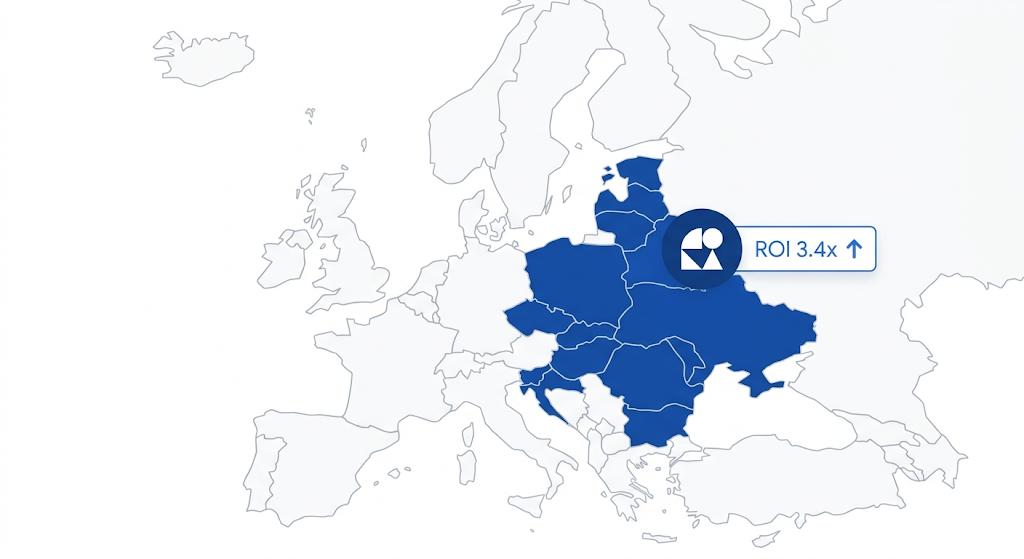
An agency promoting concerts across Eastern and Central Europe faced exactly this task. After studying the product and target audience, adskill recommended TikTok and provided consulting on creative preparation. Campaigns reached a 3.4x ROI at an average CPC of $0.13, and tickets for some concerts were sold out weeks before the event.
TikTok worked here because it matched both the audience and the product format - another project could just as successfully point to a completely different platform. That is exactly why access to a wide pool of sources truly pays off only paired with experience on these platforms, and not just with a longer list on the pricing page.
In different geos, the same source can play a completely different role: a platform providing real volume in one market might be secondary in another, while yet another source opens up a stronger opportunity specifically due to local market conditions. The number of available platforms matters far less than the number of actually viable options the team can utilize in practice.
The full cost hidden behind the account fee
Imagine a campaign that was supposed to launch on Monday. The account only becomes available on Tuesday afternoon, so the test starts a day late, and part of the planned budget shifts along with it. By the end of the week, it becomes apparent that another source is showing better results, but part of the budget is still tied to the first platform.
Meanwhile, the provider's fee hasn't changed by a cent - but the economics around the campaign have already changed. The team lost time, part of the working capital lost its flexibility, and every media buying decision now takes longer to execute.
The same goes for the hours media buyers spend dealing with account access, payments, or platform support cases. For an agency, this time accumulates across all clients at once and unnoticeably becomes part of the real cost of acquisition - a cost that is never displayed on the provider's price list.
By the end of the month, delayed launches, budget frozen in the wrong place, and hours spent sorting things out with platforms have already become part of the acquisition cost. At significant spend volumes, their combined impact easily outweighs the small difference in the account fee that seemed decisive at the provider comparison stage.
How adskill removes this layer of friction
adskill provides ad infrastructure for performance agencies and direct advertisers working simultaneously with multiple sources and geos. Clients get access to 20+ ad sources in 100+ geos, including Google Ads, Meta Ads, TikTok, Amazon Ads, Bing, Moloco, Unity, Mintegral, AppLovin, Liftoff, Xiaomi, and Snapchat.
The account model is built for media plans that actually change: agency accounts are not capped by spend or by the number of accounts, so additional capacity is connected as client projects grow, expand into new markets, or scale campaign volumes.
- Payments go through a single multi-currency wallet - supporting bank cards, SWIFT, and SEPA, plus additional payment methods depending on the project.
- Commercial terms are flexible by source and volume - fees from 0% to 15%, cashback from 1% to 5% of ad spend, and Net 30 terms where applicable.
- Certified partner status for Google, Meta, Moloco, Mintegral, and other sources provides dedicated communication channels and direct access to platform representatives for moderation, payment, or account access cases.
- For eligible TikTok campaigns, priority support and a personal TikTok strategist are available to review metrics weekly and provide optimization recommendations.
Working with a new source can start even before the account itself is issued: the adskill team studies the product, market, and campaign goals, checks the offer, creatives, landing page, and funnel at the pre-launch stage, and if necessary, can involve representatives from the ad platform itself to clarify moderation requirements in advance. The client's media buyers remain responsible for the strategy and results of the campaign - adskill simply makes sure the infrastructure beneath it doesn't become a bottleneck.
What does your cloaking setup have to do with it
If you are already driving cloaked traffic through Flows, filters, and White Pages to keep the account alive, the account itself is only half of what decides the campaign's fate. The other half is how quickly the infrastructure around it can react when something changes. A Flow can filter traffic flawlessly, but the campaign still loses money for a whole day simply because the needed account hasn't been issued yet, or because a review is stuck in the general support queue instead of reaching someone who can actually close it.
These two problems don't compete for attention - they amplify each other. Traffic filtering prevents the account from being flagged in the first place; account infrastructure determines how quickly the team can reallocate budget, open a new account, or resolve a restriction if it does happen.
A short checklist before choosing an infrastructure provider
- Can the team reallocate the budget to another source today, or is the money locked in the balance of the platform?
- How fast will a new account actually appear for a new client or geo?
- Who steps in when an active, spending campaign needs help directly from the platform?
- Is there actual contact for escalation behind the certified partner status, or just a badge on the website?
- What happens to the funds remaining on the account after a restriction, and how quickly can they be returned?
- Are payments gathered in a single wallet, or scattered across disconnected platform balances?
What matters after the account is already open
The number of sources and the account fee are easy to compare even before signing with a provider. The truly important differences emerge later - when campaigns are already running and conditions start to change.
A price list won't answer the question of how much freedom the infrastructure actually gives the media buying team at the moment the budget needs to move quickly. That answer reveals itself only in how the setup behaves under load - and by that time, the choice of provider has already been made.





Be the first to share your opinion!
We value your feedback — share your thoughts.