



Few affiliate marketing verticals have evolved as rapidly as dating.
Over the past two decades, marketers in this space have adapted to every major shift in digital advertising. From banner placements and pop traffic to the mobile-first focus, algorithmic programmatic buying, and AI-driven optimization, the tools have drastically changed.
However, having worked exclusively in the dating industry for years, we’ve noticed something interesting. Every major technological shift has rewarded the exact same skill: understanding users better than the competition does.
Looking back at the evolution of dating marketing helps us understand not only where the industry came from but also where affiliate marketing is heading next.
From Banners to Mobile
In the early days of affiliate marketing, dating campaigns were surprisingly simple. Most of the traffic came from banner placements, direct partnerships with websites, and early display networks. Targeting options were limited, and campaigns often relied on broad audience segments paired with basic landing pages.
Competition was significantly lower than it is today. Customer acquisition costs were relatively affordable, and affiliates could achieve high ROI without complex tracking tools or automation.
Yet, even then, the campaigns that consistently outperformed others shared one common trait: they matched the right message with the right audience.
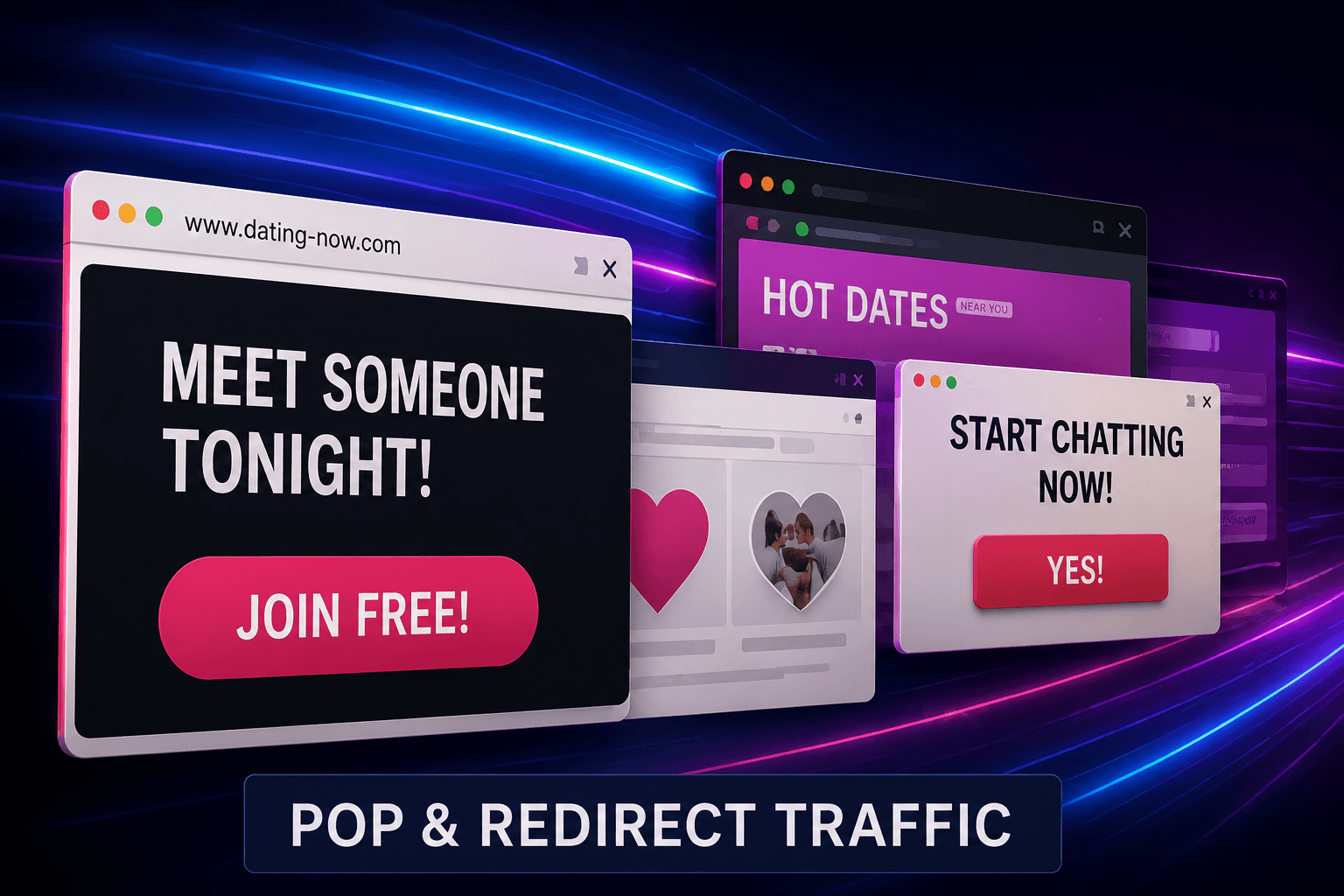
As affiliate marketing expanded, pop and redirect traffic completely transformed the dating vertical. Affiliates gained access to massive volumes and learned how to optimize campaigns at scale. Managing millions of impressions taught an important lesson that remains relevant today: more traffic does not automatically mean more profit. The main challenge was identifying which users would become engaged members, rather than just generating empty registrations.
The rise of smartphones brought another major shift. Dating was no longer something users did only on a desktop computer. It turned into an activity accessible at any time of the day. Affiliates had to rethink landing pages, registration funnels, and the overall user experience. The mobile audience expected faster loading times and minimal barriers to registration.

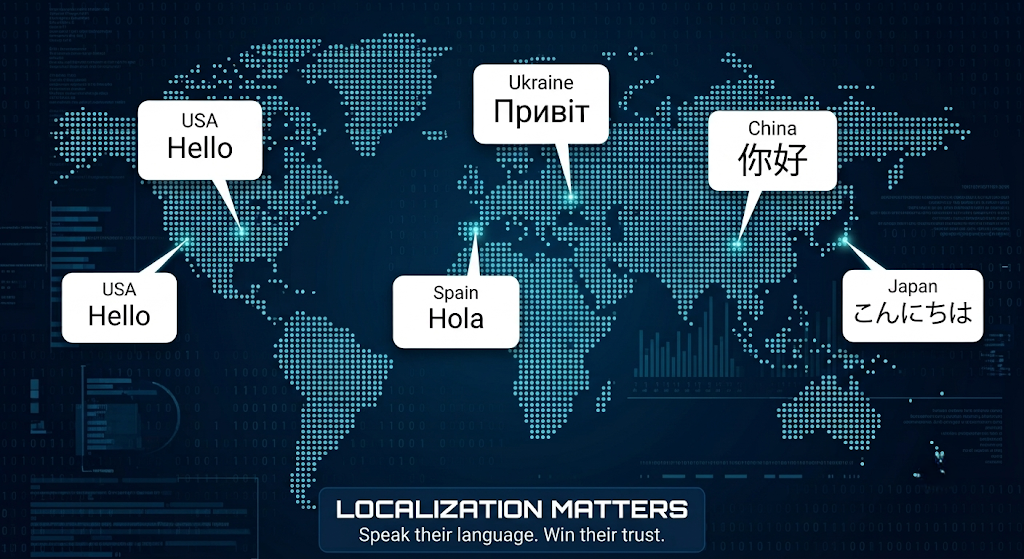
This transition also highlighted the growing importance of localization. User behavior varied greatly depending on the GEO, creating opportunities for those willing to adapt campaigns to local markets. Even today, localization remains one of the most underrated growth levers in dating marketing.
Across different GEOs, we constantly see localized funnels outperforming generic campaigns. Translating a landing page is often just the first step. Great results usually come from adapting messages, creative approaches, and user expectations to the local market, rather than simply changing the language.
The Shift Towards Data, Automation, and AI
As advertising platforms matured, data became increasingly valuable. Programmatic buying allowed marketers to reach users based on behavioral signals rather than broad demographic assumptions. At the same time, advertisers started paying close attention to metrics beyond mere acquisition.
Traffic quality became more important than its volume. Retention, engagement, and Customer Lifetime Value (LTV) began influencing campaign decisions alongside traditional conversion metrics. Dating brands that invested in a better understanding of their audience often achieved higher long-term profitability than competitors who focused solely on the quantity of generated leads.
Today, artificial intelligence is driving the next stage of this evolution.
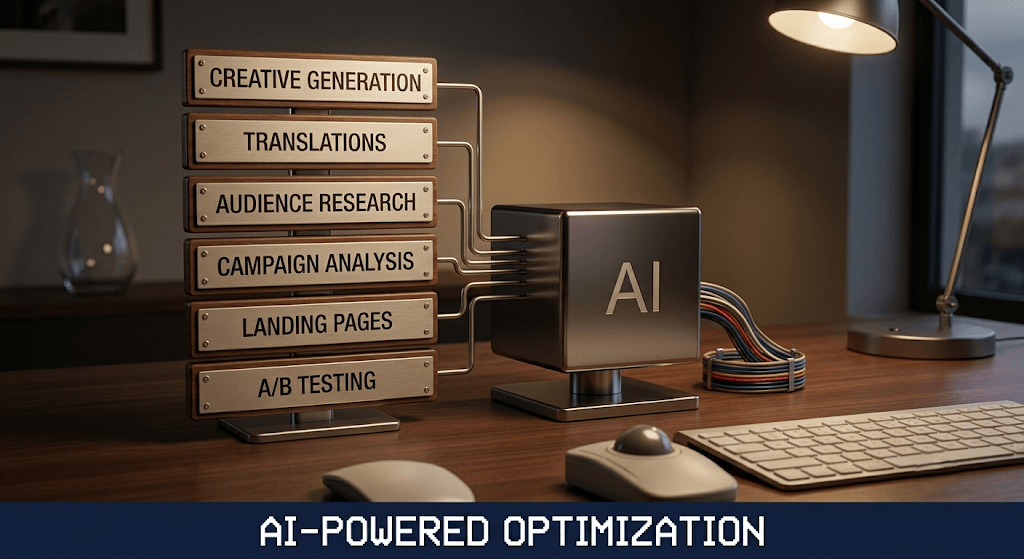
Creative generation, translations, audience research, campaign analysis, landing page creation, and testing processes can now be executed much faster. Many affiliates are already using AI tools to automate routine tasks, speed up experiments, and identify optimization opportunities.
However, a common misconception persists in the industry: that AI replaces expertise. Our experience suggests otherwise. The specialists showing the strongest results are not necessarily those using the most neural networks; they are the ones who combine automation with a deep understanding of the audience. AI increases the speed of execution, but strategic thinking remains a human advantage.
We have repeatedly observed a pattern: teams that use AI to accelerate testing outperform those who rely on AI to make decisions for them.
Another major shift is the growing role of platform automation. Modern advertising platforms are increasingly taking over bid management, targeting, and optimization. As a result, the competitive advantage has shifted away from manual campaign management toward stronger creatives, better conversion signals, and a deep understanding of the target audience.
The industry has also adapted to an environment with heightened privacy requirements. Changes in tracking technologies and stricter regulations have reduced the transparency of user journeys for marketers. Consequently, first-party data, server-side tracking, and user quality signals have become crucial components of successful strategies.
What We See in Dating Marketing Today
Working with dating traffic across various GEOs and sources alongside thousands of AdsEmpire partners, we consistently notice several patterns:
Traffic quality has become the ultimate competitive advantage. Since ad platforms automate management, simply driving massive volumes is no longer enough. Often, improving traffic quality yields a higher efficiency boost than launching new creatives.
Creative production has become easier, but standing out is harder. AI allows you to launch more creatives than ever, so volume alone no longer provides an edge. Understanding audience psychology means far more than producing dozens of variations of the same banner.
Localization beats cookie-cutter approaches. Users expect an experience that is relevant to their culture. Localized campaigns consistently generate higher engagement.
Data access is no longer exclusive. Most affiliates have access to advanced trackers. The difference now lies in how effectively this data is interpreted and turned into actionable steps.
What Remains Unchanged
One of the reasons dating remains such an exciting vertical is that it often adopts new approaches earlier than many other industries. Dating advertisers were among the first to scale mobile traffic, experiment with push notifications, and integrate AI into their workflows. High competition turns dating into a testing ground for strategies that later spread across the entire market.
And yet, despite all technological advancements, the foundation of successful dating marketing remains surprisingly stable.
People continue to seek connection.
Traffic sources change. Ad platforms change. AI capabilities change. But those who consistently succeed are the ones who understand user motivation, create a relevant experience, and provide advertisers with a high-quality audience. Technologies change how these goals are achieved. They do not change the goals themselves.
The history of dating marketing reflects the history of affiliate marketing itself. Every major shift created new opportunities. But every wave of innovation ultimately rewarded the exact same foundational skill: understanding users better than the competition.
Many are focused on finding the next "magic" tool, winning combination, or platform. But the history of the industry teaches a different lesson:
Tools create opportunities. Fundamentals create longevity.
After every major market shift, the best results were not shown by those chasing every new trend. More often, it was those who quickly adapted while remaining focused on audience understanding, traffic quality, and Lifetime Value (LTV).
Technologies will continue to change. But the fundamental pillars of successful dating campaigns will likely remain the same. This is exactly why dating continues to be one of the most resilient and adaptable verticals in affiliate marketing.






Be the first to share your opinion!
We value your feedback — share your thoughts.