


VPN applications, antiviruses, system cleaners, and utilities - one of the most profitable, but also the most capricious verticals in affiliate marketing. It features a high CPA, stable demand, and almost always paid traffic from Google Ads, Facebook, or push networks. That is exactly why a campaign setup without cloaking lives for only a matter of hours: advertising platforms review software offers more strictly than most other categories, and ban accounts quickly and without warnings.
In this article - the working logic of cloaking for VPN and software: what moderators check, how a White Page is structured for this vertical, what mistakes kill accounts most often, and what to look for when choosing an offer and an affiliate network.
Why VPN and software offers are banned more often than others
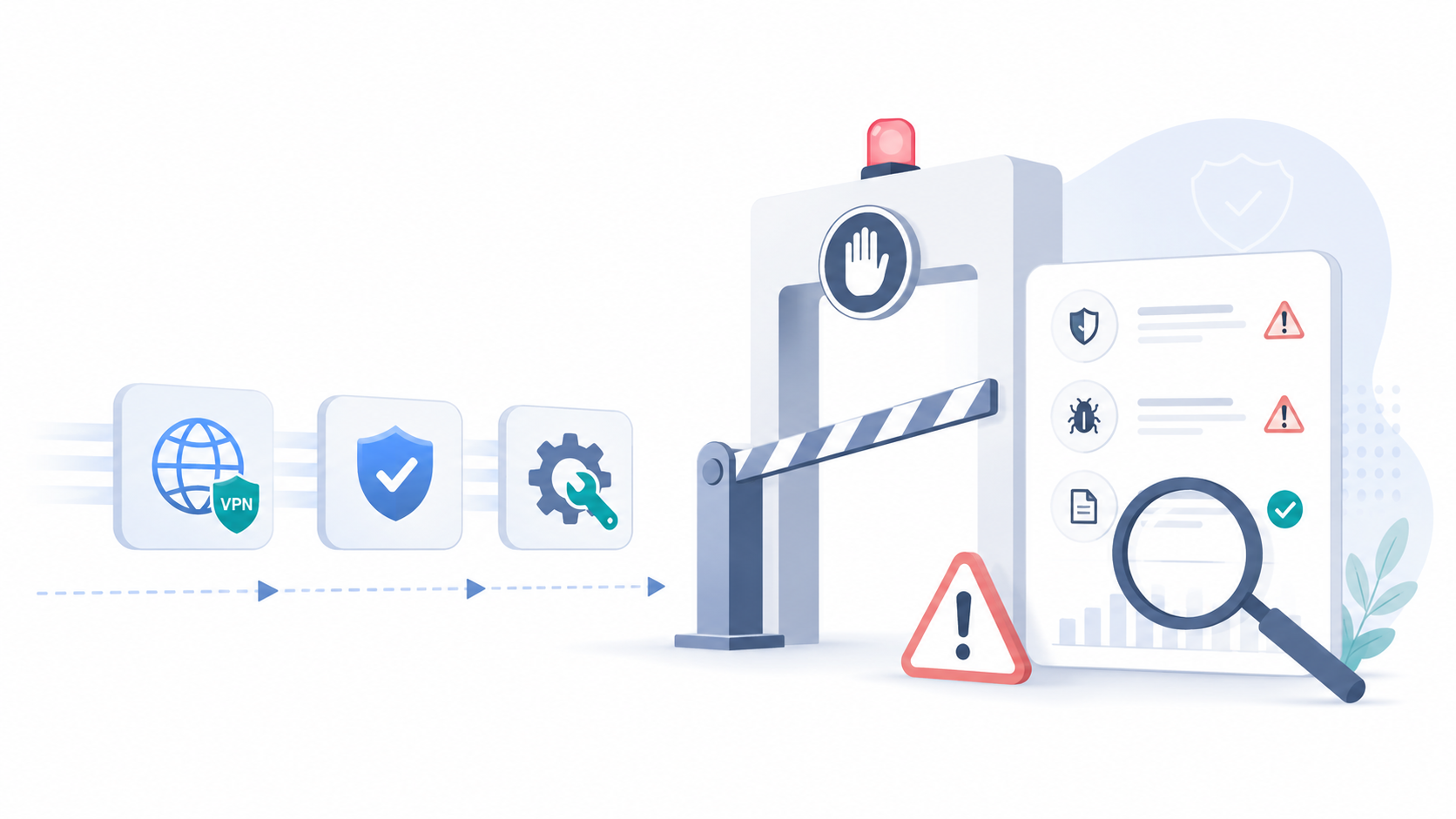 The moderation of software offers is built not around the topic of the ad, but around the product itself. Advertising platforms have fought for years against so-called "unwanted software" - programs that deceive the user at the installation stage, hide their functions, or change the system without permission. As a result, a separate, rather strict set of rules appeared, under which any application automatically falls, regardless of how harmless it seems.
Specific things are checked: whether the page describes the real functions of the program, whether the download begins only after an explicit click by the user, whether there is a link to the user agreement, and whether the creative scares with invented threats like "your device is infected" or "your IP is visible to everyone". If at least one point is not met - it does not matter whether a cloaking is added or not - the offer receives a quick ban.
A separate difficulty is the VPN product itself. In some countries, the use of a VPN is legally restricted, and this is not about the quality of the traffic, but about whether it is even allowed to advertise such a product in a specific geolocation. A good media buyer factors this into the plan even before the launch, rather than finding out after the fact from an account ban.
What makes cloaking for this vertical work
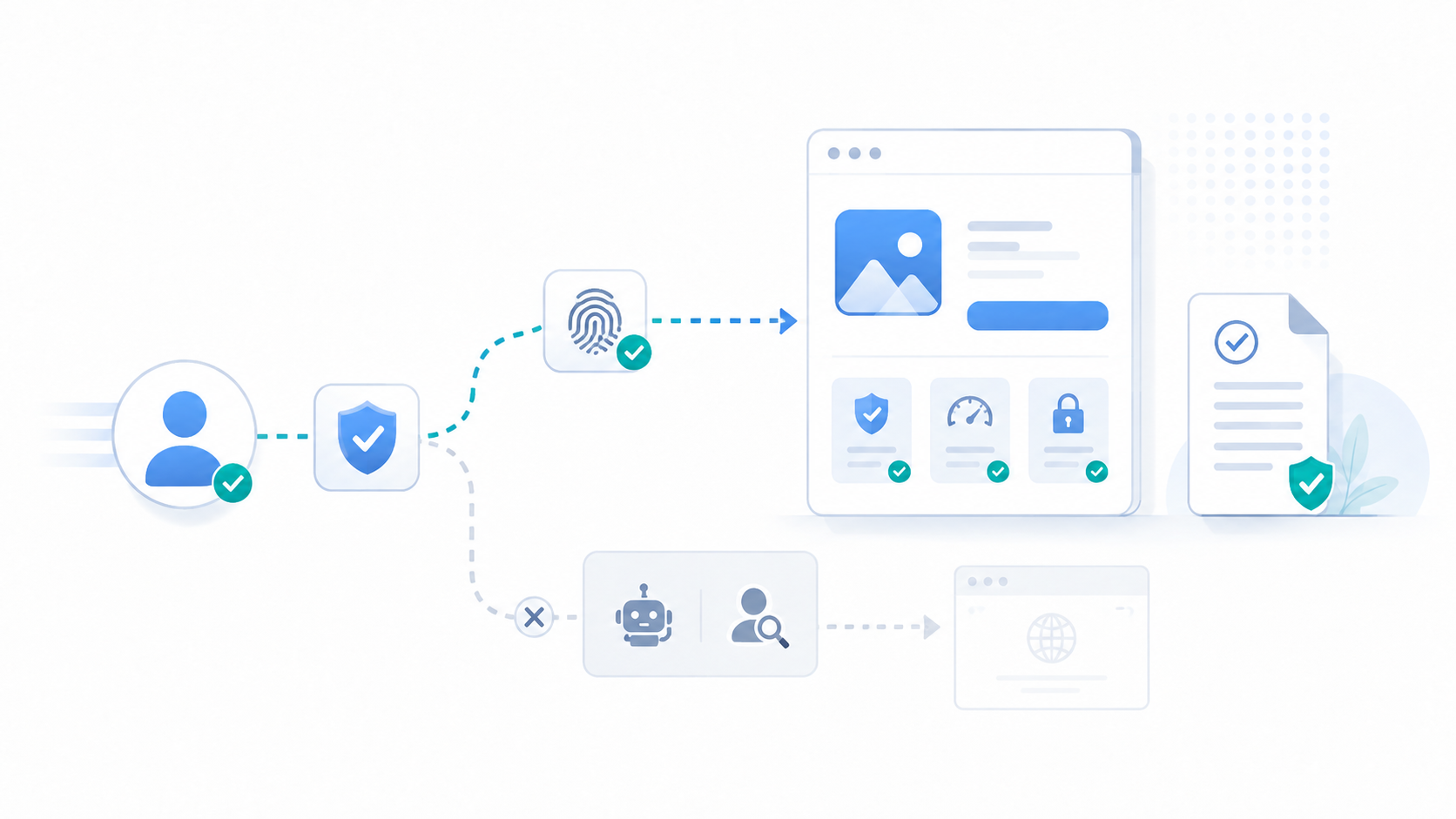 Cloaking solves a basic task - showing a safe page to the moderator and bot, and redirecting a live user from the desired geolocation to the real offer. For VPN and software, this mechanic works exactly the same as for any other vertical: filtering is done by IP, user-agent, behavioral signals, browsing history, and dozens of other parameters by which the system distinguishes a robot from a human.
The difference is - in the requirements for the White Page itself, that is, for the safe page that the moderator sees. For gambling or nutra, a White Page usually just masks the topic: a sports blog instead of betting ads, a health article instead of selling dietary supplements. For VPN and software, this approach often does not save you, because moderation looks not at the topic, but at the functionality of the product.
The White Page here needs to be built like a full-fledged application page: with a clear description of what the program does, with a working link to the terms of use, and without horror stories about hacking and data leaks presented as facts.
A practical checklist that is worth keeping in mind before launch:
- the page explains the functionality of the product in the same language as the advertising creative;
- no claims about the state of the user's device without proof;
- the link to the EULA or Terms of Service leads to a real page;
- if a download is intended - the process of installation and removal for the offer itself must be transparent;
- the language and geo of the White Page match the campaign targeting;
- the page does not claim official partnerships with brands that do not actually exist.
Typical mistakes when launching a campaign setup
Most often, a setup with a VPN or software offer fails for one of several reasons, and almost all of them are repeated from campaign to campaign.
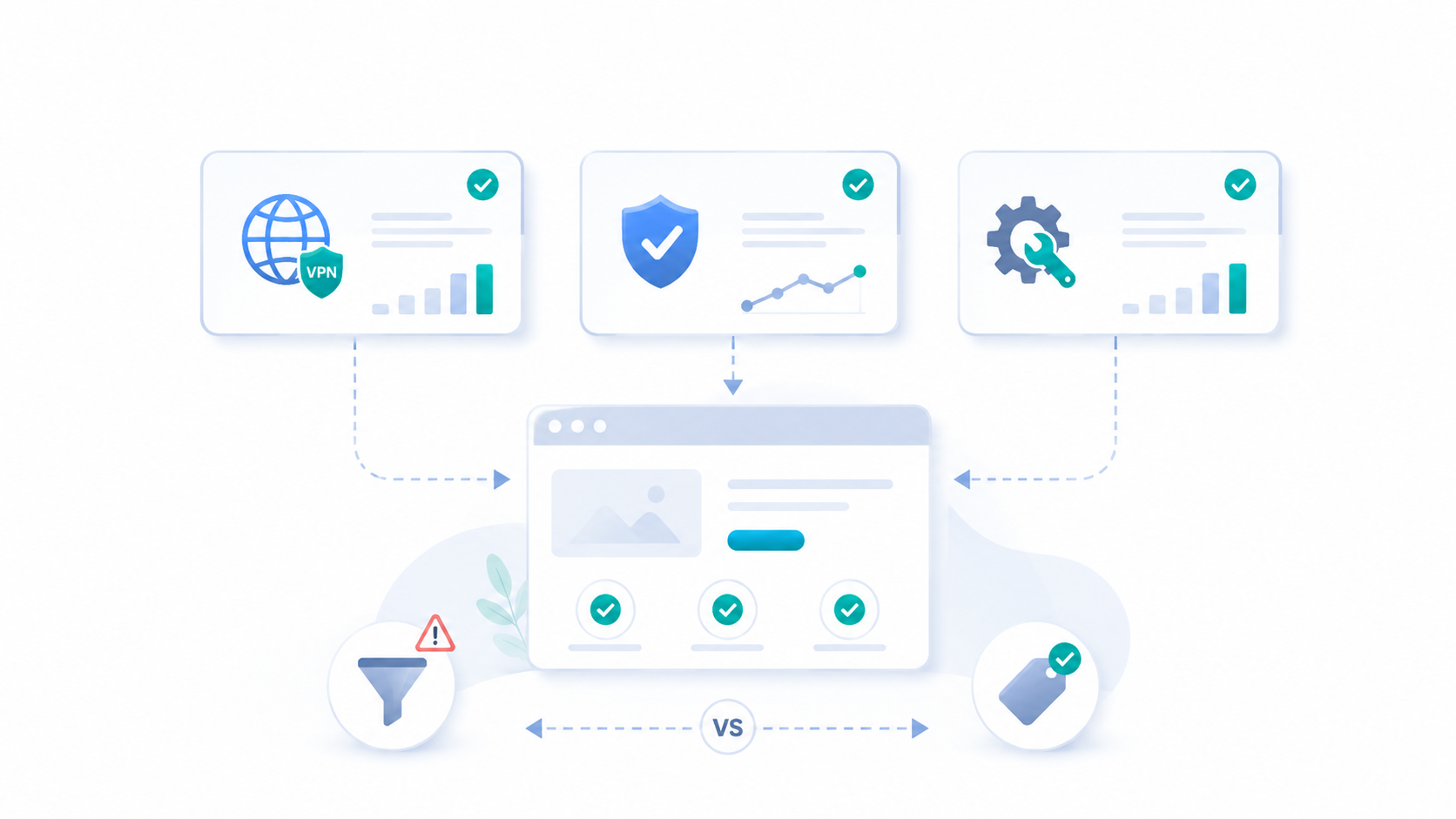 The first is - using a generic White Page copied from a gambling or nutra setup. Such a page might perfectly pass moderation in one vertical and instantly get flagged in another, because the review criteria are fundamentally different.
The second is - confusing a funnel problem with an offer problem. If an ad was rejected, it is not always the fault of the cloaking or the White Page: the specific application itself might violate the policy - through aggressive permission requests, hidden installation of secondary software, or deceptive descriptions in the app store.
You can distinguish one from the other only by testing: if the same White Page passes normally with two or three different products in the vertical, it means the risk is in the funnel. If the problem reproduces only with one offer - the problem is in the offer itself, not in the setup.
The third mistake is - ignoring the geo-specifics of the VPN as a product. The exact same offer can be absolutely legal in one country and risky in another precisely because of the legal status of VPNs, and not because of the ad account settings.
How to choose an offer and a platform for tests
To test such a setup, it is more convenient to work with a network where many direct VPN and utility offers are available at once under one account - this saves time and allows you to compare metrics without switching between different accounts.
For example, the network CIPIAI gathers offers in this vertical, including well-known VPN brands and antivirus products, across a wide geo-coverage, which precisely solves the task of quickly comparing several products on a single White Page: you can run two or three offers in a row and understand exactly where the problem lies - in the setup or in the specific application.
 When choosing a platform for tests, you should look at three things: the speed and regularity of payouts, so that test campaigns do not hang in uncertainty; support for S2S postbacks for correct tracking of approvals and conversions; and also the actual breadth of geo-coverage - offers for the US, Europe, and Asia rarely coincide in terms of products and creative requirements.
The technical side of cloaking: what to look for when setting up
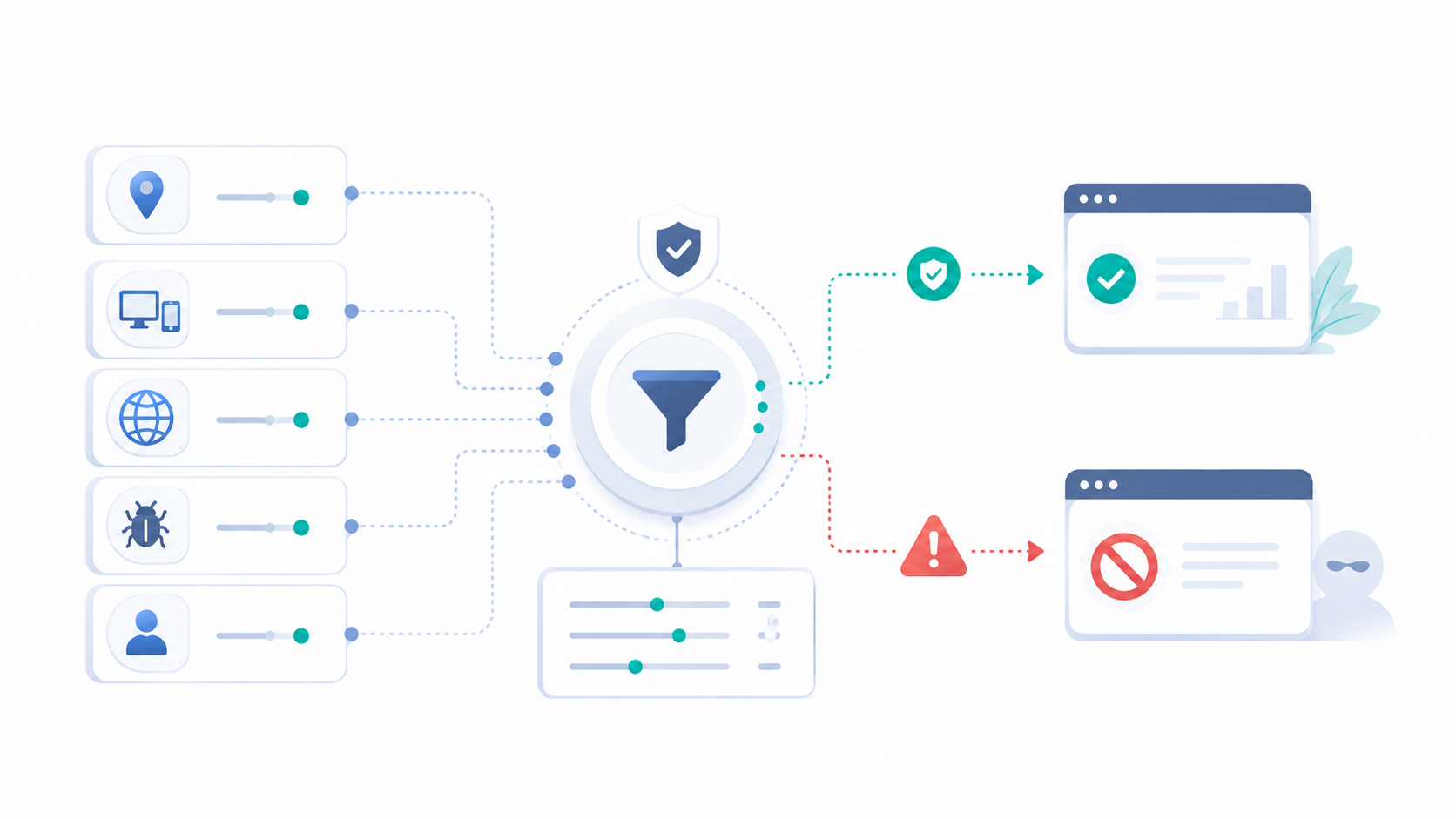
From a technical point of view, cloaking for VPN and software does not require any special stack - the exact same filters are used as in any other vertical: IP and subnet, country and time zone, user-agent and device fingerprint, behavioral signals like scroll speed or cursor movement, as well as blacklists of known bots and data centers of advertising platforms.
The difference is - in the priority of the filters.
For software offers, checking the device and operating system is especially important, because a VPN application or utility is usually designed for a specific OS - Windows, Android, iOS.
Showing a White Page or redirecting to the real offer for a user with an incompatible device is not only pointless in terms of conversion, but it also creates an unnecessary signal for moderation: the discrepancy between the claimed functionality and the visitor's device looks suspicious even to automated systems.
 The second point is - the frequency and pattern of requests. Moderators of paid traffic sources, especially Google Ads, visit the page manually and from different IPs, sometimes through a VPN or proxy, so filtering only by subnet or geo often does not work.
What helps here is - a combination of several signals at once - for example, matching the geo and browser language, browsing history, and referrer from the advertising platform - instead of relying on a single parameter.
Creatives and the landing page funnel: where traffic is lost most often
A separate point of failure is - a mismatch between the advertising creative, the White Page, and the real offer.
If the ad promises free protection from hackers, but the White Page describes the product as a "tool for private browsing," and the actual offer ultimately turns out to be a paid subscription - this works against the setup itself: the user leaves without triggering a conversion, and moderation sees a clear discrepancy between the stated and actual offer.
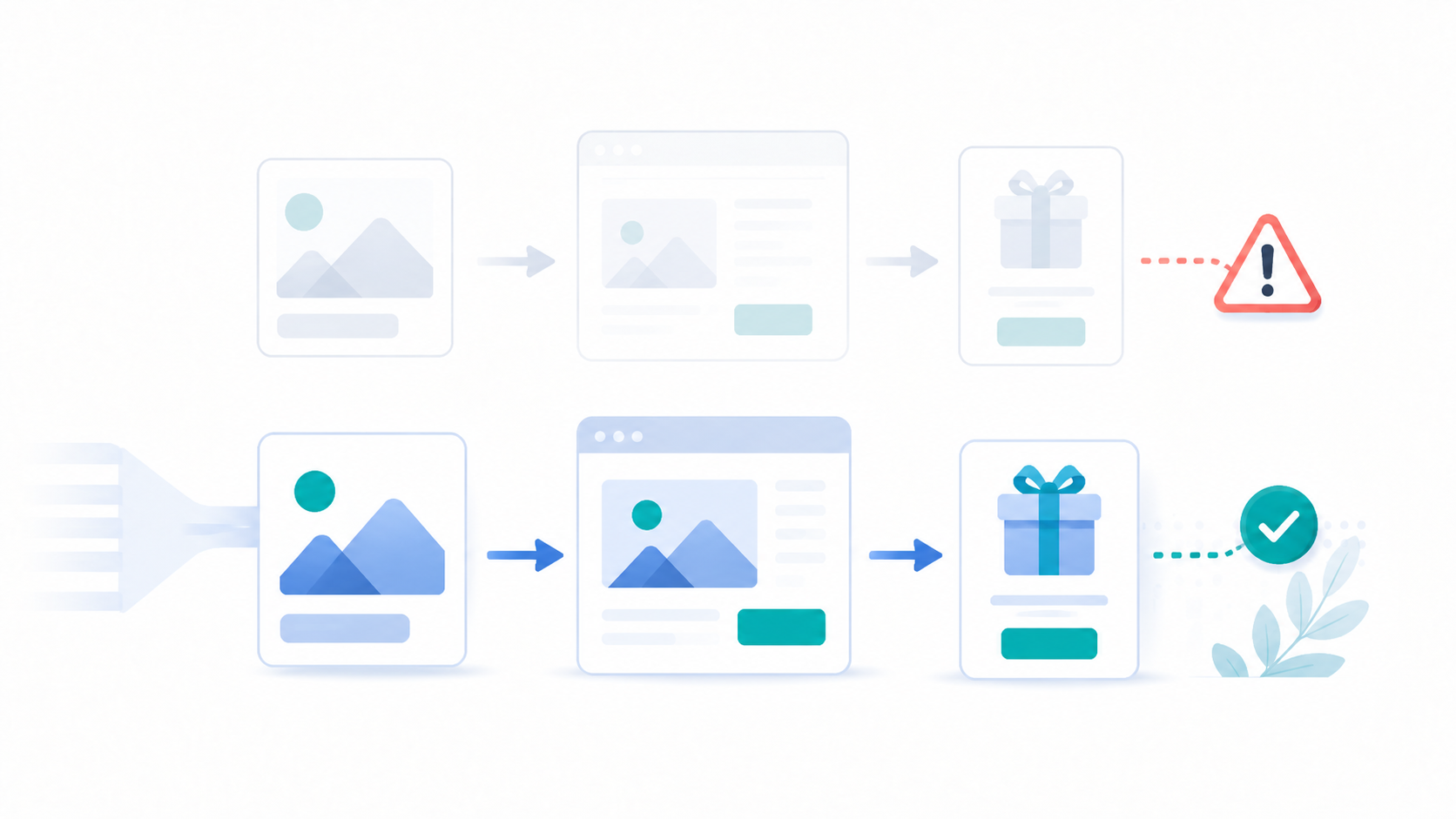 A working approach is - keeping a consistent message throughout the entire chain: the promise in the creative, the description on the White Page, and the real functionality of the offer must talk about the same product, even if in different words.
This not only reduces the risk of a ban, but also directly increases the conversion rate, because at each step the user sees a logical continuation of what they were promised.
FAQ on cloaking VPN and software offers
Do I need a separate White Page for each VPN offer?
Not necessarily for each specific product, but definitely for the offer format. If the offers are close in functionality, for example, several VPN applications with a similar set of functions, the same White Page can work for several of them - this is exactly a convenient way to test whether the setup holds up on its own.
Can I use the same White Page for a VPN and an antivirus?
Technically you can, but it is better not to mix products that are very different in functionality on the same page: the description of functions must match what the offer actually does, and a VPN and an antivirus solve different tasks for the user.
How do I know if I was banned because of the cloaking, and not because of the offer?
Run two or three different offers of the same category through the same setup. If the ban repeats on all of them - the problem is in the White Page or the filter settings. If only one product suffers - the issue is with the offer itself.
How critical is the payout speed when testing new offers?
Quite critical: until the test campaigns have confirmed a working setup, money in circulation is important, and networks with fast and predictable payouts, like CIPIAI, allow you to iterate tests faster without freezing the budget for an indefinite period.
Cloaking VPN and software offers works on the same technical principles as in any other vertical, but moderation here does not look at the topic of the ad, but at the functionality of the product itself.
A White Page for this category must realistically describe what the program does, honestly indicate its functions, and not use invented threats as a marketing ploy.
Separately, it is worth factoring in the geo-specifics of the VPN itself as a product and testing the setup simultaneously on several offers in order to distinguish a funnel problem from a specific application problem.






Be the first to share your opinion!
We value your feedback — share your thoughts.