



Major sports events are one of the most active periods for betting advertising. Tournament finals, world cups, top football matches, and other loud events can rapidly increase the number of users searching for odds, predictions, bonuses, and betting opportunities.
At the same time, competition among advertisers grows, and the load on the technical infrastructure increases. A domain might become unstable, the tracker could lose data, the landing page might load slower, and traffic costs can noticeably increase.
Therefore, betting campaigns are better prepared in advance. Below we will analyze which elements should be checked before launch and what is especially important to consider when working with a high volume of traffic.
Why sports events require separate preparation
In a regular period, a betting campaign can receive a relatively stable volume of traffic. During a major match or tournament, the situation changes literally in a few hours.
Users start massively searching for:
odds and lines;
match predictions;
results;
team lineups;
bookmaker bonuses;
promo codes;
broadcasts;
bets on specific events.
As a result, the number of clicks, server load, and competition for ad inventory simultaneously grow.
Therefore, before launching, it is important to look not at a single ad account, but at the entire chain:
Traffic source -> Tracking -> Domain -> Landing page -> Offer -> Conversion -> Analytics
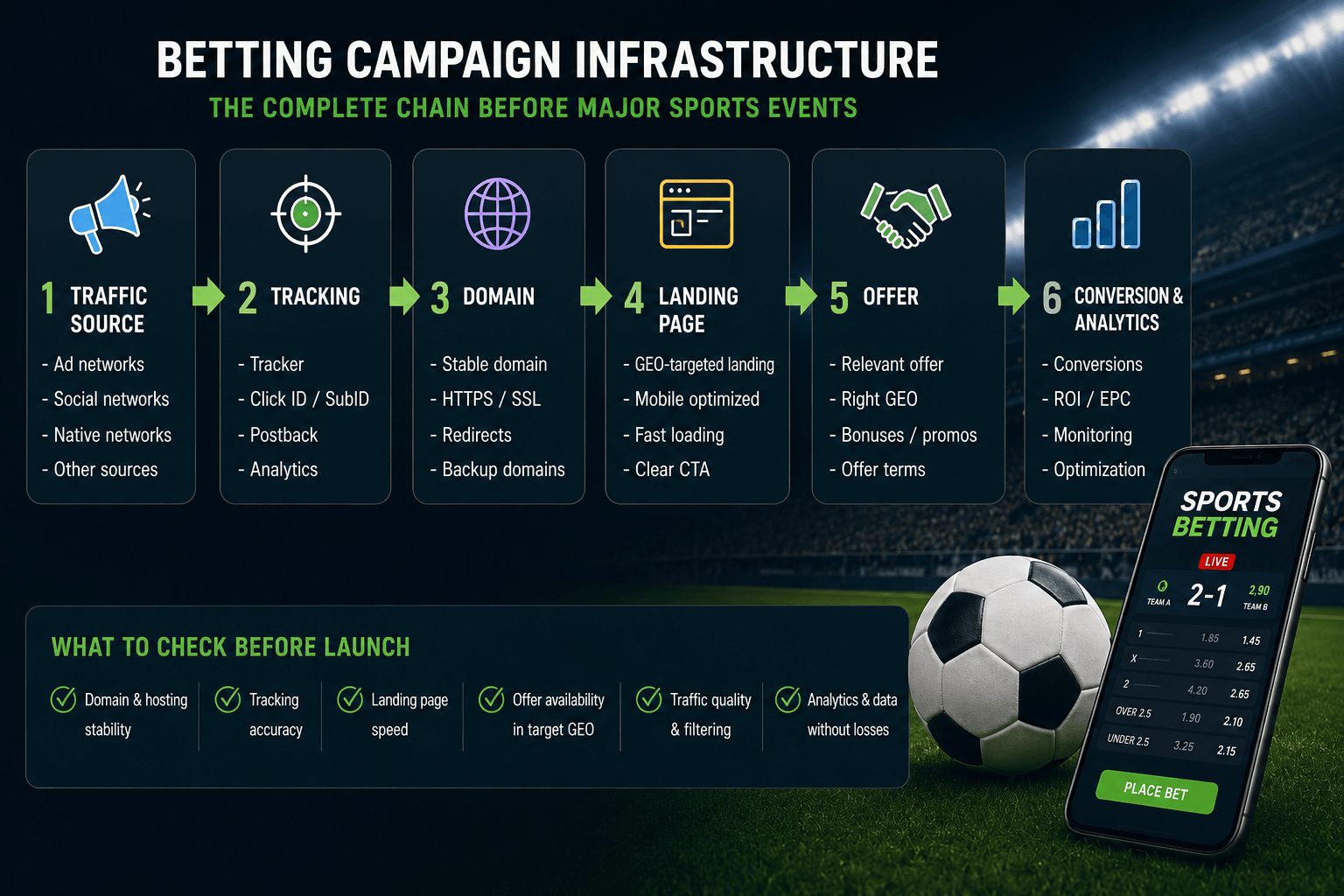
If one of the elements fails, scaling can lead to a loss of traffic or data.
1. Estimate the potential load
The first thing to do is to roughly forecast the traffic volume. You should not rely only on the usual metrics of previous days. During a popular event, the load can increase several times.
It is convenient to prepare three scenarios:
| Scenario | Load example |
| Normal | 1x |
| Elevated | 2-3x |
| Peak | 5x and higher |
If a campaign usually receives 5,000 clicks per day, it's better not to build the infrastructure strictly for this volume. With a budget increase or the launch of additional traffic sources, a margin must remain.
Special attention should be paid to:
hosting;
server response speed;
tracker;
API and its limits;
redirects;
handling a large number of simultaneous requests.
Before launching, it is highly recommended to conduct a load test. An error found a few days before an event is much easier to fix than a problem discovered during a match.
2. Check domains
A domain is one of the key elements of a betting campaign. When all traffic is concentrated on one address, any technical issue can affect the entire campaign.
Before launching, check:
DNS. All records must work correctly, and the domain must open stably.
SSL. HTTPS must work without errors on all used pages.
Redirects. There should be no unnecessary chains that increase loading time.
Response speed. The faster the server responds to a request, the lower the probability of losing a user.
Fallback options. For major launches, you should understand in advance how domain replacement or traffic switching will be organized in case of a technical problem.
You need to check the domain not only from a PC. Be sure to test mobile devices, different browsers, and several GEOs.
3. Check tracking
Poor tracking can cost as much as a technical site failure. A campaign can get conversions, but some data will be lost, and the team will not be able to understand which source actually brings results.
Before launching, check:
is the Click ID passed;
are SubIDs saved;
are UTM tags not lost;
do redirects work correctly;
does the postback arrive;
are conversions recorded correctly;
do time zones match;
is statistics updated.
It is especially important to test mobile traffic. Many problems appear only on Android or iOS. Make several test transitions from different devices and after each, check whether a click appeared in the tracker and all necessary parameters were saved.
Minimum set:
PC + Android + iPhone + multiple browsers + different GEOs.
This allows you to find errors before the main volume begins.
4. Prepare multiple landing pages
Before a major sports event, you should not completely depend on a single landing page.
Users can have completely different intentions. One person is looking for a specific match, a second for odds, a third for a bonus, and a fourth already knows the bookmaker and wants to proceed straight to registration.
Therefore, it is useful to have several variants of landing pages for different advertising approaches.
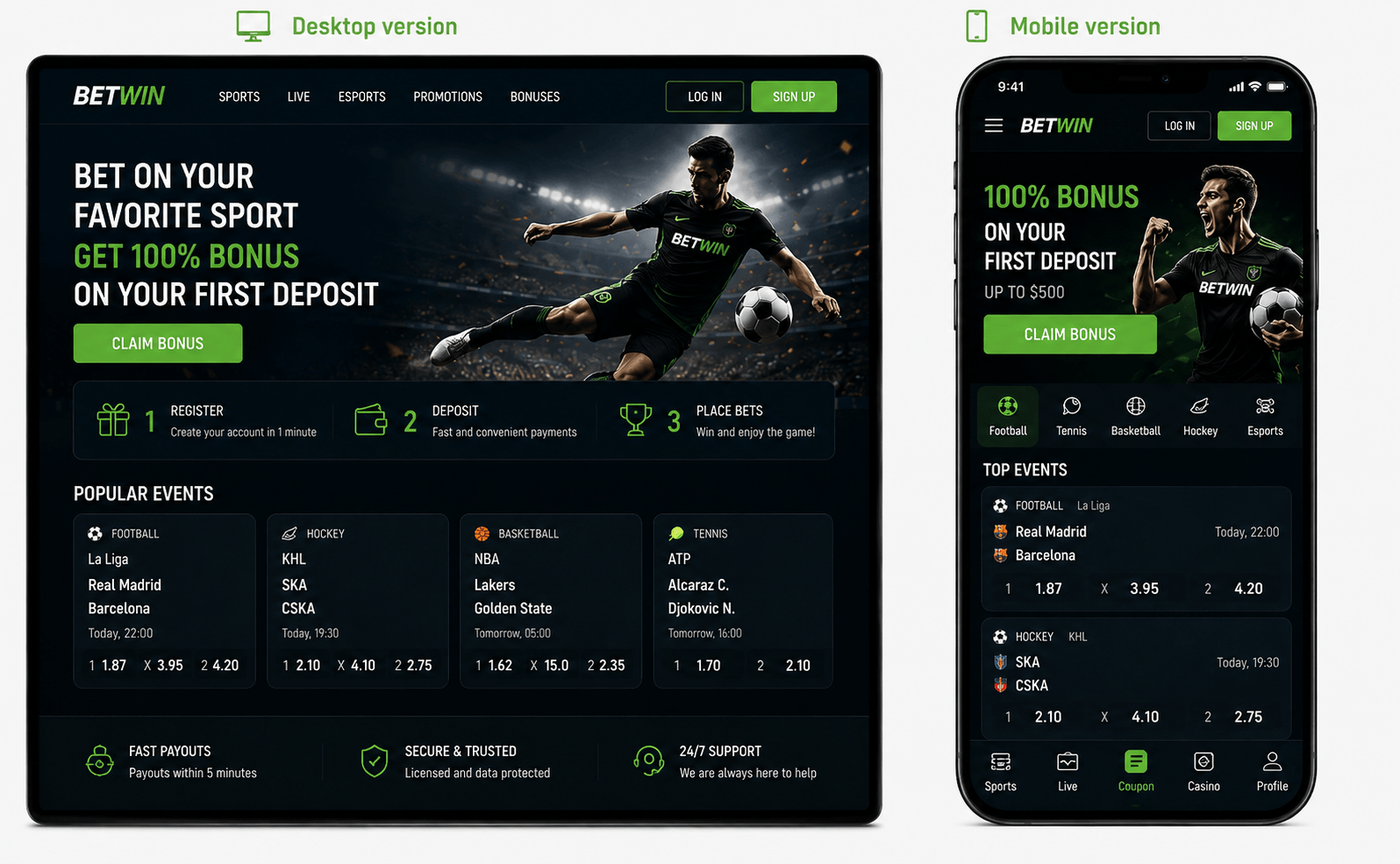
Check:
loading speed;
mobile adaptation;
CTA;
forms;
links;
images;
localization;
offer compliance;
legal information.
For international campaigns, it makes sense to prepare localized page versions in advance. A user from Germany, Spain, or Italy should see the relevant language and information appropriate for the specific GEO.
5. Pay attention to GEO
Sports events often have a clear geographic audience, and betting advertising requirements can differ from country to country.
Before launching, it is important to check:
is the GEO determined correctly;
is the offer available in the selected country;
does the language match the page;
is the correct currency used;
does the bookmaker operate in the required region;
are local advertising requirements met.
For testing, you can use tools that allow you to see how the page and the advertising funnel look to users from different regions. GEO should be checked in advance, especially if the campaign will work in several countries simultaneously.
6. Use spy tools for competitor analysis
Before a major sports event, competition becomes especially high. Therefore, it is useful to study what approaches other advertisers are already using.
Spy tools allow you to analyze:
ad creatives;
ad texts;
GEO;
landing pages;
active campaigns;
promotion approaches;
duration of individual ads' activity.
For this, you can use Spy.House - a service for analyzing advertising campaigns and finding working approaches on the market.
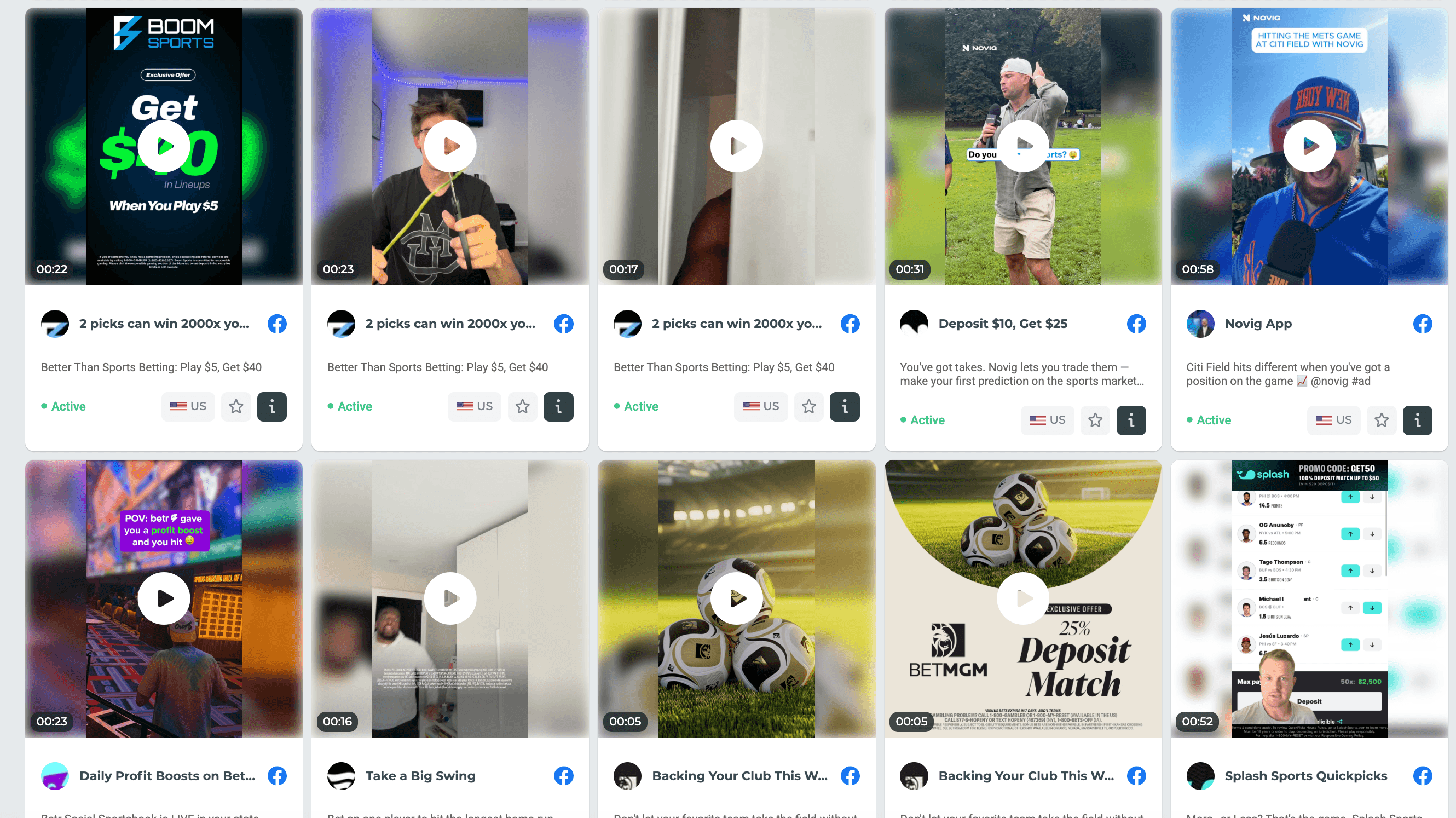
When researching competitors, it is useful to look not just at a single banner. The flow gives much more information:
Creative -> Ad text -> GEO -> Landing page -> Offer
For example, if a certain approach is found among several advertisers and continues to be used for a long time, it can be interesting as a hypothesis for your own testing. At the same time, the task of a spy tool is not to give a ready-made campaign for copying. It is much more effective to use the found data to form your own hypotheses and tests.
7. Monitor traffic quality
As the volume of advertising increases, the number of unwanted or automated requests also grows.
Therefore, it is important to understand who exactly comes to the site:
a real user;
a bot;
a crawler;
a VPN or proxy;
a visitor from an inappropriate GEO;
a user with parameters that do not meet campaign conditions.
Filtering helps make the flow more manageable and separate relevant visitors from suspicious or inappropriate traffic.
For example, Cloaking.House allows you to analyze incoming requests by GEO, IP, device, OS, browser, ISP, VPN/Proxy, and other parameters, as well as track clicks and filter triggers.
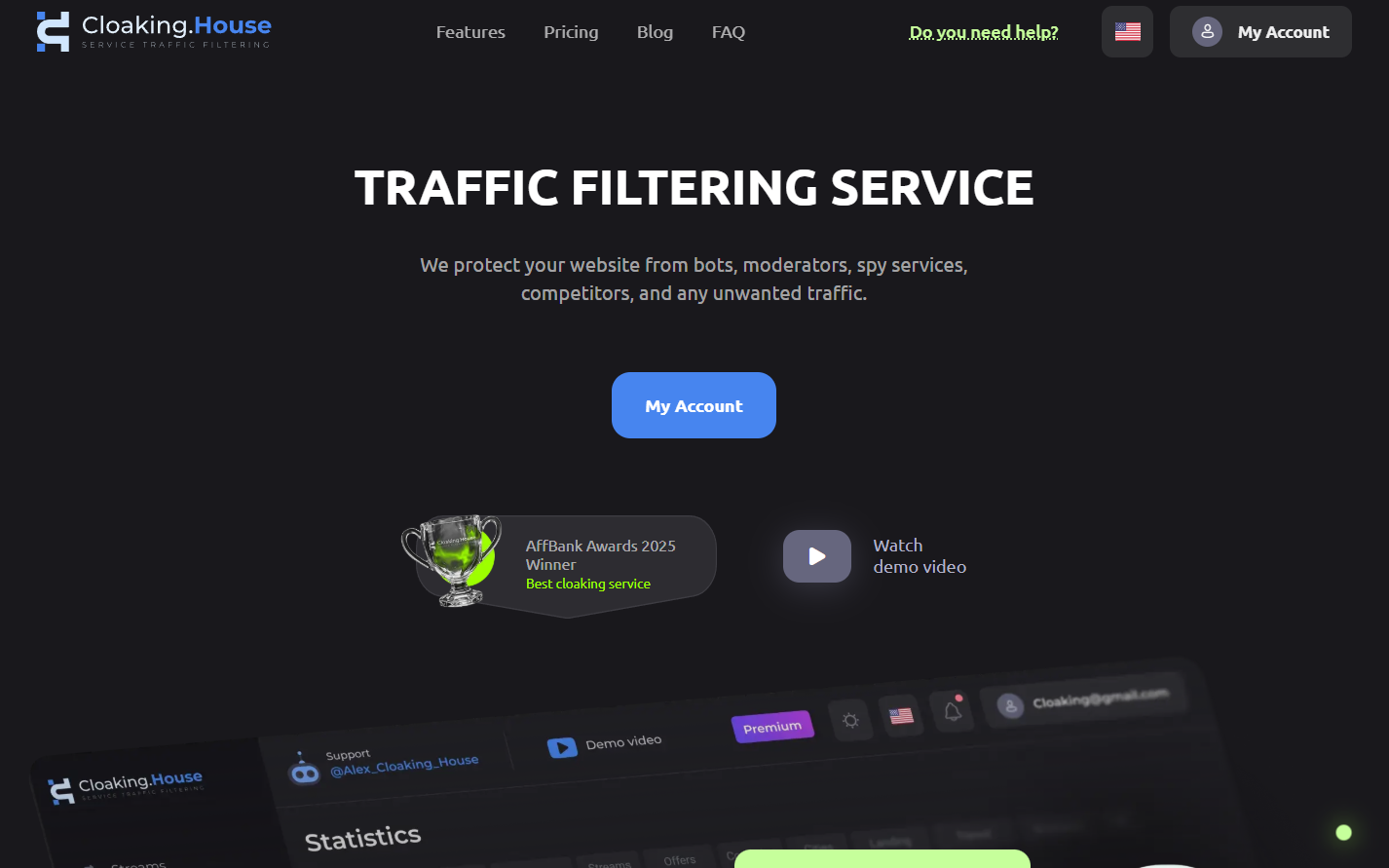
This is especially useful before scaling, when the team needs to see not only the number of clicks but also the quality of the incoming flow.
8. Conduct a pre-launch audit
A day or two before the start, conduct a final check of the entire chain.
Technical part:
Domain opens.
HTTPS works.
DNS is set up.
Redirects are checked.
Landing page loads quickly.
Mobile version works.
Tracker records clicks.
Postback works.
Conversions are transmitted.
UTM and SubID are saved.
GEO is determined correctly.
Advertising part:
Creatives are ready.
Several ad variants are prepared.
Landing pages are tested.
Offer is available in the right GEO.
Budget is set.
Ad platform rules are checked.
Do not limit yourself to checking the main page. You need to go through the entire user journey from the ad to the conversion.
9. Monitor the campaign during the event
After the launch, the work is just beginning. During the match, metrics can change much faster than on ordinary days.
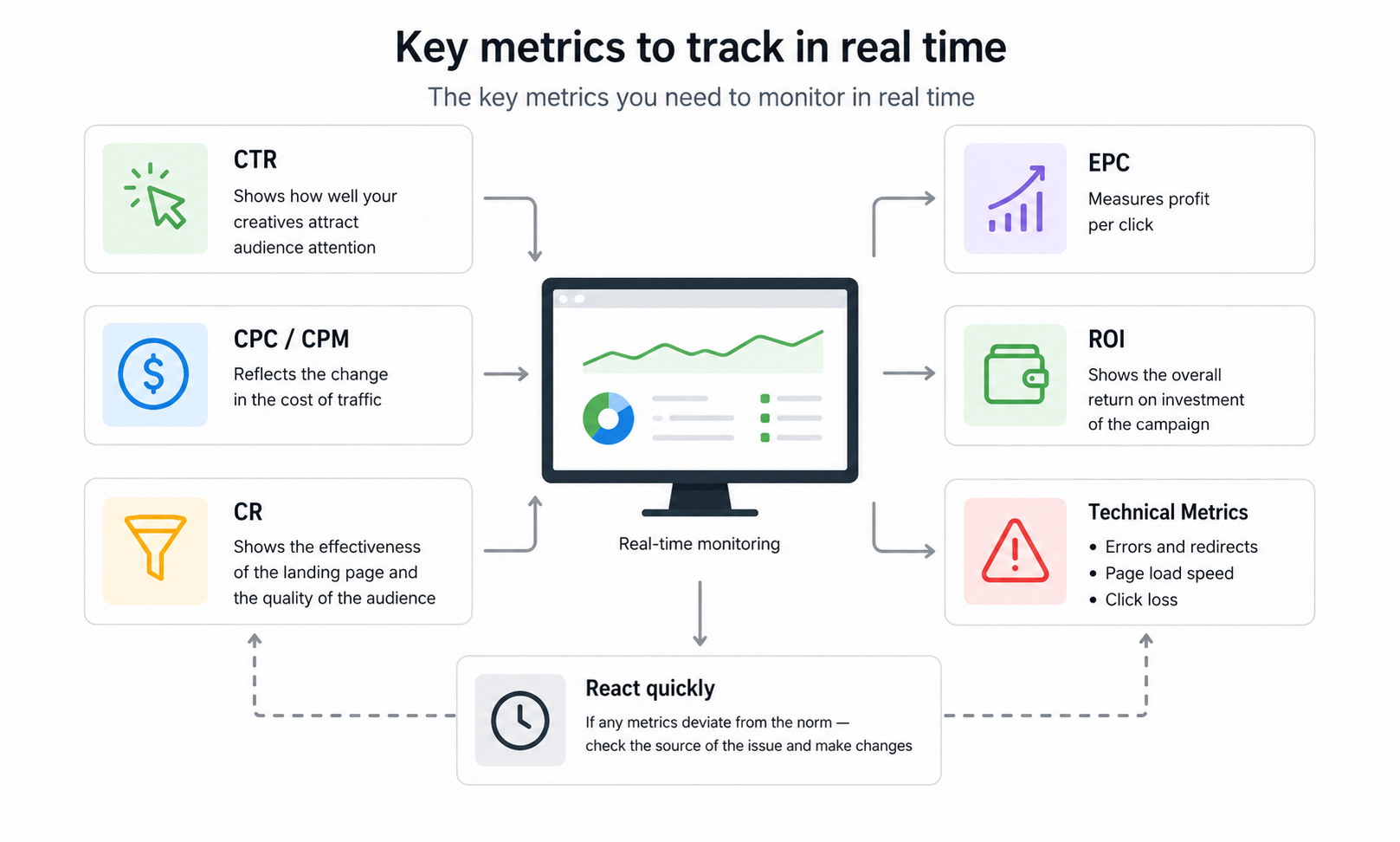
Monitor the main metrics:
CTR - helps understand how well the creative attracts the right audience.
CPC / CPM - show the change in the cost of advertising traffic.
CR - allows you to notice problems with the landing page or audience quality.
EPC - helps evaluate traffic economics.
ROI - shows the overall efficiency of the campaign.
Also, monitor technical indicators: errors, loading speed, the number of lost clicks, and the correct transmission of data to the tracker. If CR drops sharply while the traffic volume remains the same, the problem may not be in the ad creative, but at the level of the landing page, offer, or technical chain.
Summary
Preparing betting campaigns for a major sports event starts long before the first match.
You need to check domains, hosting, tracking, landing pages, GEO, filtering, and analytics in advance. Separately, it is worth studying the market through spy tools to understand what creatives and advertising approaches competitors use.
An optimal working chain looks like this:
Competitor analysis -> Traffic source -> Tracking -> Domain -> Landing page -> Cloaking -> Offer -> Analytics
The main goal of preparation is to eliminate technical problems before the main flow of users begins. A sports event gives a limited window for work. Therefore, the better the infrastructure is prepared, the more time the team can spend not fixing bugs, but optimizing traffic and scaling truly working flows.






Be the first to share your opinion!
We value your feedback — share your thoughts.