


Affiliate marketing (Traffic arbitrage) - is one of the few directions in digital marketing where you can earn without your own product and development team. Starting capital - from 200-300 dollars for testing. The mechanics are simple: you bought traffic cheaper, monetized it for more, the difference - is your profit. But in practice, most beginners drain their first budgets on the exact same mistakes - poor traffic quality, crooked campaign structure, unprotected accounts.
In this article, we will break down how modern PPC arbitrage works: how to choose offers and affiliate networks, how to protect accounts from bans, and what tools media buyers actually use in 2026.
What is traffic arbitrage and why PPC remains the main channel
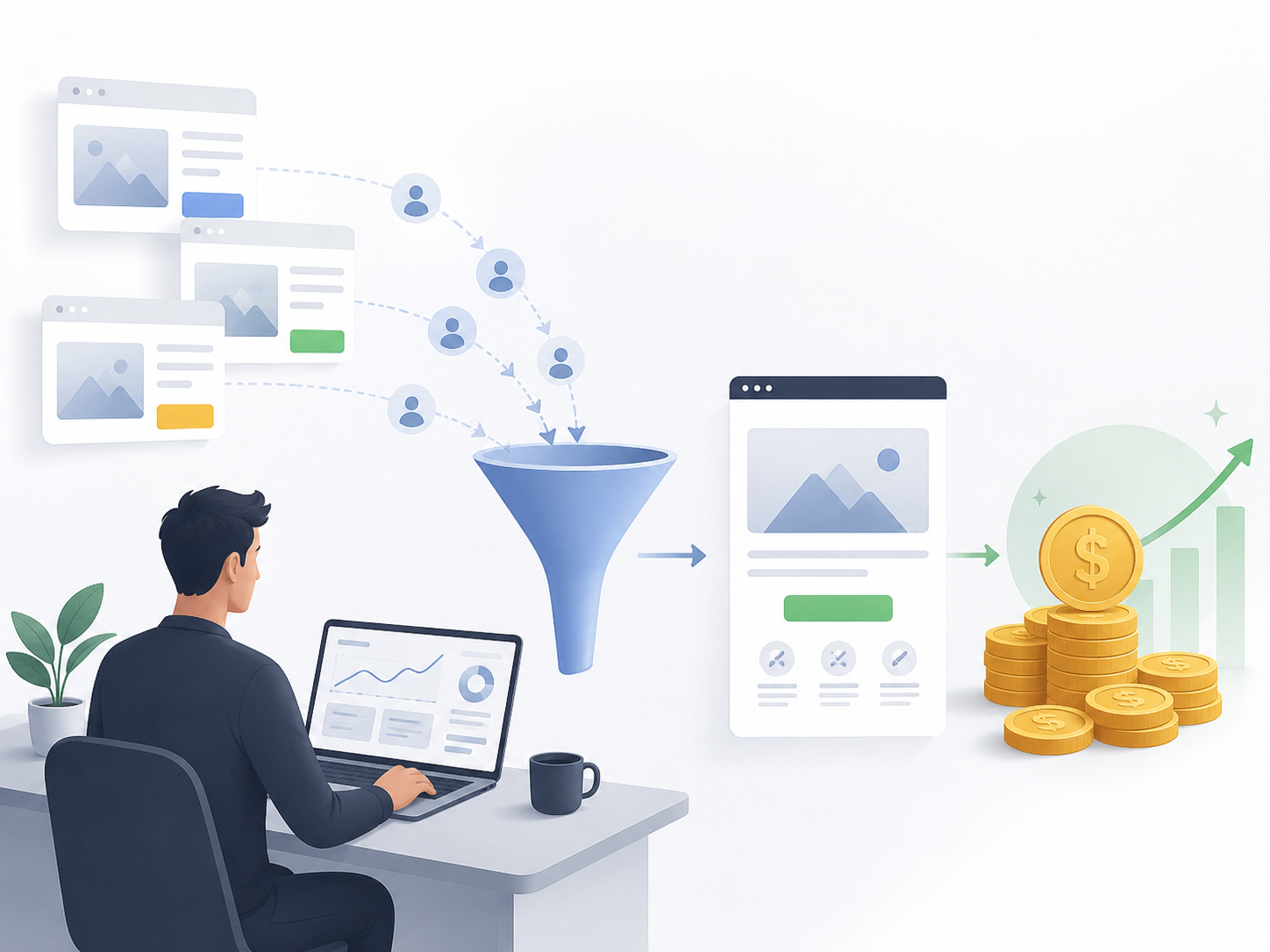 An affiliate marketer buys traffic - for example, through Google Ads at $0.15 per click - and sends it to an offer that pays $1.5 per lead. With a 15% conversion rate, this is a plus, with 8% - a minus. All affiliate marketing comes down to finding such profitable combinations and keeping them in the black.
PPC (Pay Per Click) - is a digital advertising payment model in which the advertiser pays not for ad impressions, but for each click on it. Conditionally: you placed a banner, 10,000 people saw it, 200 clicked - you paid only for these 200 clicks. This exact model is used in Google Ads, Meta Ads, TikTok Ads, and most other advertising platforms. For an affiliate marketer, PPC - is the main traffic buying tool: you know exactly how much each visitor costs, and you can manage the campaign economy in real time.
In 2026, working "head-on" doesn't work: large platforms automatically block suspicious patterns, competition in nutra, gambling, crypto, and dating has grown to the limit. Those who test faster, analyze deeper, and technically protect their campaigns win.
Choosing a vertical and offer: where to start
Vertical - a thematic category of offers: health and beauty (nutra), finance, gambling, dating, mobile apps, e-commerce. Each has its own margin, its own allowed traffic sources, and its own degree of headache with moderation.
Beginners are better off starting with e-commerce (physical products) or mobile apps - fewer restrictions, easier to achieve the first conversions. Experienced affiliate marketers go into "greyhat" verticals, where the margin is 200-400%, but the technical requirements for campaigns are incomparably higher.
When choosing a specific offer, look at four numbers:
EPC - average earnings per click. If the offer's EPC is $0.10, and the CPC in the chosen source is $0.20 - the combination is unprofitable even before launch.
CR - conversion rate on the partner's landing page. Even excellent traffic won't save an offer with a 1% CR.
Hold and payouts - the money retention period by the network. Weekly payouts versus monthly ones - this is a difference in budget turnover speed by 4 times.
Geo - CPL/CPA payouts in Tier-1 (USA, UK, Australia) are 3-10 times higher compared to Tier-3, but the traffic there is proportionately more expensive. Often Tier-2 (Poland, Czech Republic, UAE) gives the best ROI.
Structure of a profitable PPC campaign
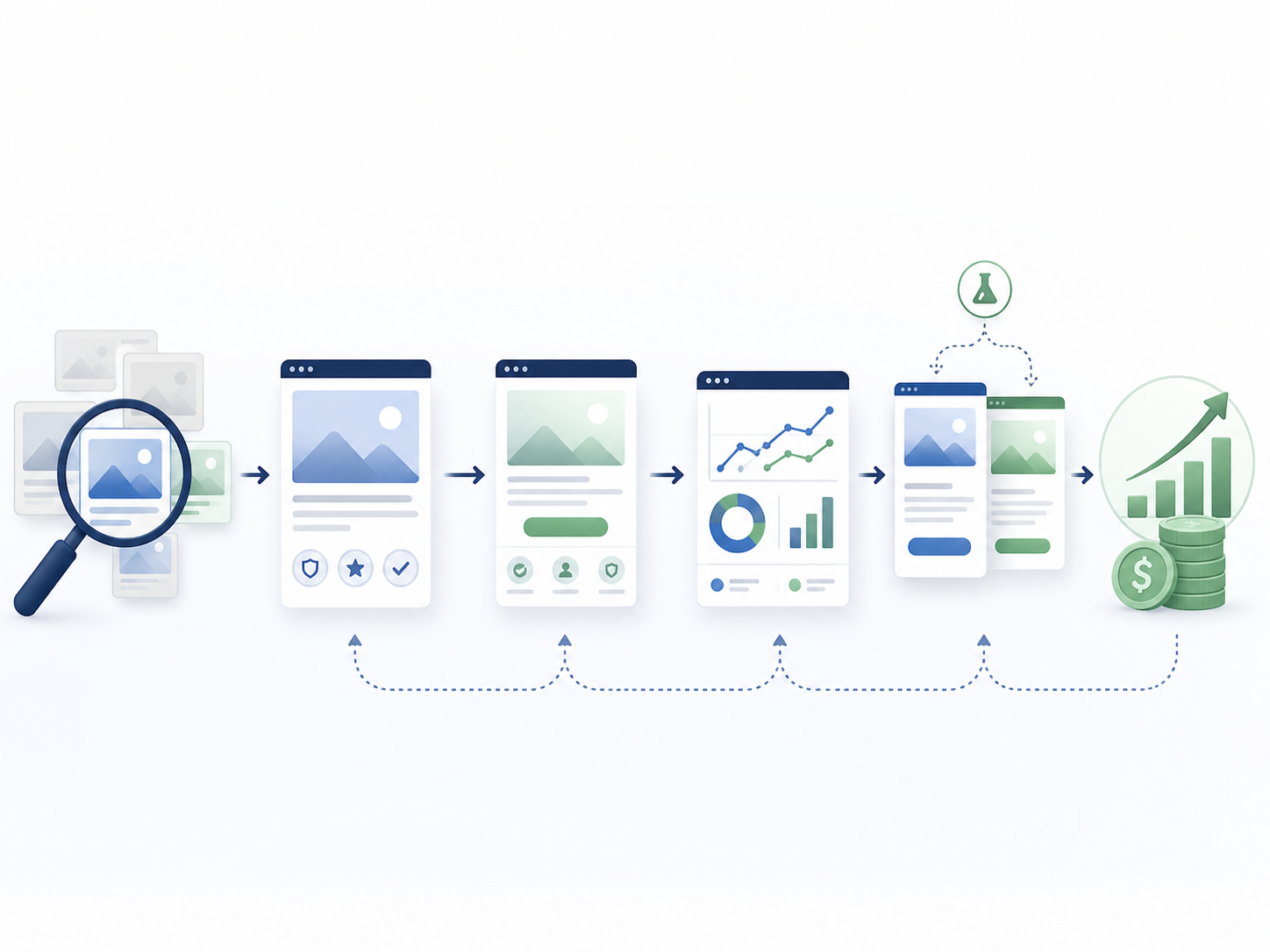 80% of success is determined by preparation - before you top up your ad account.
Spying and competitor analysis
Don't start with a blank slate. Tools like AdSpy, BigSpy, SimilarWeb, and spy services for push ads show active creatives, landing pages, and traffic sources for your vertical. The goal - is to understand the mechanics that already work: the headline structure, the image type, the angle of presenting the offer. You don't need to copy literally - you need to adapt it for your audience.
Funnel: pre-lander and lander
A direct link to an offer almost never yields a good result. You need a pre-lander - an intermediate page that warms up the user. In nutra, this is a success story or an article in the format of a "product review", in finance - a profit calculator or a quick calculation form. A good pre-lander raises the final CR of the funnel by 1.5-2 times.
Tracking and analytics
It's impossible to work in affiliate marketing without a tracker - this is not an exaggeration. Keitaro, Binom, Voluum, RedTrack - every click is recorded down to the source, placement, device, time of day, and ad version. Only with a tracker do you see: placement X yielded 200 clicks and 0 conversions, placement Y - 80 clicks and 4 conversions. Without this, optimization is impossible.
Testing and scaling
Standard procedure: allocate 3-5 daily budgets for testing at the target CAC, launch 3-5 hypotheses (different headlines, images, audiences), and after 30-50 conversions turn off everything that doesn't work. Only a confirmed profitable combination is scaled - the budget is increased, the geo is expanded, look-alike audiences are added.
Why accounts get banned and how to prevent it
An ad account ban - is not a disaster if you have built a system in advance. In "greyhat" verticals, a ban - is simply a working situation, not the end of a career.
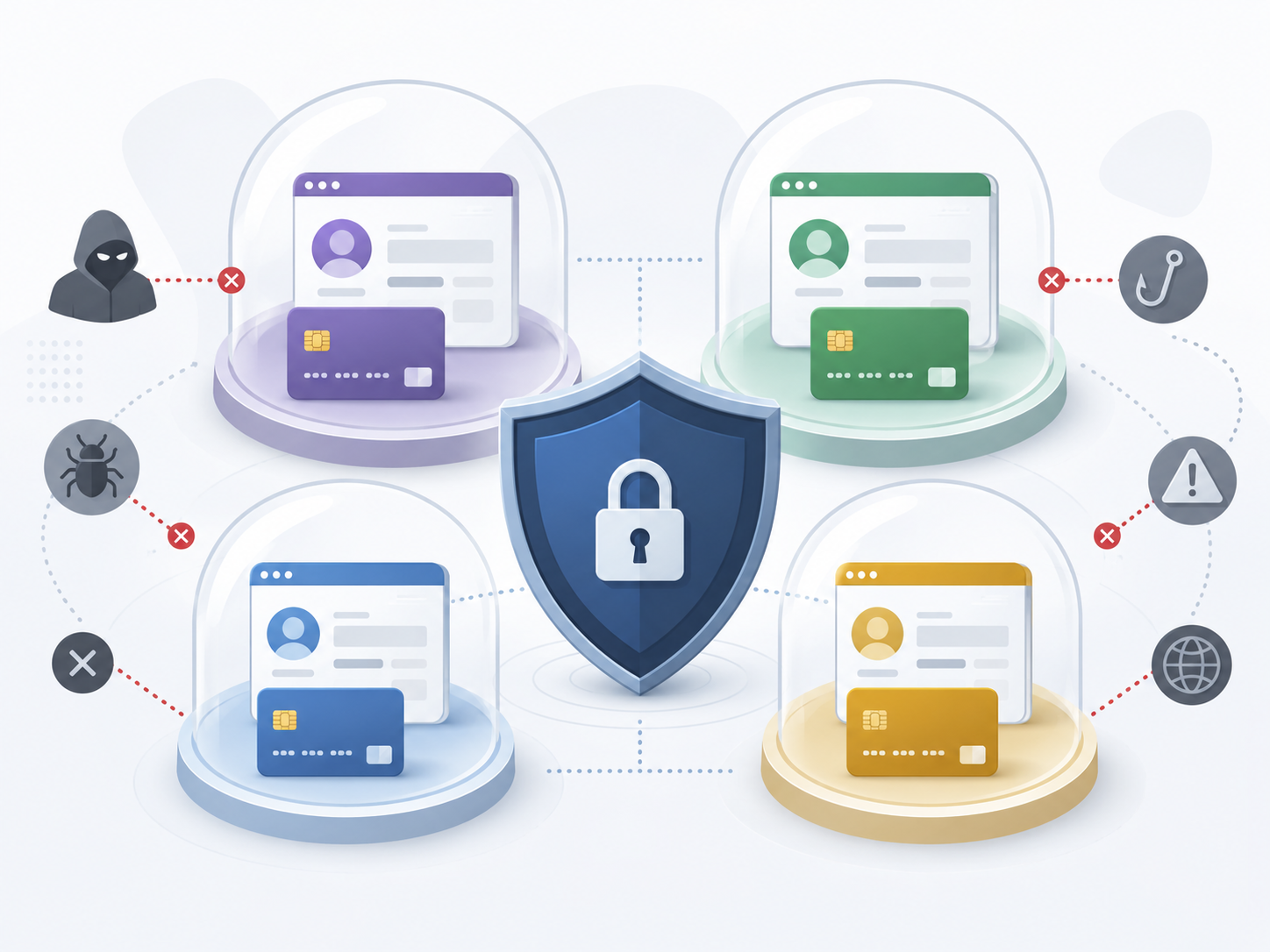 A basic protective system includes four elements:
Separate accounts and payment methods. Never link all campaigns to one account and one card. In the event of a ban, you lose one account, not the entire business.
Anti-detect browsers. Dolphin Anty, AdsPower, Multilogin create isolated profiles with unique digital fingerprints - different cookies, canvas fingerprint, WebGL, time zones. Each account lives in its own "environment" and doesn't burn its neighbors during a ban.
Cloaking. A technology where the advertising platform and moderators are shown "whitehat" content, while the target audience is shown the real offer. It is used in verticals where this is standard industry practice, strictly within the limits permitted by law.
Warming up accounts. New accounts start with small budgets and "whitehat" campaigns - $5-10 a day on a safe offer. In 1-2 weeks, the algorithm "gets used" to the account, after which you can move on to the main campaigns.
Cloaking and traffic filtering: how professional tools work
Professional cloaking - is not just "showing the moderator a different page". It is a real-time filtering system: each incoming request is analyzed by hundreds of parameters, and the system decides in milliseconds who is in front of it - a real user, a bot, a security scanner, or an advertising network moderator.
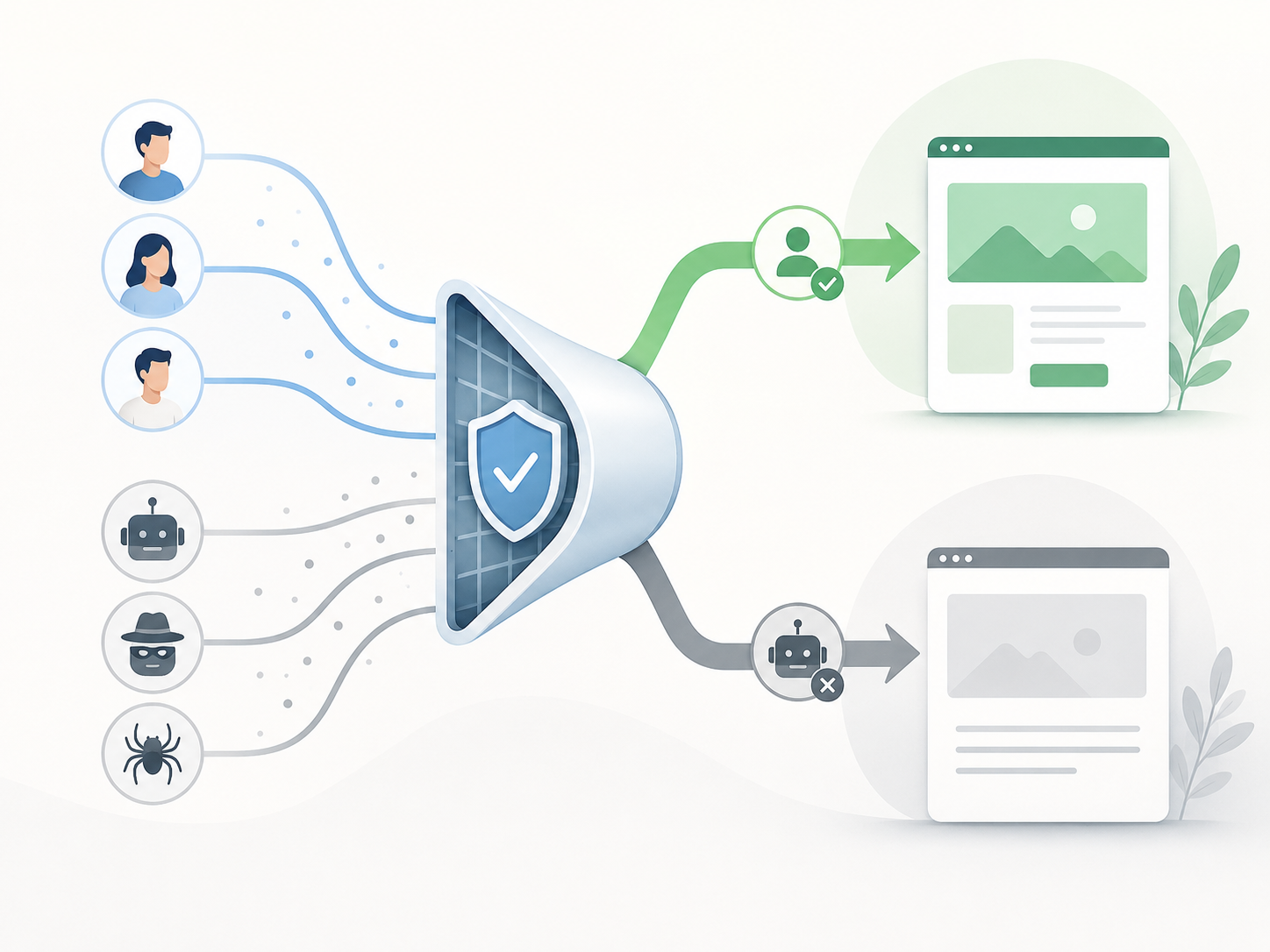 Cloaking.House works on this principle: the service analyzes the IP, User-Agent, behavioral signals, ASN affiliation, and thousands of other parameters of each visitor. Unwanted traffic gets redirected to a "whitehat" page - the ad account remains clean.
PPC Rebels covers another level of tasks - the automation and optimization of the advertising campaigns themselves: bid management, scaling of working combinations, rapid reaction to changes in auctions.
Together, these two tools create a closed loop: Cloaking.House protects traffic and accounts at the entry point, PPC Rebels manages campaigns at the level of strategy and bids. In competitive verticals, where the price of one wrong decision - is a drained budget and a lost account, such a combination moves from the category of "convenient" to the category of "necessary".
Affiliate networks: how to choose a reliable partner
An affiliate network - is an intermediary between the advertiser and the affiliate marketer. The stability of earnings depends on its choice: timeliness of payouts, quality of offers, honesty in calculations.
Reputation. Study reviews on CPA.rip, Affbank, IMGrind. Networks with a history of 3+ years and verified reviews - are an order of magnitude more reliable than newcomers to the market.
Exclusive offers. The best networks work directly with advertisers, bypassing resellers. This gives payouts 20-40% higher than intermediaries.
Dedicated account manager. In serious networks, every affiliate marketer has a personal manager. This is not a formality - a manager can bump your payout, open a private offer, or help with the optimization of a specific combination.
Payout frequency. Weekly or daily payouts are critically important for reinvestment. Waiting 30 days during active affiliate marketing - means freezing working capital.
Mistakes made by beginner affiliate marketers
The set of typical mistakes hasn't changed over the years.
Working without a tracker. "I see conversions in the affiliate network dashboard" - this is not analytics. Without your own tracker, you don't know which ad, placement, or source yielded the result. Keitaro or Binom cost $50-100 a month and pay for themselves after the very first optimization.
Scaling without statistics. A beginner sees the first conversions and increases the budget tenfold. 10-15 conversions - is not a sample size. A professional's rule: scale only what is confirmed by at least 30-50 conversions.
Ignoring traffic quality. A cheap click often means a bot, a fake impression, or an untargeted placement. This underestimates the real metrics and creates the illusion of a bad combination where the problem - is in the source. Regularly check traffic quality through your tracker and blacklist bad placements.
One account for all campaigns. This is not saving money, this is a concentration of risk. Professionals always work with multiple accounts in parallel.
Launching without a financial model. Before starting, calculate the unit economics: at what CPC do you stay in the black at your target CR? For example: an offer pays $2, the target CR - is 10%, which means the allowable CPC - is no higher than $0.20. Anything above this mark - is a loss by definition.
PPC affiliate marketing trends in 2026 from PPC Rebels
 AI automation in ad accounts. Meta Advantage+ and Google Performance Max are increasingly taking over campaign management. Campaign structure adapts to machine learning: algorithms are given more data and freedom, maintaining control through budget and bid limits.
The growth of TikTok Ads. TikTok continues its expansion in the advertising market. In a number of verticals, the competition there is still noticeably lower than in Meta and Google. Those who mastered the platform earlier are now working with CPMs 30-50% cheaper than the latecomers.
Strengthening of anti-fraud systems. Advertising platforms are investing in algorithms for detecting violations. The industry's response - more complex solutions for traffic filtering and account profile management.
Native advertising as an alternative. Against the background of the growing cost per click in search and targeted ads, native networks - Taboola, Outbrain, MGID - are again attracting affiliate marketers, especially in nutra and the financial vertical, where the "article" content format works organically.
Conclusion
Traffic arbitrage via PPC in 2026 - is a profession with its own methodology, tools, and learning curve. The days of random profits are gone. But this is exactly what makes the industry interesting: systematic people win here, not the lucky ones.
Start with one vertical. Set up tracking from day one - Keitaro or Binom. Launch the first tests with a minimal budget, $50-100. Analyze every result, scale only proven combinations, gradually add protection tools. The market is huge, and there is a place in it - the only question is how seriously you are prepared to approach it.






Be the first to share your opinion!
We value your feedback — share your thoughts.