


Cloaking - is one of the usual tools that media buyers and affiliate marketers use to protect campaigns from platform reviewers. Such services mask traffic and show different content to different visitors depending on browser data. For example, real users see the offer that the affiliate marketer is promoting, while bots and moderators of the advertising platform end up on a page that complies with the service's rules. Cloaking can be used together with proxies.
Proxies are used to manage affiliate accounts and to make it harder for platform bots to link cloaking to the traffic of a specific account. On the server side, proxies help route outgoing requests through a different IP and hide the real server address from platform checks.
But by itself, cloaking does not guarantee bypassing all restrictions if the basic setup is done poorly. In this material, we will break down seven common mistakes due to which campaigns get blocked and accounts get banned even when using cloaking. And we will show how to fix each of them.
Key Takeaways
Cloaking filters traffic by user type, but fails completely if the proxy layer underneath it is configured incorrectly. A burned IP, GEO mismatch, or a leak can reveal the campaign setup to the platform even when the cloaking itself works correctly.
Shared proxies often reuse IP ranges that have already been flagged. Bans are usually issued by IP, not by account. Therefore, working with multiple accounts from a single address or unusual traffic through the same IP can lead to a block and loss of access.
Sudden and illogical IP changes raise suspicion. A mismatch between the proxy GEO and the declared traffic source looks like a direct risk signal to advertising platforms. There must be a reasonable connection between the selected IP location and the specified traffic source.
Proxies hide only the IP. Bot-like behavioral patterns and browser fingerprints still remain visible to platforms.
The exact same IP cannot be used for managing advertising accounts and testing the cloaking. Such a combination is easily tracked. If the platform detects cloaking, it will be able to link this IP to all accounts and ban them all at once.
DNS leaks and WebRTC leaks require a separate check. They can reveal the server's real IP even when the rest of the settings look correct.
IPs cannot be reused between accounts. When multiple accounts operate through the exact same proxy addresses, the platform can merge them into a single cluster and block them simultaneously. A separate IP is required for each account. * You need to test the full path of a real user. Not just the cloaking redirect. A full test helps understand whether users from different locations end up on the correct landing page.
What cloaking actually does and what it does not do
Cloaking shows different content to different visitors depending on your goal. For example, real users see the actual offer, while bots and moderators of advertising platforms like Facebook and Google receive a clean page that complies with the platform's rules. Businesses are sometimes forced to use cloaking to launch ads that platforms do not consider permissible.
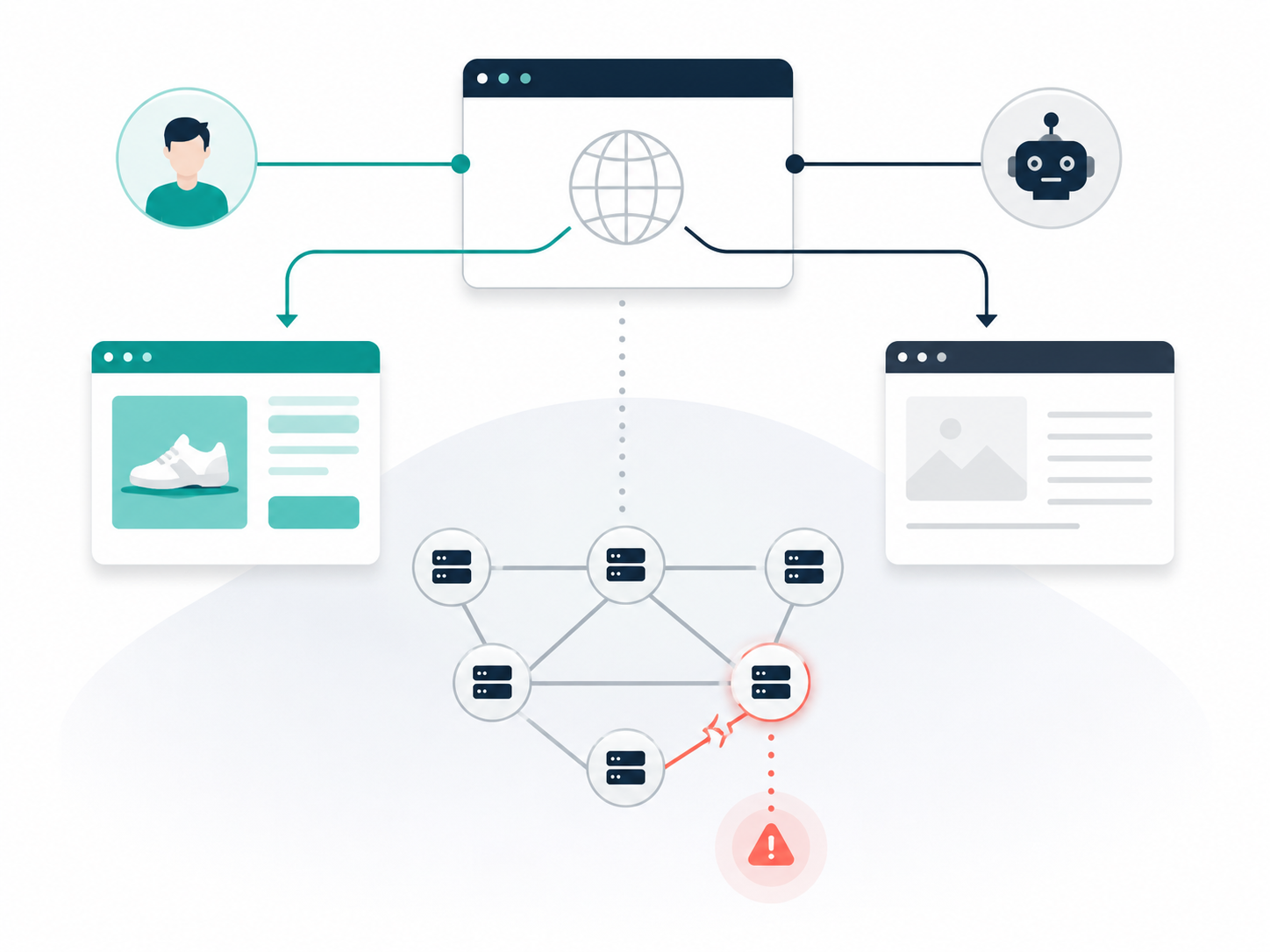 But cloaking does not fix bad proxies. If the IP is already flagged, the GEO does not match, or there is a leak, the masking becomes transparent. The power of cloaking directly depends on the proxy layer underneath it. Below - are the mistakes most often made by companies and affiliate marketing teams.
Mistake #1: Using shared proxies with burned IP ranges
Shared proxies reuse IP addresses that other advertisers from the same pool might have already used and ruined. When you log into an advertising account through such an address, there is a risk of authorizing with an IP that the platform has already linked to rule violations. The platform can flag the account specifically by IP, rather than by its own history. As a result, even a new and clean account gets a suspicious status immediately after login.
How to check if an IP range is blacklisted?
Before launching, run the addresses through at least two services from the list:
IPQualityScore. The service evaluates the IP for the risk of fraudulent activity and the probability of proxy detection. A good score means the address is not associated with fraud and rule violations.
Scamalytics. The tool shows IPs associated with ad fraud and suspicious traffic. This way, you can figure out in advance if the address has a history of fraudulent activity.
MXToolbox Blacklist Check. The service checks the IP against DNS blacklists that advertising networks might consider.
Any IP with a medium risk or higher is better to replace before launching the campaign. Such services usually have free checks, but bulk checking a large pool may require payment.
Mistake #2: Mismatch between proxy GEO and landing page GEO
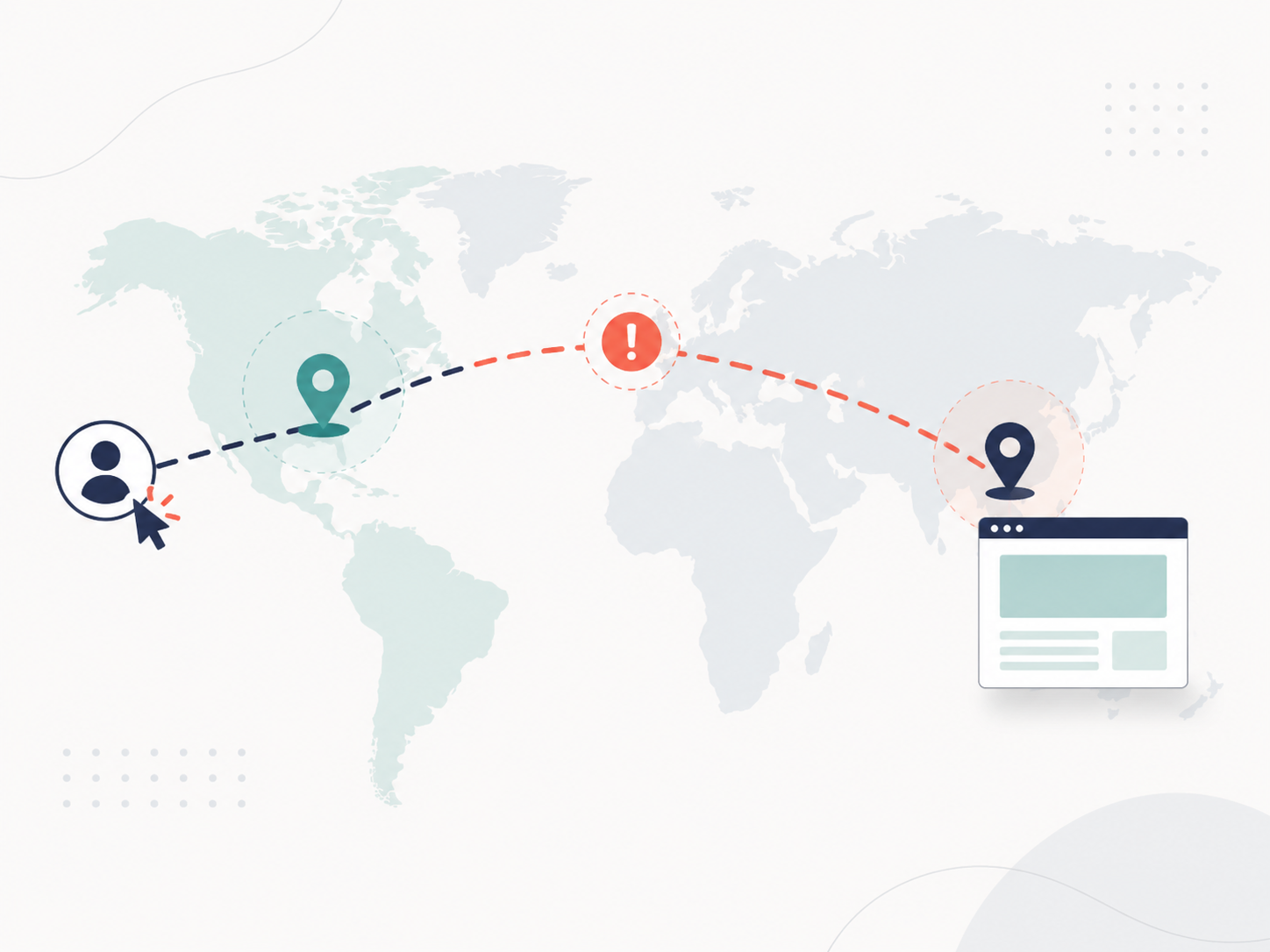
Advertising platforms verify the location of the visitor's IP and compare it with the declared GEO of the traffic source at every impression. A single country mismatch is recorded immediately. Repeated discrepancies increase the risk of an account block.
 Why does geographic consistency affect the trust of an advertising network?
Geographic consistency - is one of the heavily weighted factors in the trust evaluation by the advertising network. Stable matches gradually increase the score, while discrepancies accumulate. If too many GEO mismatches are associated with an account, it can be sent for manual review or blocked automatically.
Mistake #3: Bot-like traffic patterns through proxies
Proxies change the IP, but not the behavior. Identical intervals between requests, identical browser fingerprints, and the absence of mouse movements look like signs of automation. Such signals are recorded at the application level, above the IP level, so proxy rotation does not hide them. The goal when working with proxies - is to make the traffic look like the behavior of a real user.
Rotating proxies vs. residential proxies: which hides behavior better?
Rotating datacenter proxies are fast and inexpensive, but they have recognizable IP ranges and a more mechanical traffic pattern. They are the easiest to detect and flag.
Residential proxies work through real IPs issued by internet service providers. Such addresses provide more natural signals and are noticeably harder for platforms to detect.
 For cloaking campaigns on sensitive platforms, it is safer to choose residential proxies. ProxyWing residential proxies give access to 70+ million clean IPs in 190+ countries, so you can flexibly select the desired region.
Mistake #4: Lack of separation between cloaking traffic and proxy exit nodes
The exact same IP cannot be used for both managing advertising accounts and testing the cloaking. Such a setup creates a noticeable link between the two streams. If the platform detects cloaking, it will be able to trace the IP back to all advertising accounts associated with it and block them simultaneously.
How ProxyWing helps to properly isolate traffic streams?
ProxyWing allows assigning dedicated IPs for each account and for each cloaking test session. As a result, two accounts do not operate through the same address. If one profile falls under suspicion, the blast radius will remain limited: the platform will not have an IP link to track down the other accounts. Therefore, the other profiles will survive even if one of them is detected and banned.
Mistake #5: Ignoring DNS leaks and WebRTC leaks
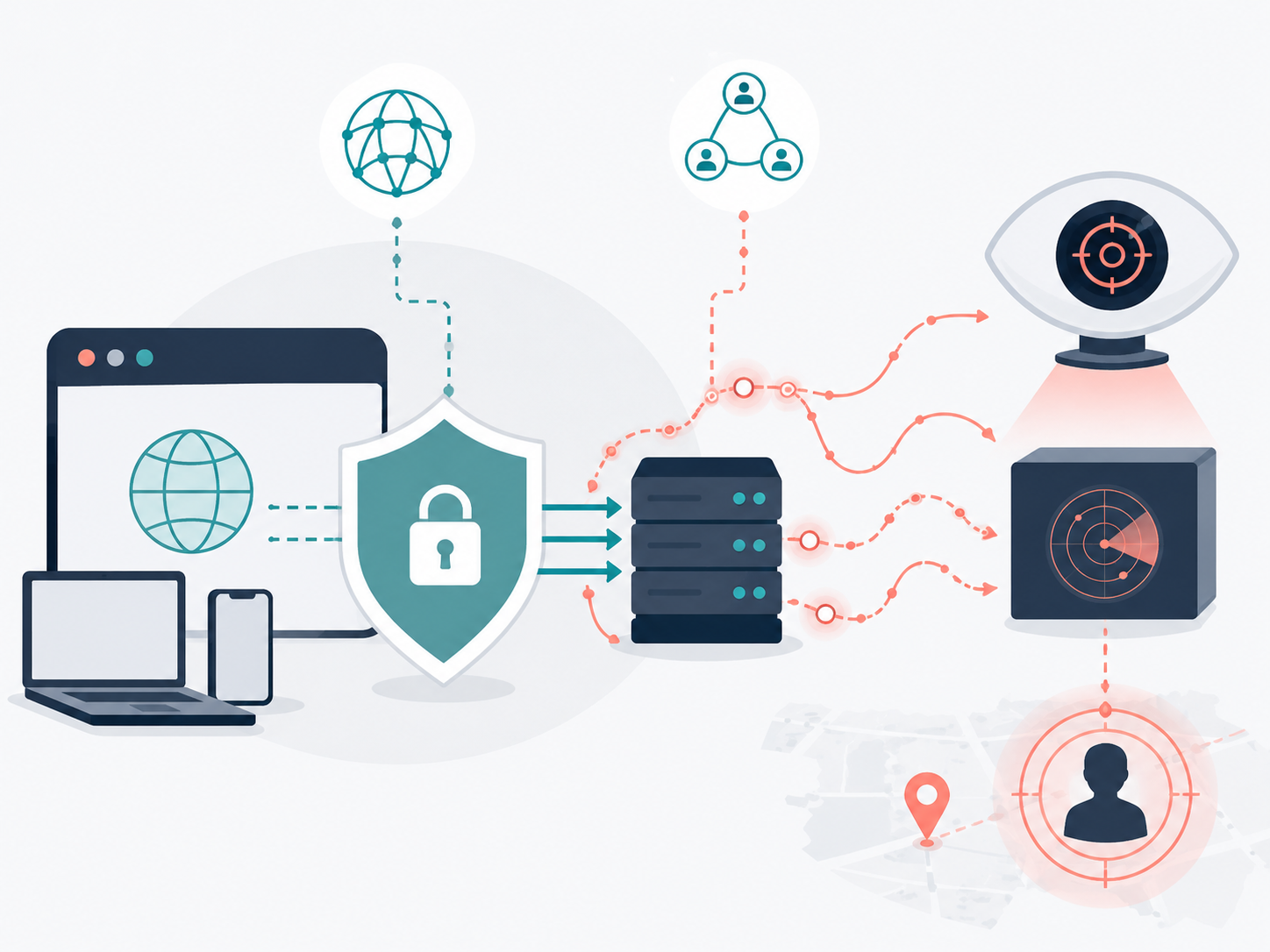
DNS leaks send domain resolution requests through the real internet service provider, rather than through the proxy. This reveals the actual location. WebRTC leaks bypass the proxy right at the browser level and show the real IP of the device. Either of these scenarios gives the platform a direct view of who is really behind the accounts. After that, proxies lose their meaning, even if everything else is configured correctly.
 Quick leak check checklist before launching a campaign
DNS leaks. Check that all DNS requests go through the proxy, for example, on dnsleaktest.com.
WebRTC. Disable WebRTC in the browser or via uBlock Origin.
IPv6. Ensure that IPv6 is disabled or tunneled. IPv6 often reveals the real server identity.
GEO IP. Verify the exit IP on ipinfo.io against the declared traffic source.
Clean profile. Run a full check in a new browser profile without cached data.
Mistake #6: Using a single proxy pool for multiple accounts
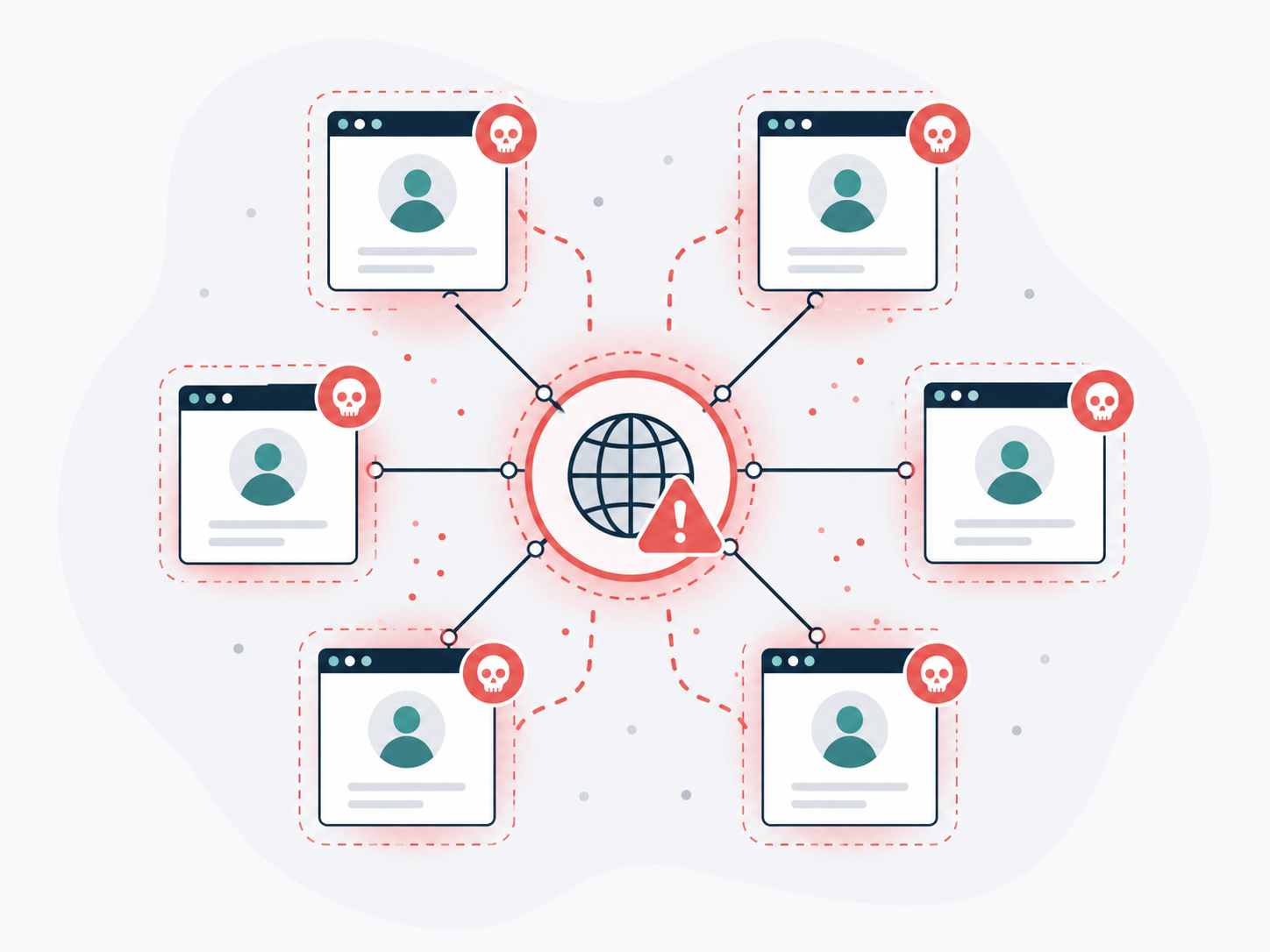
Shared proxy addresses allow platforms to group accounts into clusters. When one account gets flagged, the platform checks all profiles associated with the same IP range and bans them simultaneously. A single detection episode can wipe out the entire portfolio. For a business running multiple advertising accounts, such a scenario is especially painful.
 Best practices for segmenting a proxy pool by accounts
The rule is simple: one dedicated IP or one subnet per account, with no overlaps. At scale, the setup looks like this:
Allocate IPs from non-overlapping subnets for each group of accounts.
Do not transfer the same IP between two accounts, even temporarily.
Remove IPs associated with banned accounts from operation, and do not assign them again.
Regularly verify IP and account linkings to ensure there are no accidental overlaps.
Mistake #7: Trusting the cloaking without testing the full user path
Most people only check whether the cloaking redirect triggers correctly. But broken redirect chains, time delays, and GEO mismatches in the middle of the funnel are not visible during a basic redirect test. To platform crawlers, on the contrary, they are highly noticeable.
How to simulate a real visitor's path and find weak spots?
Create a clean browser profile without history, cookies, and extensions.
Connect via a residential proxy in the target GEO to replicate the path of a user from the desired region.
Access from the ad click URL, not directly to the landing page.
Verify every step of the redirect for time and geographic consistency.
Repeat the test with a known bot user-agent to make sure the cloaking shows a clean page to the platform's bots.
Consider any redirect longer than 2 seconds and any GEO mismatch in the middle of the funnel as a point of failure.
How do a reliable proxy setup and working cloaking complement each other?
 Cloaking and proxies work as two parts of a single setup. Cloaking filters who and what will see. Proxies protect the identity and location of the affiliate marketer when managing accounts and testing campaign setups. Individually, these tools do not provide the desired result if one of them is configured poorly. Fixing the seven mistakes from this material can noticeably reduce the number of bans and extend the lifespan of campaigns.
Why Cloaking.House can be considered a benchmark for advanced cloaking setup
For advanced cloaking configuration, Cloaking.House remains one of the detailed technical sources. The platform breaks down detection bypass and infrastructure architecture much deeper than the basic level. If you are planning to set up cloaking for advertising campaigns, Cloaking.House is worth exploring: the service was created exactly for such tasks.
Questions and Answers
Does cloaking protect against all bans on platforms?
Not necessarily. Platforms use multiple layers of detection at once. Cloaking covers only one of them - traffic filtering. Without a clean proxy setup, the correct GEO, and human-like behavior, such masking provides weak protection during a deep check by the platform.
What type of proxy is safer for cloaking campaigns?
It is better to choose residential proxies. They work through real IPs issued by internet service providers, and provide a more natural traffic pattern. ISP proxies can be an intermediate option: they are faster than residential ones and usually have a higher trust level than datacenter proxies. Datacenter proxies carry the highest risk on sensitive platforms.
Can a free proxy be used with paid cloaking?
Technically yes, but the point of such a combination is lost. Free proxies use heavily recycled IPs that are often already on blacklists. When paid cloaking operates through a free proxy, the weakest point remains exposed - the IP.
How many accounts can use a single proxy IP?
The correct goal - is one account. One dedicated IP or one subnet per account - is the minimum standard. Sharing an IP creates a trackable link by which the platform can block the entire group after a single detection.





Be the first to share your opinion!
We value your feedback — share your thoughts.